Monday, December 30, 2019

Mother Tongue


From The New Yorker:
Oswaldo Vidal Martín always wears the same thing to court: a striped overshirt, its wide collar and cuffs woven with geometric patterns and flowers. His pants are cherry red, with white stripes. Martín is Guatemalan and works as a court interpreter, so clerks generally assume that he is there to translate for Spanish speakers. But any Guatemalan who sees his clothing, which is called traje típico, knows that Martín is indigenous. “My Spanish is more conversational,” Martín told me. “I still have some difficulties with it.” He interprets English for migrants who speak his mother tongue, a Mayan language called Mam...

Pedro Pablo Solares, a specialist in migration and a columnist for the Guatemalan newspaper Prensa Libre, travelled throughout the U.S. between 2010 and 2014, providing legal services to migrants. He found that the “immense majority” of Mayans were living in what he called ciudades espejo—mirror cities—where migrants from the same small towns in Guatemala have reconstituted communities in the U.S. “If you are a member of the Chuj community and that is your language, there are only fifty thousand people who speak that in the world. There’s only so many places you can go to find people who speak your language,” Solares told me. He described the migration patterns like flight routes: Q’anjob’al speakers from San Pedro Solomá go to Indiantown, Florida; Mam speakers from Tacaná go to Lynn, Massachusetts; Jakalteco speakers from Jacaltenango go to Jupiter, Florida.
Rachel Nolan, "A Translation Crisis at the Border" (January 6, 2020 issue)

Monday, December 23, 2019

Notes for a Commonplace Book (27): Lost Powers


Charles Dickens:
The air was filled with phantoms, wandering hither and thither in restless haste, and moaning as they went. Every one of them wore chains like Marley's Ghost; some few (they might be guilty governments) were linked together; none were free. Many had been personally known to Scrooge in their lives. He had been quite familiar with one old ghost in a white waistcoat, with a monstrous iron safe attached to its ankle, who cried piteously at being unable to assist a wretched woman with an infant, whom it saw below, upon a door-step. The misery with them all was, clearly, that they sought to interfere, for good, in human matters, and had lost the power for ever.

A Christmas Carol

Wednesday, December 18, 2019

From the Guardian


This brings us back to impeachment. The question it poses is not whether it will be the thing that drives Donald Trump from office or whether it will be an unalloyed political boon for Democrats or other progressive forces in the country. It won’t be any of these things. Instead, the issue raised by impeachment is whether America, at this stage in its history, has what it takes to stand up against the forces of tyranny – whether there is still a passion among its people, and enough vitality in its institutions, to defend the American ideal against an unprecedented assault.
Andrew Gawthorpe, "Impeachment won't force Trump out of office. But it matters for our republic." Guardian.

(Photograph: Jim Lo Scalzo/EPA)

Tuesday, December 10, 2019

The Wolf (Paul Bowles)


Last night's Jeopardy featured, of all things, a clue that referred to Paul Bowles's venomous short story "The Frozen Fields," which is one of the few pieces Bowles set in the US and which is also, in its twisted way, a Christmas story. Of course I had to pull it out today and read it again.

The story is set at a family gathering at a rural farmhouse somewhere in the northeast, presumably in the early decades of the twentieth century, and is told largely through the eyes of Donald, a boy of six who is visiting the farm along with his parents. Despite the Norman Rockwellish ambience, all isn't well; there are whispers of illicit goings-on, and Donald's father is a surly martinet who eventually precipitates a family crisis with a rude insinuation uttered during the course of Christmas dinner.

There's no love lost between father and son (the story almost certainly draws on Bowles's difficult relationship with his own father), and when Donald lies down to sleep in the farmhouse bedroom he lets his imagination run free:
On his way through the borderlands of sleep he had a fantasy. From the mountain behind the farm, running silently over the icy crust of the snow, leaping over the rocks and bushes, came a wolf. He was running toward the farm. When he got there he would look through the windows until he found the dining room where the grown-ups were sitting around the big table. Donald shuddered when he saw his eyes in the dark through the glass. And now, calculating every movement perfectly, the wolf sprang, smashing the panes, and seized Donald's father by the throat. In an instant, before anyone could move or cry out, he was gone again with his prey still between his jaws, his head turned sideways as he dragged the limp form swiftly over the surface of the snow.
So, in the end, this atypical Bowles story maybe isn't so atypical after all. It has the same sudden, pitiless violence of many of his North African tales, and the frozen fields of the rural US turn out to be just another kind of desert.

Sunday, December 08, 2019

Notebook: December Blue


Sunday afternoon. Close enough to shake a stick at to fifty years ago, in my lonely and melancholy youth, Joni Mitchell's Blue was the one record I could never listen to enough. Shut in behind dormroom doors, I played it over and over on a clunky portable hi-fi that was already a museum piece by the time I got hold of it. There was nothing unique in this; Blue was a very popular record, at least among the people I hung out with. Mitchell sang beautifully, in spite of whatever minor technical imperfections she might have had at that point in her development, she was beautiful to look at, but most important, nothing she did before or after, not even gems like Hejira (maybe her "masterpiece," overall), and certainly nothing anyone else was doing to that point, seemed to have the same emotional directness. Sparely produced, with just Mitchell's piano, dulcimer, and guitar and a scattering of contributions from other musicians, Blue seemed to suggest that art — whatever art it was you practiced — could, if wielded with honesty and passion, not to mention genius and dedication, cut through all the pretense and posturing and give a glimpse of how we might talk — or sing — to each other if just once we could drop the masks we all carry around with us, both the ones we show to others and the ones we show to the mirror. All an illusion, perhaps, but that's not how it felt at the time.

Anyway, today I got in the car and drove a few miles to a place I like to go hiking, and I brought along a newly-purchased copy of Blue on CD for the ride. I still have my original LP, but I don't really have a functioning turntable and I'm not a big fan of streaming, so this was actually the first time I'd heard the whole thing in many years. (How did I go so long without being able to listen to "A Case of You"? It's hard to figure.) And I have to say it sounded great, probably better than ever since, whatever the merits of the CD vs. vinyl argument, my car's music system is undoubtedly better than my old hi-fi was. And the emotional impact? Yes, it's still there.
Just before our love got lost you said
"I am as constant as a northern star"
And I said "Constantly in the darkness
Where's that at?
If you want me I'll be in the bar"

On the back of a cartoon coaster
In the blue TV screen light
I drew a map of Canada
— Oh, Canada —
With your face sketched on it twice
But enough of that. It was a seasonably cold but not uncomfortable December afternoon, the skies were partly cloudy, and I hiked for a couple of miles to an overlook I like to visit in the winter when the leaves don't obstruct the views of the nearby reservoir and the surrounding hills. As I neared the top I sensed movement in the sky ahead of me, and looking up I saw an enormous hawk — a red-tail, I think — settle at the top of a bare tree not far off. I switched on my camera but the angle and the light were bad, and before long the hawk leaned forward, leapt off the branch it was perched on, awkwardly bumped another nearby branch, and took flight, quickly disappearing in to the woods behind my shoulder. I finished climbing and sat on the bench that marks the summit for a while, then as I got up to leave I saw the hawk again, in flight above me, and with it a second hawk, probably its mate. The hawks wheeled above me, each in its own tight circle, in effortless command of their element, then gradually drifted further off and out of sight.

On the way home, having traveled several miles by now, I took a back road, and when I neared a small family cemetery adjacent to a horse farm I slowed, thinking it might be a good time and place to see something. Sure enough, as I pulled up, I saw another pair of hawks perched in a tree directly above the cemetery. I switched the camera on even before I opened the car door, but once again the angle was bad and the hawks were too wary. First one then the other took flight, making the same tight circles as the earlier pair, regarding me for a moment or two before likewise moving off.

After I got home, just at dusk, I looked out my kitchen window and saw yet another hawk perched in our peach tree — the one we haven't gotten a peach from in years because of our resident squirrels. This one we've come to think of as an old friend, as we see it in our yard almost every day, and the same or similar hawk has been visiting in the winter for years. It lingered only for a moment, then flew off.

Saturday, November 23, 2019

Wednesday, November 20, 2019

Aubade (November)


Lying awake before dawn, hearing the faint scratching of rain on the gutters, waiting for the first pale light of a winter morning to stretch across the floorboards, he feels the last traces of his dreams dissolve. A car rolls by on the wet street and he hears the damp thud of newspapers being deposited, one after another, into the driveways of the houses along the block. The sparrows have nothing to say.

Saturday, November 16, 2019

Pilgrimage


If I lived in Japan maybe I'd climb Mt. Fuji, but since I don't I settle for Turkey Mountain, a bump of gneiss that soars to an elevation of all of 831 feet. I like to go up a few times a year, and since the trails can be tricky once there's snow on the ground I suspect today was it for the year. It was a beautiful clear November day, warm enough that I could dispense with my coat for the brief but fairly steep climb.

From the top you can see time. The Manhattan skyline, some forty miles away, is clearly distinguishable if you look south, a nearby reservoir and the Hudson River are closer at hand to the southwest, but the surrounding woods, from this perspective, probably appear more or less as they have for hundreds, even thousands of years, and the stone beneath my feet is roughly a billion years old. It feels pretty solid and I suspect it'll be around for a while to come.

Tuesday, November 12, 2019

A Social Call


Joseph Conrad:
Razumov had been admitted twice to that suite of several small dark rooms on the top floor: dusty window-panes, litter of all sorts of sweepings all over the place, half-full glasses of tea forgotten on every table, the two Laspara daughters prowling about enigmatically silent, sleepy-eyed, corsetless, and generally, in their want of shape and the disorder of their rumpled attire, resembling old dolls; the great but obscure Julius, his feet twisted round his three-legged stool, always ready to receive the visitors, the pen instantly dropped, the body screwed round with a striking display of the lofty brow and of the great austere beard. When he got down from his stool it was as though he had descended from the heights of Olympus. He was dwarfed by his daughters, by the furniture, by any caller of ordinary stature. But he very seldom left it, and still more rarely was seen walking in broad daylight.

Under Western Eyes
Edward Gorey created covers for several Anchor Press editions of Joseph Conrad's books, including Chance, Victory, and The Secret Sharer, but as far as I can tell he never did this novel, which is shown here in a design by Diana Klemin, Anchor's art director, which was issued in 1963 as part of a serious of uniform editions with introductions by Morton Dauwen Zabel. The passage above, with its jumble of forlorn objects and wraith-like women, seems tailor-made for him. Laspara and his daughters play no great role in the plot of the novel, but Conrad seems to have enjoyed describing them.

Klemin chose two photographs corresponding to the two cities in which the novel is set. One shows the Winter Palace in St. Petersburg, the other includes, at right, the tiny Île Rousseau in Geneva, where Razumov goes for a bit of privacy when he wants to do some writing.

Monday, November 04, 2019

The Great Circle of the Catalogue (George Gissing)


Marian Yule, the daughter and amanuensis of a London literary critic, contemplates her fate in the famous reading room of the British Museum:
Oh, to go forth and labour with one's hands, to do any poorest, commonest work of which the world had truly need! It was ignoble to sit here and support the paltry pretence of intellectual dignity. A few days ago her startled eye had caught an advertisement in the newspaper, headed ‘Literary Machine’; had it then been invented at last, some automaton to supply the place of such poor creatures as herself to turn out books and articles? Alas! the machine was only one for holding volumes conveniently, that the work of literary manufacture might be physically lightened. But surely before long some Edison would make the true automaton; the problem must be comparatively such a simple one. Only to throw in a given number of old books, and have them reduced, blended, modernised into a single one for to-day’s consumption.

The fog grew thicker; she looked up at the windows beneath the dome and saw that they were a dusky yellow. Then her eye discerned an official walking along the upper gallery, and in pursuance of her grotesque humour, her mocking misery, she likened him to a black, lost soul, doomed to wander in an eternity of vain research along endless shelves. Or again, the readers who sat here at these radiating lines of desks, what were they but hapless flies caught in a huge web, its nucleus the great circle of the Catalogue? Darker, darker. From the towering wall of volumes seemed to emanate visible motes, intensifying the obscurity; in a moment the book-lined circumference of the room would be but a featureless prison-limit.

New Grub Street

Thursday, October 31, 2019

Halloween, 2019


On this rainy October morning, a reminder that the work of transforming dead matter into life (and vice versa) never stops.

Wednesday, October 16, 2019

Tomorrow's All We've Got


From songwriter-musician-bookseller-writer Amy Rigby, one track from a collection of old demos from the 1980s and '90s entitled A One Way Ticket to My Life, available from Rigby or Bandcamp.

I like this kind of homemade project. The songs were recorded on cassette, in cramped apartments rather than in a studio, and of course a record company back in the day would have wanted to start from scratch and re-record the vocals under optimal conditions, then layer on a lot of extra crap to make it radio-friendly, and if the producer was on the ball the final product might have sounded pretty good. But it would have lost something too, and a lot of these tracks might not have made it onto the record in the first place. In fairness, only about half of the nineteen tracks here are anything I'd go out of my way to hear again (the rest are tolerable), but for demos that's probably a pretty high percentage, no? Amy's husband Eric Goulden aka Wreckless Eric has cleaned up the recordings a bit but that's all.

In any case, Amy Rigby has just published a memoir, Girl to City, relating how she left Pittsburgh in her teens and set out for the big city and art studies at Parsons School of Design, wound up in a band (as you do), and eventually went on to a solo career, juggling touring, day jobs, relationships, a marriage, and parenting, and managed not to lose her mind along the way. It's a nifty book, full of lively glimpses into New York's bygone downtown music scene, and best of all is that Rigby herself comes off as a whole person, vulnerable and fallible and self-conscious but also surprisingly resilient (and talented). It's available direct from Rigby's website, as well as the usual places.

Tuesday, October 08, 2019

Scalded to Death by the Steam


I think this is what is called character development. Newlywed Cesca (Ann Dvorak) romps through a disturbingly peppy rendition of the most gruesome lines of the railroad disaster ballad "The Wreck of the Old 97." Just off-screen is her husband, mobster Guino Rinaldo (George Raft), who is about to get his at the hand of her brother, Tony Camonte (Paul Muni), whose relationship with Cesca is itself more than a little creepy. From Scarface (1932).

The lyrics to the ballad are sung out of order, as the death of the engineer here occurs before the train crashes. Ann Dvorak was not related to the subject of the previous post.

Friday, October 04, 2019

They Don't Sing This One in Church


I found this Canadian edition of Josef Škvorecký's novel about his countryman Antonín Dvořák one afternoon in Kingston, Ontario, and read it and enjoyed it soon after, but then I put it away for many years and I can't say I remembered much about it until I picked up a used CD of the New World Symphony the other day, and then of course I had to read it again. It's an odd book, splendid and sad and often hilarious. It's not quite "about" Dvořák and not really about him being in love at all (though that element is in there too), but instead it manages to trace a portrait of him largely through the eyes of the people around him (family members, other musicians, casual acquaintances), sometimes in scenes decades after his death. Many of the characters are historical figures from the music world and quite a number of them are Americans, including Will Marion Cook, the black violinist and composer who winds up having to "explain" (i.e., sanitize) the lyrics of a raunchy African-American musical number during the composer's sojourn in the US. "Is it a kind of spiritual?," asks Dvořák, whose English is limited, and Will replies, "Exactly, except they don't sing this one in church." Dvořák, a devout Catholic but one with an earthy streak, eagerly soaks up the music in any case.

According to an interview with Škvorecký, the title was the suggestion of his English-language publisher. The Czech title is Scherzo capriccioso, and it was originally issued by 68 Publishers in Toronto (that is, by the author and his wife, who were publishers to the emigré community), in an edition with illustrations that sadly weren't used in the translated version. I understand no Czech but Paul Wilson's translation reads extremely well.

One change in the translation that everyone, including the author, seems to have liked, is to move to the very end a chapter involving the celebrated classically-trained black singer Sissieretta Jones. Dvořák is long dead when the chapter opens, and Jones, who had known him and performed for him, is now old, retired, mostly forgotten, and living in Providence, Rhode Island. She receives a visit from an old colleague, and at the same time a phone call from Jeanette Thurber, who as patron of music had been responsible for first bringing Dvořák to America. In the brief chapter the narrative moves back and forth over the years, while in the present a boat outside, rocked by the waves, bumps repeatedly against a dock as Jones reflects on what, if anything, all of it was for. It's a small but unsettling detail, a reminder of the ceaseless tides that in the end carry everything away.

Naturally the novel should be read to the accompaniment of your favorite rendition of the New World Symphony.

Wednesday, September 25, 2019

Adrift


He arrived knowing nothing of the city and no one there. Cities in general were mysteries to him, this one, which he had no ties to, most of all. What did he expect to find there? What did he have to offer?

The trolleys and bus station were run down, the domain of mumbling alcoholic ghosts. The museum was closed for restoration. The sidewalks downtown were torn up, vacant lots boarded over, stores shut behind steel curtains, out of business, waiting for a renewal that showed no sign of coming. Only the streets, arteries jammed with cabs and utility vans, seemed to function.

The river made a hairpin turn through the center of town, crossed by aging iron spans. Barges lay moored along the shore but never seemed to move. Deserted warehouses, their siding shredded, their rooves broken, sagged amid eddies of dust and trash.

A park opened out along one shore on the outskirts leading north, and under the great oaks and balding sycamores leaves blew about, their colors fading to rust. Radios blared from picnickers far off, and a soccer game was in progress. The sun at least was warm and strong. He skirted the edge of the field, watching strangers.

The further out of town he went the more the city seemed to come alive, though not in order to beckon to him. Little shops with Coca-Cola signs stood open among rowhouses; groups of men clustered outside eyed him critically, their conversations breaking off as he approached. He decided he had come too far, cut back across the park, heading south again towards whatever was going to pass for now for home.

Monday, September 23, 2019

The 23rd of September


There aren't so many reasons to note this day (or opportunities to play this song) that one can afford to let the convergence go unobserved. The band is the Vulgar Boatmen and the singer is Professor Robert Ray.

Friday, September 13, 2019

Peter Case: A Kickstarter Campaign


Musician and songwriter Peter Case has an ambitious two-record project in the works, and is looking for financial support to put him over the top in his Kickstarter campaign. He'll be recording an album of original songs, entitled Doctor Moan, as well as a second devoted to acoustics blues covers, The Midnight Broadcast. The rewards for sponsors range from signed CDs and LPs to house concerts, but time is of the essence; I encourage you to check it out. More info is available at Kickstarter and Peter's website.

Update: The project was successfully funded. Look for the records around June 2020.

Tuesday, September 10, 2019

Family reunion


Four years ago I posted the above image, dated 1887, of a young French woman named Alexandra Marie Fulton de Lipowski. Thanks to a message from a Lipowski descendant I can now post the following photo, which shows her older sister Marie.


The photographs were taken at the same studio, Photographie Prost in Meaux, and in all likelihood they were taken on the same day, as the clothing and pose are nearly identical except for the sisters' pins. Marie's photograph has remained with the family, but Alexandra's somehow wandered across the Atlantic, where I found it in an antique shop. The reverse of the photo is shown below.


Both of the sisters lived long lives. Alexandra, who was married at least twice, died in 1971 at the age of 97. Her sister Marie had died the previous year at 98.

Thanks JH for the information. Alexandra's photograph has now rejoined the family in France.

Monday, August 26, 2019

Ode


The larger the scale, the more predictable the world is. The planets and stars move on determined courses, the earth revolves, day becomes night, the seasons change, all obeying established patterns. The closer you focus, the murkier it becomes. Will it rain tomorrow? Will it be a harsh winter? Will the breeze blow down the last leaf this morning, or the next?


And then there are phenomena — things appearing to view. We can predict comets — some of them, at least — but not every flash of a meteor shower. We can't be sure of the consequences of all of our own actions, though with some the baneful results are easy enough to foresee. And why does a bird appear one evening, and not the next? They obey their own unknowable laws, and cross through our vision only by accident.


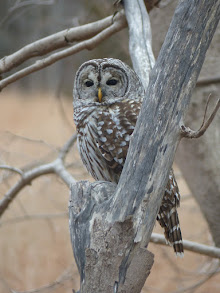
And yet that's too facile. We ourselves are on unpredictable courses, and our fellow beings are inextricably mixed up in ours, for better or worse. The bird at top is no wild thing but someone's racing pigeon, and bears a band of human possession. I saw it two days in a row at the same location on the summit of a nearby dam. It showed no fear of me, and perhaps was lost, or maybe it was just resting before heading home. On the third day it was gone.


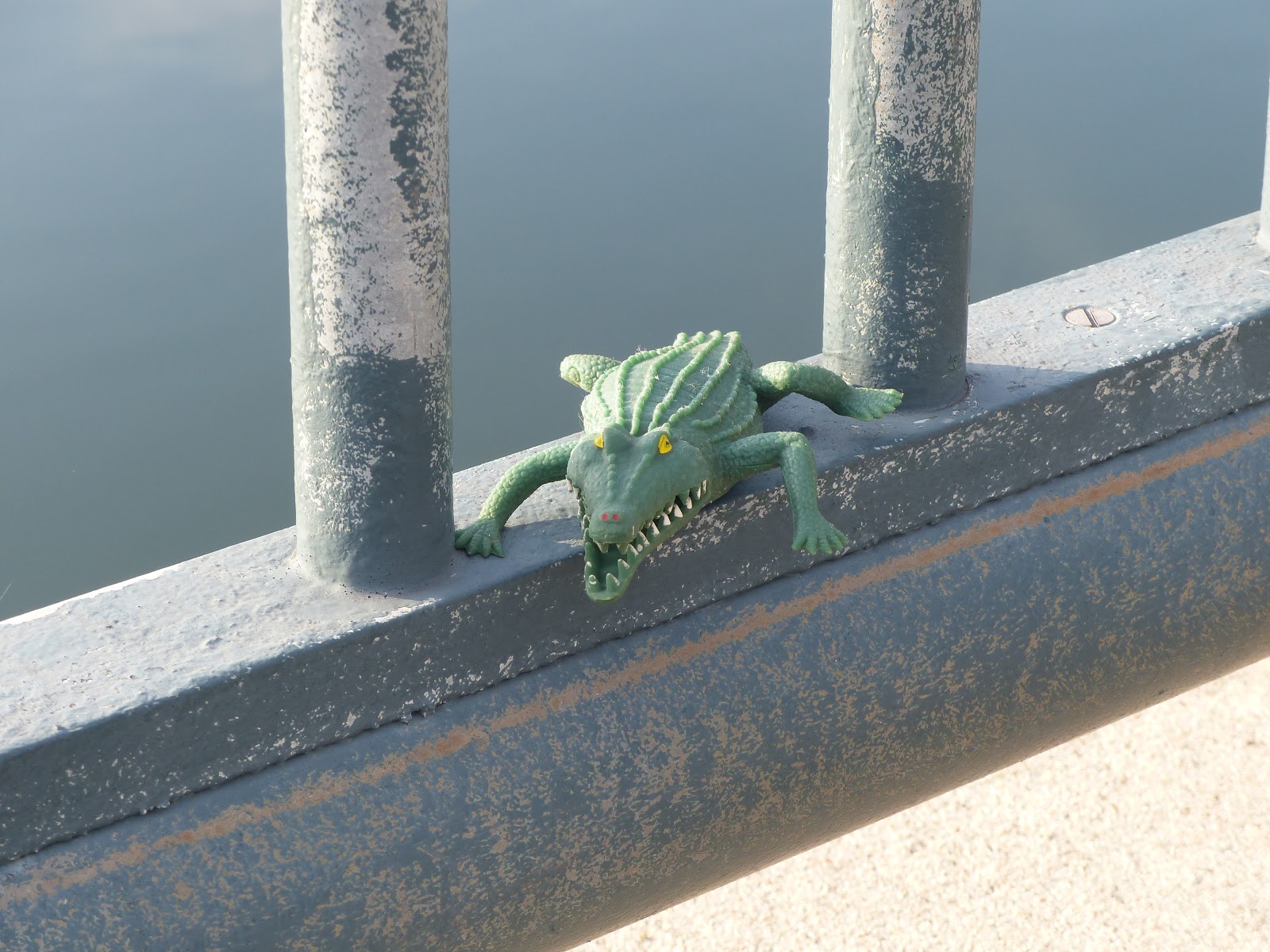
As for the last creature, I found it on its back, not far from the dove, and set it aright, for someone else to ponder.