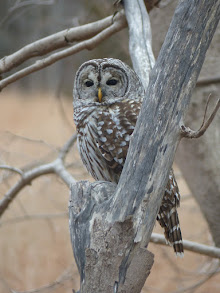
My mother she butchered me,
My father he ate me,
My sister, little Ann Marie,
She gathered up the bones of me
And tied them in a silken cloth
To lay under the juniper.
Tweet twee, what a pretty bird am I!
Showing posts with label Maurice Sendak. Show all posts
Tuesday, October 08, 2024
Lore Segal (1928-2024)
The writer Lore Segal has died; the New York Times has an obituary. Two of Segal's novels have been on and off my to-read list for years, though I confess that I've never quite gotten around to them; I'm putting Other People's Houses and Her First American back at the top of the queue. What I have read, and re-read often, are her brilliant translations from the Brothers Grimm collected in The Juniper Tree and Other Tales from Grimm with the delicious illustrations by Maurice Sendak. Segal was without peer in being able to capture both the lyrical beauty of the tales and their sinister horror, as in the refrain from the title tale, which I believe I first heard on the radio in the 1970s.
Monday, February 19, 2024
Prickly issues
The poet Donald Hall was born and raised in suburban Connecticut, but he spent many of his summers at his maternal grandparents' farm in New Hampshire in the 1930s and '40s, an experience he recollected in a memoir entitled String Too Short to Be Saved. Though he was capturing a disappearing way of life, and remembering it fondly, he largely avoided the lure of nostalgia. There are golden afternoons spent haying and tending chickens in the book, but there is also alcoholism, mental illness, and suicide among the neighbors. He would later own up to embellishing a bit; in a reprint he confessed that the abandoned railroad on Ragged Mountain that he described didn't actually exist. It was another passage in the book, though, that initially perplexed me. Hall describes a day on the farm in the company of his grandfather:
As any naturalist can tell you, there are no wild hedgehogs in New England or anywhere in the Americas, nor do they readily climb trees (pace Maurice Sendak), nor are they considered agricultural pests (though they were once popularly thought to suckle milk from cows). There are, of course, porcupines, but no one who had grown up in New England (and was later educated in part in the UK, where there are hedgehogs), would be likely to confuse the two. So what gives?
As it turns out, Hall was simply following vernacular tradition. Although "porcupine" (unlike "opossum" and "skunk") is a European word dating to the Middle Ages, few English colonists to New England would have ever seen an Old World porcupine, as the closest ones live in Italy, and faced with a spiny creature they simply borrowed the familiar name "hedgehog." The usage was common enough to have been written into law; as late as the early twentieth century the state of New Hampshire was paying bounties for killing "hedgehogs." The bounty was repealed in 1979, by which time the word had been corrected to "porcupines."
Another word for hedgehog is "urchin," from Latin ericius (see Spanish erizo, French hérisson). Today that word refers to a street waif, but its original meaning is preserved in the name for the spiny echinoderms known as "sea urchins."
Image: "Hans My Hedgehog," from The Juniper Tree.
We walked slowly uphill to the barn, which looked like a rocky ledge of Ragged in the gray light. When we were nearly to the milk shed, he suddenly pointed upward at the branches of the great maple next to the old outhouse. "Look!" he said. "There's a hedgehog!" I followed the angle of his finger and saw what resembled a bird's nest at a fork in the branches, indistinct in the late light. "Let's see how you are with a shotgun these days," he said.The animal is dispatched, not by Hall, who misses four times, but by his grandfather. In a later chapter, when the grandfather is dead, Hall returns to the farm, spots three more "hedgehogs" in the trees, and brings them down.
As any naturalist can tell you, there are no wild hedgehogs in New England or anywhere in the Americas, nor do they readily climb trees (pace Maurice Sendak), nor are they considered agricultural pests (though they were once popularly thought to suckle milk from cows). There are, of course, porcupines, but no one who had grown up in New England (and was later educated in part in the UK, where there are hedgehogs), would be likely to confuse the two. So what gives?
As it turns out, Hall was simply following vernacular tradition. Although "porcupine" (unlike "opossum" and "skunk") is a European word dating to the Middle Ages, few English colonists to New England would have ever seen an Old World porcupine, as the closest ones live in Italy, and faced with a spiny creature they simply borrowed the familiar name "hedgehog." The usage was common enough to have been written into law; as late as the early twentieth century the state of New Hampshire was paying bounties for killing "hedgehogs." The bounty was repealed in 1979, by which time the word had been corrected to "porcupines."
Another word for hedgehog is "urchin," from Latin ericius (see Spanish erizo, French hérisson). Today that word refers to a street waif, but its original meaning is preserved in the name for the spiny echinoderms known as "sea urchins."
Image: "Hans My Hedgehog," from The Juniper Tree.
Thursday, October 06, 2022
Macario
I enjoyed this seasonally appropriate 1960 Mexican film directed by Roberto Gavaldón, with cinematography by Gabriel Figueroa. Macario is based on a short story by B. Traven, which is in turn based on a folktale called (in one of its many versions) "Godfather Death." It tells of a poor woodcutter (Ignacio López Tarso) who can barely feed his family enough tortillas and beans to fill their stomachs. Since his one wish in life is to have an entire roast turkey for himself, his devoted wife (Pina Pellicer) finally steals one and cooks it for him. As he sits down to eat it he receives in succession three visitors, whom we realize are in turn the Devil, God (or Jesus), and Death. Each asks to share his meal, but on the basis of some quite logical reasoning he agrees to invite only the third, who, in return, gives Macario a magic liquid that will enable him to cure the dying. There is a catch, however; if Macario sees Death standing at the feet of the patient, he may perform his cure; if Death stands at the head of the bed, the patient is his and Macario must not intervene. Macario makes use of the potion and becomes, in time, a rich man, until the Inquisition gets wind of his activities.
One of the things I liked about the film is that it plays down the potentially garish visual aspect of the story. (That aspect is, in part, reserved for the opening credits, which feature a troupe of folkloric skeleton marionettes.) The Devil, for instance, is a bit of a snazzy dresser, but he doesn't have horns and a goatee, nor is Death a skeletal figure with a flail. Macario, in his unassuming way, recognizes them for who they are nevertheless, and he isn't excessively impressed with either, or with the Señor. López Tarso is particularly good at giving Death skeptical looks at the bedside of patients who are obvious goners but whom Death assures him can still be saved. Really, this one? (Shrug.)
Gavaldón made at least two other films based on Traven novels or stories, Rosa Blanca and Días de otoño. I haven't seen either one, although I've read the story the latter is based on and it could be interesting. Ignacio López Tarso, at this writing, is still alive at the age of 97, which suggests that he set aside a bit of that potion for himself. Sadly, Pina Pellicer, who starred in Días de otoño, died at age 30 of an overdose of sleeping pills.
I'm not sure about the current availability of Macario on DVD or from streaming services; I watched an older DVD release that has subtitle options in both English and Spanish. A version of the folktale can be found in the Lore Segal / Maurice Sendak edition of The Juniper Tree and Other Tales from Grimm, one of those perfect books that belong in every household.
One of the things I liked about the film is that it plays down the potentially garish visual aspect of the story. (That aspect is, in part, reserved for the opening credits, which feature a troupe of folkloric skeleton marionettes.) The Devil, for instance, is a bit of a snazzy dresser, but he doesn't have horns and a goatee, nor is Death a skeletal figure with a flail. Macario, in his unassuming way, recognizes them for who they are nevertheless, and he isn't excessively impressed with either, or with the Señor. López Tarso is particularly good at giving Death skeptical looks at the bedside of patients who are obvious goners but whom Death assures him can still be saved. Really, this one? (Shrug.)
Gavaldón made at least two other films based on Traven novels or stories, Rosa Blanca and Días de otoño. I haven't seen either one, although I've read the story the latter is based on and it could be interesting. Ignacio López Tarso, at this writing, is still alive at the age of 97, which suggests that he set aside a bit of that potion for himself. Sadly, Pina Pellicer, who starred in Días de otoño, died at age 30 of an overdose of sleeping pills.
I'm not sure about the current availability of Macario on DVD or from streaming services; I watched an older DVD release that has subtitle options in both English and Spanish. A version of the folktale can be found in the Lore Segal / Maurice Sendak edition of The Juniper Tree and Other Tales from Grimm, one of those perfect books that belong in every household.
Labels:
B. Traven,
Film,
Folklore,
Lore Segal,
Maurice Sendak,
Mexico
Friday, March 13, 2020
Notebook: State of Siege
Major disasters, natural or otherwise, have a way of forcing one not only out of one's routines but out of mental patterns as well. They can reveal a great deal about human character, or (to put it less judgmentally) about human behavior. Camus famously explored this in The Plague, which was the book I instinctively turned to when the first stirrings of the current epidemic (now officially a pandemic) were heard in China. I re-read about a third of the novel, then put it aside for something unrelated I wanted to read, but by the time I was free to get back to it its theme felt too close to home. So instead I went back to fundamentals, first re-reading The Juniper Tree, the superb volume of tales from the Brothers Grimm translated by Lore Segal (and Randall Jarrell), featuring some of Maurice Sendak's most evocative illustrations, and then to Robert Fitzgerald's translation of the Odyssey. Neither of these splendid works has much relevance to the present situation (which is, in part, the point), but if matters of life and death bring one back to essentials, then these are about as essential to me as any books I can think of.
In the meantime, I avoid public places, keep an eye on the food supply (holding up so far), and take walks in the woods, which are now (unlike the forest of folk tales) probably the safest place to be.
Labels:
Lore Segal,
Maurice Sendak,
Notes
Sunday, June 21, 2009
Wild Things on the town

An illustration by Maurice Sendak, specially commissioned in 1971 by the Brentanos bookstore chain (now long since defunct) for an invitation to its "Annual Costume Galla" (sic). The invitation was designed and printed, in an edition of 800 numbered copies, by George Laws & Dennis J. Grastorf at the Angelica Press, New York City.
The text reads as follows:
Brentanos invites you to attend its Annual Costume Galla dressed as a character from a novel you WISHED you had written ... and reveal your secret self! Toast of the town pianist Steve Ross entertains. Prizes for the most imaginative costumes.I didn't go.
Subscribe to:
Comments (Atom)