Jeopardy clue: "Inscribed on Woody Guthrie's guitar: 'This machine kills' these." Contestant's response: "What is 'trees'?"
(Correct question: "What is 'fascists'?" Kudos to Jeopardy for remembering, especially now.)

The administration of this country was carried out in an enlightened, hardly perceptible manner, with a cautious clipping of all sharp points, by the best bureaucracy in Europe, which could be accused of only one defect: it could not help regarding genius and enterprise of genius in private persons, unless privileged by high birth or State appointment, as ostentation, indeed presumption. But who would want unqualified persons putting their oar in, anyway? And besides, in Kakania it was only that a genius was always regarded as a lout, but never, as sometimes happened elsewhere, that a mere lout was regarded as a genius.The Man without Qualities (Wilkins-Kaiser translation). "Kakania" was Musil's coinage for the kaiserlich und königlich Austro-Hungarian Empire.

Everybody knows that the Earth is separated from other heavenly bodies by a variable number of light-years. What few know (in reality, only I) is that Margarita is separated from me by a considerable number of snail years.Translated by Gregory Rabassa. Lucas, the narrator, is a kind of alter ego of the author. The above piece is the final chapter of the book (which has been out of print for many years).
At first I thought it was a matter of tortoise years, but I've had to abandon that unit of measurement as too flattering. Little as a tortoise may travel, I would have ended up reaching Margarita, but, on the other hand, Osvaldo, my favorite snail, doesn't leave me the slightest hope. Who knows when he started the march that was imperceptibly taking him farther away from my left shoe, even though I had oriented him with extreme precision in the direction that would lead him to Margarita. Full of fresh lettuce, care, and lovingly attended, his first advance was promising, and I said to myself hopefully that before the patio pine passed beyond the height of the roof, Osvaldo's silver-plated horns would enter Margarita's field of vision to bring her my friendly message; in the meantime, from here I could be happy imagining her joy on seeing him arrive, the waving of her braids and arms.
All light years may be equal, but not so snail years, and Osvaldo has ceased to merit my trust. It isn't that he's stopped, since it's possible for me to verify by his silvery trail that he's continuing his march and that he's maintaining the right direction, although this presupposes his going up and down countless walls or passing completely through a noodle factory. But it's been more difficult for me to check that meritorious exactness, and twice I've been stopped by furious watchmen to whom I've had to tell the worst lies since the truth would have brought me a rain of whacks. The sad part is that Margarita, sitting in a pink velvet easy chair, is waiting for me on the other side of the city. If instead of Osvaldo I had made use of light years, we probably would already have had grandchildren; but when one loves long and softly, when one wants to come to the end of a drawn-out wait, it's logical that snail years should be chosen. It's so hard, after all, to decide on what the advantages and the disadvantages of these options are.

One only had to watch the confirmation hearings for Trump's cabinet to fully grasp the sort of men and women who are now in charge in all spheres of life in this country. Lacking any feeling of empathy for their fellow Americans and their problems, convinced in their minds of their superiority because of their immense wealth, eager to pillage this country even more, they are bound to do evil because that's the kind of people they are. In the meantime, the crimes and injustices that are bound to multiply in the months and years ahead is what we have to look forward to. Ubu Roi may not be a great play, but we don't deserve Shakespeare."Year One: Our President Ubu"

Being in a strange land and among strange men and things, meeting with customs and surrounded by circumstances widely different from all their previous experience, ignorant of the precise state of affairs here, and wanting education and flexibility by which they could adapt themselves to their new and unwonted position, they necessarily form many impracticable purposes, and endeavor to accomplish them by unfitting means. Of course disappointment frequently follows their plans. Their lives are filled with doubt, and harrowing anxiety troubles them, and they are involved in frequent mental, and probably physical, suffering.Report on Insanity and Idiocy in Massachusetts, by the Commission on Lunacy, Under Resolve of the Legislature of 1854.

The diary of Caroline Owen, wife of the zoologist Richard Owen, records an odd incident when she was visited by a lady who produced out of her reticule 'a thing which she had been told was an unborn kangaroo.' She (the lady visitor) had brought it to show Richard Owen, but 'she was hesitating about bringing such an "indelicate" subject to a gentleman.' Caroline set her fears at rest by assuring her that the kangaroo had not only been born but had lived for some time, and they then settled down to tea and chat, since Richard was not at home anyway, but it is surely strange that a woman who had no qualms about carrying a dead kangaroo around with her would then start blushing and trembling at the thought of showing it to a gentleman. It reminds us, if we need any reminder, that Victorian delicacy had very little to do with natural modesty and a great deal to do with cultivated prurience.Of Buckland's gustatorial experiments there is much to report, including:
While at Oxford, he feasted on panther, sent down from the Surrey Zoological Gardens. 'It had, however, been buried a couple of days,' he noted, 'but I got them to dig it up and send me some. It was not very good.'And here is Barber on science versus religion in the days before Darwin upset the apple cart:
When we talk about the 'clash' between religion and science in the Victorian era, we are talking about the 'clash' between an articulated lorry and a grain of sand. Science counted for absolutely nothing compared to religion. It stood, at best, in the relation of a handmaid to religion but, like a handmaid, it could be sacked if it ever showed signs of being uppity.The jacket flap of the book identifies Lynn Barber as "a British journalist educated at Oxford," and notes that "she is currently working on a new book focusing on another aspect of Victorian popular culture." (Unmentioned in the author bio is the fact that her journalism had included seven years at Penthouse.) As far as I can tell, she never published the "new book" alluded to, but she didn't disappear into obscurity either. She has had a long career as a writer and interviewer for various publications (she has been called "the rottweiler of Fleet Street"), and has published a memoir recounting her affair, while in her teens, with a dashingly charming older man who turned out to be not only involved in various criminal activities but married to boot. That account, An Education was made into a likeable 2009 film starring Carey Mulligan, which I saw several times before I realized that she and the author of The Heyday of Natural History were one and the same. As to her curious career path and Heyday's place in it, Barber has this to say:
There are whole subjects I used to know that I have since forgotten. I have a certificate that says I can do shorthand at 100 wpm – how did I acquire that? Did I bribe the examiner? I got top marks in A-level Latin – eheu fugaces, I can't translate a line of Horace now. In my brief, improbable career as a sex expert, I wrote a manual called How to Improve Your Man in Bed that was accepted at the time as an authoritative guide. How did I have the chutzpah to do it? I also spent five years researching and writing a book, The Heyday of Natural History, which involved reading all the popular natural history books of the Victorian era. Gone, all gone. I seem to have an auto-erase button in my brain that says that once I have 'done' a subject, I no longer need retain it.Luckily, talent is the one thing she has apparently never been short on.


I remember how at sixteen, I convinced my dad to give me the six thousand pesos that Hopscotch cost, explaining that the book was "several books, but two in particular,"* so that buying it was like buying two novels for three thousand pesos each, or even four books for fifteen hundred pesos each. I also remember the employee at the Ateneo bookshop who, when I was looking for Around the Day in Eighty Worlds, explained to me patiently, over and over, that the book was called Around the World in Eighty Days and that the author was Jules Verne, not Julio Cortázar."Bring Back Cortázar," from The Paris Review (online) October 17, 2018.
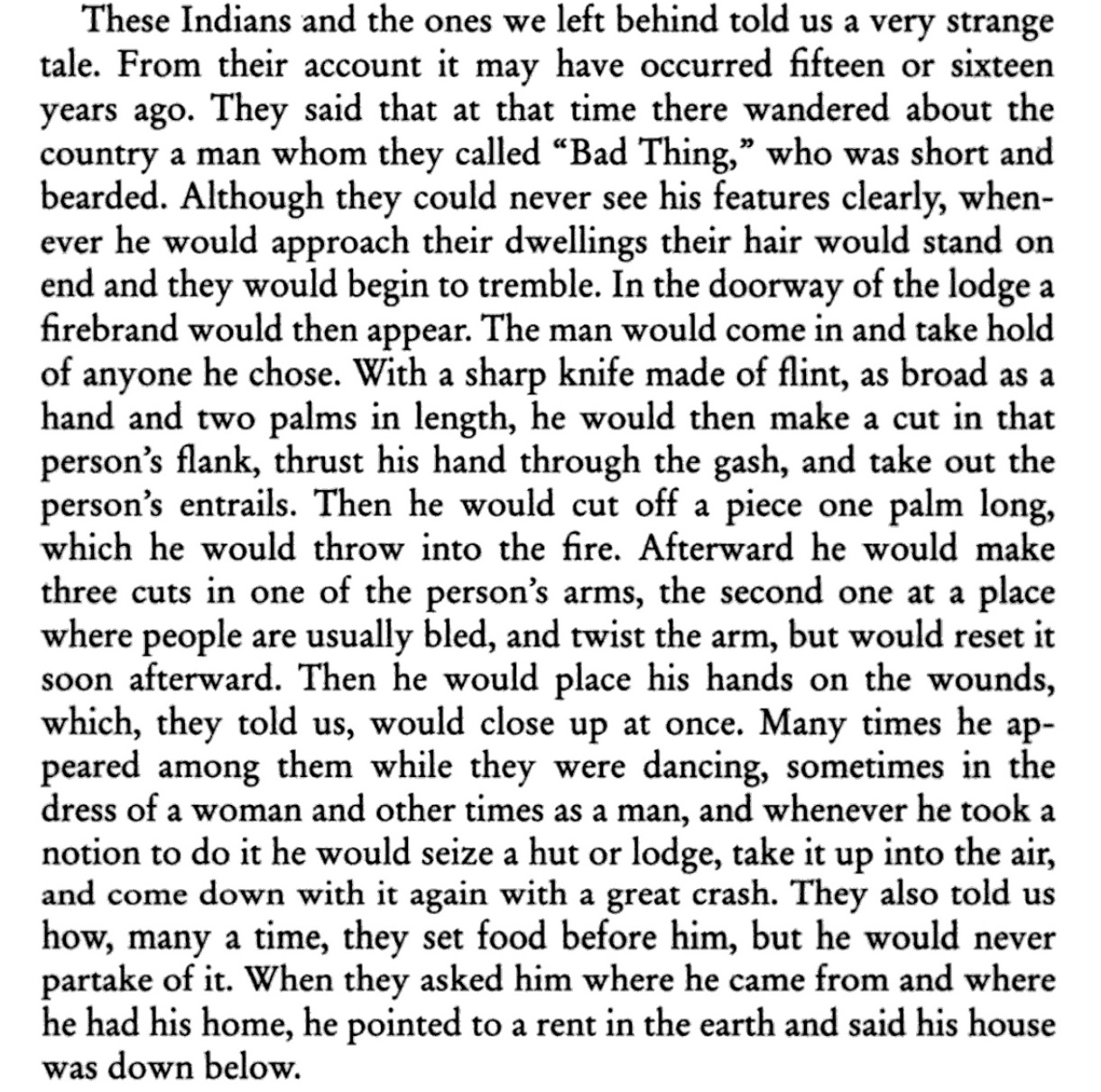

Getting yourself photographed was a pastime and an existential necessity. It reminded you that you existed outside your own head. It showed you your face as others would see it. It gave you an opportunity to compose yourself, although few had the skill to do so successfully, and often the photographer’s haste and hard sell would mitigate against it. Most people come off in arcade pictures as if they had suddenly been shoved onstage to face an audience of thousands."Pinakothek" (from a Greek and Latin word for a picture gallery) was also the title of a short-lived feature that Sante maintained on his website a number of years ago.
This lucky woman, Joan, with her job and her lover and her striking looks—more remarked upon now than ever before in her life (she is as thin as she was at fourteen and has a wing, a foxtail of silver white in her very short hair)—is aware of a new danger, a threat she could not have imagined when she was younger. She couldn't have imagined it even if somebody had described it to her. And it's hard to describe. The threat is of change, but it's not the sort of change one has been warned about. It's just this—that suddenly, without warning, Joan is apt to think: Rubble. Rubble. You can look down a street, and you can see the shadows, the light, the brick walls, the truck parked under a tree, the dog lying on the sidewalk, the dark summer awning, or the grayed snowdrift—you can see all these things in their temporary separateness, all connected underneath in such a troubling, satisfying, necessary, indescribable way. Or you can see rubble. Passing states, a useless variety of passing states. Rubble."Oh, What Avails," from Friend of My Youth
And am I born to die?The peculiarities begin with the title itself, which seems to have come not from Wesley but from a later arranger. Why "Idumea"? According to reference works, Idumea (or Edom) was an ancient kingdom south of the Dead Sea. It is mentioned in the Bible, though not, as far as I can tell (and I'd welcome an exegesis) in any context that would explain the lyrics above. The noted folklorist A. L. Lloyd, in his liner notes to the version of the song performed by the English folk group the Watersons, thought it unnecessary (or was it impossible?) to explain the allusion.
To lay this body down
And as my trembling spirit fly
Into a world unknown?
A land of deepest shade
Unpierced by human thought
The dreary region of the dead
Where all things are forgot
Soon as from earth I go
What will become of me?
Eternal happiness or woe
Must then my fortune be
Waked by the trumpet's sound
I from my grave shall rise
And see the judge with glory crowned
And see the flaming skies
The dreary region of the deadsounds more like the pagan, antinomian conception of the underworld (peopled by Homer's "exhausted dead") than it does the Christian vision of a place where sinners are sent to be paid back for their misdeeds. Is this because the speaker's voice is supposed to be an ancient, Idumean one? Is it because Wesley, though an evangelist and missionary, was also a classically educated scholar for whom the tropes of Greek and Roman literature would have been part of his intellectual training? Or was Wesley, good Methodist, really a secret Modernist avant la lettre (Pound's Cantos, after all, also begins with "And …")? All the elements are there: cryptic reference to antiquity, fragmented monologue …
Where all things are forgot