Wednesday, March 31, 2021

Blues


The great blue herons at the local pond I frequent tend to be skittish, flying off as soon as they see me coming down the path, but for whatever reason this one felt like showing off. I walked up to the shore as quietly as I could and finally settled down on a rock just across from the dead branch where it was perching. It gave me a casual glance or two but then settled back into its routine of alternatingly preening and peering into the water. It seemed to be trying out poses and hairstyles, and I have to admit that its full feathered regalia was impressive.
There was a second heron on the other side of the pond that was a bit more standoffish. It also seemed to be a bit smaller and more submissive. Eventually it settled on a branch of its own, but the first heron quickly joined it and chased it off. Maybe it was jealous of those flashy white chest feathers.

Monday, March 29, 2021

Words & Music


An interesting sign of something, though I'm not sure what: all of a sudden a large number of the musicians I listen to regularly or occasionally have either come out with a book or have one in the pipe. The one I've been anticipating for some time is Richard Thompson's memoir, which is being published shortly, but just in the last week I've learned that Rickie Lee Jones is also releasing a memoir in April, and that Robin Hitchcock is publishing a hardcover volume of lyrics in July.

Just looking back four years and including only performers represented in my modest CD collection, I came up with the following short list:
  • Loudon Wainwright III, Liner Notes: On Parents & Children, Exes & Excess, Death & Decay, & a Few of My Other Favorite Things (2017)
  • Amy Rigby, Girl to City: A Memoir (2019) (reviewed briefly in this space here)
  • Peter Case, Somebody Told the Truth: Selected Lyrics and Stories (2020)
  • Peter Blegvad, Imagine, Observe, Remember (2020)
  • Rickie Lee Jones, Last Chance Texaco: Chronicles of an American Troubadour (April 6, 2021)
  • Richard Thompson, Beeswing: Losing My Way & Finding My Voice, 1967-1975 (April 13, 2021)
  • Mary Gauthier, Saved by a Song: The Art and Healing Power of Songwriting (July 2021)
  • Robyn Hitchcock, Somewhere Apart: Selected Lyrics 1977-1997 (July 2021)
  • Roy Gullane (of the Tannahill Weavers), untitled memoir (tentatively 2021)
Some of the above are self-published (or appear to be), but Rigby's memoir was admirably written and professionally produced, and the Hitchcock, which will include some of his drawings as well, looks nicely packaged. Others are being issued and supported by major US publishers. The Blegvad, available from Uniformbooks in the UK, is a bit of a ringer here, as it has no particular connection to his music.

Most or all of these performers, some of whom have worked with each other in the past, have had to drastically reduce their touring schedules due to the pandemic, which may have given them the incentive and leisure time to shift their attention to the written word, but several of the volumes listed appear to have been at least contemplated before last year. A more likely explanation is that all of these artists have reached a point in their careers that a bit of retrospective seems to be in order, and no doubt any extra bit of revenue is welcome as well.

Sunday, March 14, 2021

Notebook: Stephens at Palenque

From 1839 to 1841 the American traveler John Lloyd Stephens and the British artist Frederick Catherwood traveled throughout Mexico and Central America exploring and meticulously describing Mayan antiquities, which were then barely known to the English-speaking world (and even to many living in the region). Here Stephens relates his thoughts as they leave the site in Mexico known by the Spanish name of Palenque.
There was no necessity for assigning to the ruined city an immense extent, or an antiquity coeval with that of the Egyptians or of any other ancient and known people. What we had before our eyes was grand, curious, and remarkable enough. Here were the remains of a cultivated, polished, and peculiar people, who had passed through all the stages incident to the rise and fall of nations; reached their golden age, and perished, entirely unknown. The links which connected them with the human family were severed and lost, and these were the only memorials of their footsteps upon earth. We lived in the ruined palace of their kings; we went up to their desolate temples and fallen altars; and wherever we moved we saw the evidences of their taste, their skill in arts, their wealth and power. In the midst of desolation and ruin we looked back to the past, cleared away the gloomy forest, and fancied every building perfect, with its terraces and pyramids, its sculptured and painted ornaments, grand, lofty, and imposing, and overlooking an immense inhabited plain; we called back into life the strange people who gazed at us in sadness from the walls; pictured them, in fanciful costumes and adorned with plumes of feathers, ascending the terraces of the palace and the steps leading to the temples; and often we imagined a scene of unique and gorgeous beauty and magnificence, realizing the creations of Oriental poets, the very spot which fancy would have selected for the "Happy Valley" of Rasselas. In the romance of the world's history nothing ever impressed me more forcibly than the spectacle of this once great and lovely city, overturned, desolate, and lost; discovered by accident overgrown with trees for miles around, and without even a name to distinguish it. Apart from everything else, it was a mourning witness to the world's mutations.
Unlike many early observers who attributed the ruins to a civilization originating in the Old World, Stephens ultimately concluded, correctly, that the builders were the ancestors of the same Maya people who still inhabited the region. I visited several of the sites, including Palenque, in 1980, by which time conditions for travelers, distinctly rough in 1840, were vastly improved. The fine Dover editions of the four volumes of Stephens's travels are still in print.

Saturday, March 13, 2021

La Gileppe

These images by C. Renard are from a novel by the Belgian entomologist Ernest Candèze, which relates the adventures of a group of insects who lose their home when a dam is built. According to the historian David Blackbourn, who describes the book in The Conquest of Nature, "with its cast of anthropomorphized insect characters, the book gently satirized human pretensions from the perspective of the victims."
The entire contents of La Gileppe can be perused online at https://gallica.bnf.fr/ark:/12148/bpt6k6540180w/f1.item.texteImage.

Tuesday, March 02, 2021

Airwaves (The Midnight Broadcast)

If you've ever twiddled the radio dial late at night when the ionosphere was in one of its capricious moods and the receiver was pulling in haunted signals from who knows where, signals that faded out as mysteriously as they appeared, you'll get this record right away. Peter Case is well-known as a songwriter, but on The Midnight Broadcast the only Case composition ("Just Hanging On") is one he has recorded before (though with a very different arrangement). There are two Dylan tunes (or strictly speaking one Dylan tune and one Danko-Dylan tune) and the rest of the songs mostly belong to the churning alchemical matrix of "folk music," attributed or otherwise, including old blues songs, a raucous cowboy number, a couple of nautical tunes, a lament by a New Zealand gold-miner, and a version of "Stewball," the ode to a champion racehorse that has been morphing from one form to another since the 1780s. Alternating with and sometimes overlaying the music are miscellaneous synthesizer drones, whistles, and loops, interspersed with scraps of DJ patter (voiced by Ross Johnson) that might be described as Joycean cornball. The whole aural collage was put together in the Old Whaling Church on Martha's Vineyard with the participation of longtime Case collaborators Ron Franklin (who produced) and Bert Deivert, among others. The apt cover photo above is by David Emsinger.

Case's usual instrument when he performs is acoustic guitar, but on The Midnight Broadcast he often sits at the piano, even picking out an instrumental version of the pop-jazz standard "Dinah." But there's gorgeous guitar work on St. Louis Jimmy Oden's "Going Down Slow," Memphis Minnie's "Bumble Bee," and elsewhere. Some of these songs have been in Case's repertoire for decades, but here they sound fresh. There's a richness and depth to this record that speak to long years of experience as a performer but also to a willingness to mix it up, to discover unexpected musical textures, and to make the old new.

The Midnight Broadcast is available on CD from Bandaloop Records. An LP is forthcoming.

Saturday, February 27, 2021

"Mid-August at Sourdough Mountain Lookout" (Gary Snyder)

Down valley a smoke haze
Three days heat, after five days rain
Pitch glows on the fir-cones
Across rocks and meadows
Swarms of new flies.

I cannot remember things I once read
A few friends, but they are in cities.
Drinking cold snow-water from a tin cup
Looking down for miles
Through high still air.


A poem read this morning, coincidentally, while an experimental batch of sourdough bread rises down the hall. As to the name of the mountain, Jim Harris gives one explanation:
In 1872 Jack Rowley and his partners, from the Lower Skagit [...] set out to prospect the Skagit to its headwaters. Panning each river bar, they found scattered flecks of gold, enough to keep them going. At the head of canoe navigation, now Newhalem, they were still seeking that elusive mother lode. Native guides were hired to lead them high above and around the river's narrow canyon. It was tough going and very hot. Sourdough starter began to work in a prospector's pack, messing up his gear. The place was christened Sourdough Mountain.
Harris's account, which is from a volume entitled Impressions of the North Cascades, is available online here.

Tuesday, February 23, 2021

Lawrence Ferlinghetti (1919-2021)

City Lights Books has announced the death of its co-founder, the writer, bookseller, and publisher Lawrence Ferlinghetti, after an astonishingly long and productive career. Ferlinghetti was 101 and had just published a book a year or so ago, making him (along with Herman Wouk) a rare centenarian author of consequence.

I've never been to San Francisco and it's been years since I read any of Ferlinghetti's poetry, but the bookstore and publishing company remain active, having survived a financial crisis a year ago with the help of donations. Long may it continue along its cantankerous way.

I've owned a handful of City Lights books over the years, but the only two I seem to have now are shown here. Both are fairly minor works by writers I admire, but the press did a nice job on them and I'm glad that they exist.

Sunday, February 21, 2021

The Character of the Cassowary


I wish I were a cassowary
Out on the plains of Timbuctoo.
I'd kill and eat a missionary--
Head, arms, legs, and hymn-book too.
The above lines have been kicking around since at least the 1850s, and nobody seems to know who wrote them. They're geographically inaccurate — cassowaries live in Australia, New Guinea, and thereabouts, not Africa — but they do contain a grain of truth, for this flightless bird is, at least according to most accounts, a singularly surly and aggressive customer, and though it eats neither missionaries nor heathens it does have lethal claws that have led to well-documented, if infrequent, fatalities in human beings who were foolhardy enough not to give the cassowary its space.

Julio Cortázar, who expressed memorable interspecies kinship with the axolotl, had no such empathy with the fearsome cassowary. He describes it in Cronopios & Famas as "unlikable in the extreme and repulsive." In Paul Blackburn's translation, these are its curious properties:
He lives in Australia, the cassowary; he is cowardly and fearsome at the same time; the guards enter his cage equipped with high leather boots and a flame thrower. When the cassowary stops his terrified running around the pan of bran they’ve put out for him and comes leaping at the keeper with great camel strides, there is no other recourse than to use the flame thrower. Then you see this: the river of fire envelops him and the cassowary, all his plumage ablaze, advances his last few steps bursting forth in an abominable screech. But his horn does not burn: the dry, scaly material which is his pride and his disdain goes into a cold melding, it catches fire with a prodigious blue, moving to a scarlet which resembles an excoriated fist, and finally congeals into the most transparent green, into an emerald, stone of shadow and of hope. The cassowary defoliates, a swift cloud of ash, and the keeper runs over greedily to possess the recently made gem. The zoo director always avails himself of this moment to institute proceedings against the keeper for the mistreatment of animals, and to dismiss him.
As entertaining as that fantasy is, reality is hardly less so, and the cassowary's true nature seems to be open to debate. During the travels he described in Gatherings of a Naturalist in Australasia, the naturalist and explorer George Bennett kept several specimens of what he called the mooruk in captivity, and even successfully shipped a pair to England. He found them generally congenial as housemates, although they were perhaps a bit too tame. They certainly weren't fussy about what they ate:
It is well to warn persons, inclined to keep these birds as pets, of their insatiable propensities. When about the house, they displayed extraordinary delight in a variety of diet ; for, as I have previously related, one day they satisfied their appetites with bones, whetstones, corks, nails, and raw potatoes, most of which passed perfectly undigested ; one dived into thick starch and devoured a muslin cuff, whilst the other evinced a great partiality for nails and pebbles; then they stole the Jabiru’s meat from the water. If eggs and butter were left upon the kitchen-table, they were soon devoured by these marauders ; and when the servants were at their dinner in the kitchen, they had to be very watchful ; for the long necks of the birds appeared between their arms, devouring everything off the plates ; or if the dinner-table was left for a moment, they would mount upon it and clear all before them. At other times they stood at the table, waiting for food to be given to them, although they did not hesitate to remove anything that was within their reach. I have often seen them stand at the window of our dining- room, with keen eye, watching for any morsel of food that might be thrown to them. The day previous to the departure of the pair for England, in February 1859, the male bird walked into the dining-room, and remained by my side during the dessert. I regaled him with pine-apple and other fruits, and he behaved very decorously and with great forbearance.
All in all, the presence of the birds seemed to be just one more challenge among many for the domestic staff:
One or both of them would walk into the kitchen ; while one was dodging under the tables and chairs, the other would leap upon the table, keeping the cook in a state of excitement; or they would be heard chirping in the hall, or walk into the library in search of food or information [sic], or walk up stairs, and then be quickly seen descending again, making their peculiar chirping, whistling noise ; not a door could be left open, but in they walked, familiar with all.
Perhaps the mooruk has a gentler disposition than its larger cousins. The smallest cassowary species, it is now often known as Bennett's cassowary in honor of its scientific discoverer.

Sunday, February 14, 2021

Weeks of Inward Winter (Charlotte Brontë)


"Those who live in retirement, whose lives have fallen amid the seclusion of schools or of other walled-in and guarded dwellings, are liable to be suddenly and for a long while dropped out of the memory of their friends, the denizens of a freer world. Unaccountably, perhaps, and close upon some space of unusually frequent intercourse—some congeries of rather exciting little circumstances, whose natural sequel would rather seem to be the quickening than the suspension of communication—there falls a stilly pause, a wordless silence, a long blank of oblivion. Unbroken always is this blank; alike entire and unexplained. The letter, the message once frequent, are cut off; the visit, formerly periodical, ceases to occur; the book, paper, or other token that indicated remembrance, comes no more.

"Always there are excellent reasons for these lapses, if the hermit but knew them. Though he is stagnant in his cell, his connections without are whirling in the very vortex of life. That void interval which passes for him so slowly that the very clocks seem at a stand, and the wingless hours plod by in the likeness of tired tramps prone to rest at milestones—that same interval, perhaps, teems with events, and pants with hurry for his friends.

"The hermit—if he be a sensible hermit—will swallow his own thoughts, and lock up his own emotions during these weeks of inward winter. He will know that Destiny designed him to imitate, on occasion, the dormouse, and he will be conformable: make a tidy ball of himself, creep into a hole of life's wall, and submit decently to the drift which blows in and soon blocks him up, preserving him in ice for the season."

Villette

Friday, February 12, 2021

The Memory of Things (Charlotte Brontë)


There's an intriguing recognition scene about 200 pages into Charlotte Brontë's final novel, Villette. The narrator, Lucy Snowe, is a young Englishwoman with sad memories and no strong family ties who crosses the Channel and finds employment in a school for girls, first as a servant and eventually as a teacher of English. There she becomes acquainted with a fellow expatriate, a young physician she knows, initially, as Dr. John, who is regularly called on to attend to the pupils in the school. After several months at the school, Snowe undergoes an emotional crisis. Though Protestant, she visits a Catholic church and gets a sympathetic if puzzled reception in the confessional; after leaving, she collapses in the street.

She comes to in a strange room, but the objects that surround her aren't entirely unfamiliar.
It was obvious, not only from the furniture, but from the position of windows, doors, and fire-place, that this was an unknown room in an unknown house.

Hardly less plain was it that my brain was not yet settled; for, as I gazed at the blue arm-chair, it appeared to grow familiar; so did a certain scroll-couch, and not less so the round center-table, with a blue-covering, bordered with autumn-tinted foliage; and, above all, two little footstools with worked covers, and a small ebony-framed chair, of which the seat and back were also worked with groups of brilliant flowers on a dark ground.

Struck with these things, I explored further. Strange to say, old acquaintance were all about me, and "auld lang syne" smiled out of every nook. There were two oval miniatures over the mantel-piece, of which I knew by heart the pearls about the high and powdered "heads"; the velvets circling the white throats; the swell of the full muslin kerchiefs: the pattern of the lace sleeve-ruffles. Upon the mantel-shelf there were two china vases, some relics of a diminutive tea-service, as smooth as enamel and as thin as egg-shell, and a white center-ornament, a classic group in alabaster, preserved under glass. Of all these things I could have told the peculiarities, numbered the flaws or cracks, like any clairvoyante. Above all, there was a pair of hand-screens, with elaborate pencil-drawings finished like line engravings; these, my very eyes ached at beholding again, recalling hours when they had followed, stroke by stroke and touch by touch, a tedious, feeble, finical, school-girl pencil held in these fingers, now so skeleton-like.

Where was I? Not only in what spot of the world, but in what year of our Lord? For all these objects were of past days, and of a distant country. Ten years ago I bade them good-by; since my fourteenth year they and I had never met. I gasped audibly, "Where am I?"
Snowe has good reason to wonder (and I've quoted only a small portion of an extended passage of discovery). She has been rescued by Dr. John, who (we learn now) is identical with the John Graham Bretton who is the son of the godmother with whom Lucy spent long periods during her adolescence, and she is now recuperating in his home. Neither Bretton nor his mother, who is also in the house, has recognized Lucy yet. The familiar articles Lucy sees around her are well-remembered objects from her childhood, brought along by the mother when she left England.

At this point Brontë, through Snowe, admits that she has been deceiving us. Snowe has, in fact, recognized Bretton chapters earlier, but has withheld that information both from him and from the reader.

That Lucy Snowe might have lost touch with the Brettons when she became an adult is not implausible. Like many a Brontë character, she lacks an intact nuclear family and seems to have been set adrift into life. That John Bretton wouldn't recognize his former housemate is, perhaps, harder to swallow. But it's a stroke of genius that Charlotte Brontë has understood how memories of childhood can be eerily embodied in knickknacks and furnishings that in themselves are entirely banal, and also to understand the disorientation that can occur in someone who re-encounters those objects in a strange environment to which they don't seem to belong.

Friday, January 22, 2021

One of the most desperate characters in the City

Over the years I've devoted several posts to the colorful early history of Manhattan's Water Street Mission, an institution that was founded in 1872 by reformed convict Jerry McAuley (and which still exists, though under a different name). Above is a little handout card from the mission that can be fairly precisely dated to 1882-84, after McAuley had moved on to start a second mission further uptown.

According to Samuel Hadley's Down in Water Street, McAuley's immediate successor or co-successor was the John O'Neil whose name appears on the card, but O'Neil was only in charge briefly before giving up the helm to one J. F. Shorey, who was already in place as superintendent by November 1884. Hadley himself took charge in 1886. Below is the floral design on the other side of the card.
There doesn't seem to be much other information available on the O'Neils. The only significant source I've found is the New York Times obituary from 1879 (below) for a Mrs. John O'Neil "who identified herself for years with Jerry McAuley's Water-Street Mission." Here we learn that her husband John, who apparently survived her, had been a career criminal and "one of the most desperate characters in the City" before his eventual reformation. He might not have been cut out for the task of superintending the mission, but he seems to have settled down to a productive life.
Around the same time there was another John O'Neil in New York City who was notorious for criminal activities, specifically burglary, but whose very recognizable modus operandi was a clever con involving pawn shop tickets. One of his arrests came just a few weeks after the death of the Water Street Mrs. O'Neil, but there's no reason to suspect that the two men were one and the same. The website Professional Criminals of America — REVISED, based on an 1886 volume devoted to the topic, has a photo and details of the activities of the unreformed O'Neil.

Previous Water Street Mission posts:

The Madonna of Cherry Hill
Death of a Salesman
A Manhattan Mission
Cassie Burns
The Water Street Mission, Revisited
Tracts (2): Jerry McAuley's Story

Saturday, January 16, 2021

Notes for a Commonplace Book (29)


Thomas De Quincey:
Of this at least, I feel assured, that there is no such thing as forgetting possible to the mind; a thousand accidents may, and will interpose a veil between our present consciousness and the secret inscriptions on the mind; accidents of the same sort will also rend away this veil; but alike, whether veiled or unveiled, the inscription remains for ever; just as the stars seem to withdraw before the common light of day, whereas, in fact, we all know that it is the light which is drawn over them as a veil -- and that they are waiting to be revealed, when the obscuring daylight shall have withdrawn.

Confessions of an English Opium-Eater
I suspect that Borges, who knew De Quincey's work well and regarded it highly, likely had this passage in the back of his mind when he wrote his famous short story about a man who suffers a head injury and becomes literally unable to forget anything.

That no memory is ever entirely erased is not, perhaps, an entirely untestable proposition. One could easily imagine experiments that would demonstrate the existence of "inscriptions" of which the mind has no conscious memory. But in the end it probably should be regarded as a supposition that is both certainly true — in some sense — and at the same time utterly unfathomable to rational inquiry. And it makes me think of gravity, which, if the little I understand of it is correct, never loses a faint pull on an object no matter how distant it travels.

Wednesday, January 06, 2021

Nobody Should Be Surprised


If anyone in this country is still harboring illusions about the man in the White House and his core of thugs, it's about time they asked themselves why — or how. Defeated at the polls, trounced in the courts (often by judges he put in their posts), repudiated by much of his own party, defied now by the (Republican) Senate majority leader and his own hand-picked vice-president, the sociopath has no avenues left but an appeal to violence, and violence, directly provoked by his own words, is exactly what we have. Is there really anyone left who can look at the scene in Washington today and not realize that the whole Trump cult has been nothing but a lie? It didn't "get a little out of hand"; it was rotten to the core from the very start, and every opportunist who thought it was possible to make common cause with MAGA cap-wearing, gun-waving fascist lunatics and somehow keep their hands clean has a lot to answer for today. How could anyone think that it was possible to make common cause with an unscrupulous monster who was willing to put his own ego ahead of the very principles of democratic government and the rule of law, and who was willing to unleash armed goons to achieve his ends? Does American democracy no longer matter? Was it really all worth selling out for a bit of partisan advantage, the chance to make an extra buck and bruise a few liberals?

Make no mistake; Trump is doomed. It's a lot easier to provoke a riot than it is to run a country when you've lost your last shred of legitimacy. The country's battered institutions will re-group, preserve what's left of their integrity, and move on to other crises. But the damage is done, literally and figuratively. Elections, as they like to say, have consequences; no one has any right to be surprised at the consequences of the presidential election of 2016. Learn the lesson. Next time it may be worse.

Saturday, January 02, 2021

Blackburn & Cortázar: The Correspondence

Today, entirely by accident, I learned of the existence of this bundle of eight chapbooks published in 2017 by the Center for Humanities at CUNY as part of a project called Lost & Found: The CUNY Poetics Document Initiative. My interest in this particular number (Series VII) centers on two of the chapbooks, which bear the collective title of “Querido Pablito"/"Julissimo Querido," Selected Correspondence, 1958-1971 (Parts I & II). These volumes contain translations of the letters between Julio Cortázar and his first US translator (and literary agent), Paul Blackburn. I'm familiar with portions of the correspondence from the five-volume Spanish-language edition of Cortázar's Cartas, but I despaired of ever seeing them published here. (Some time ago I translated and posted brief excerpts here and here.)

The CUNY chapbooks are a little tricky to find at the moment, in part because CUNY's offices have been shuttered by the pandemic. If it helps, the ISBN for this series is 9780997679625.

World Without Borders has an excerpt from the CUNY volumes as well as an interview with the editors, Ammiel Alcalay, Jacqui Cornetta, Alison Macomber, and Alexander Soria.

In addition to the two chapbooks described above, the next installment in the CUNY series (Series VIII) contains a chapbook dedicated to a translation of a portion of Cortázar's posthumously-published study of Keats, Imagen de John Keats.

More information to come.

Sunday, December 27, 2020

Necrology


Three masters, three obits. Just an average day in 2020. Rest in peace.
Barry Lopez

Phil Niekro

Tony Rice

Thursday, December 24, 2020

A Parting


I came to this book by way of Coleridge and Wordsworth, both of whom are profiled, usefully if somewhat eccentrically, in its pages, but stayed for its other pleasures. One of the most memorable pieces here is "Recollections of Grasmere," which relates an incident from late 1807 when a couple named George and Sarah Green became disoriented on their way homeward during a snowstorm and perished, orphaning six children, the eldest of whom, a girl of nine, eventually went for help when the parents failed to return. William Wordsworth made a poem out of it, and his sister Dorothy wrote her own prose account (harder to find but said to be superior even to the one here). De Quincey skillfully sketches the background, describes the rugged upland landscape where the Greens lived, and narrates the difficult search that ended in the discovery of their bodies. He ends with an intriguing proposal for the construction of a system of "storm-crosses," equipped with bells, to prevent similar tragedies.

Among the other local characters described here is a brilliant self-taught philologist named Elizabeth Smith, who died in obscurity at the age of twenty-nine, not before mastering French, Italian, Spanish, Latin, German, Greek, and Hebrew and aquiring "no inconsiderable knowledge of the Syriac, the Arabic, and the Persic." Her headstone, which De Quincey calls "the scantiest record that, for a person so eminently accomplished, I have ever met with," declared simply that "she possessed great talents, exalted virtues, and humble piety."

The most affecting piece, however, is one devoted to De Quincey's friend Charles Lloyd, a promising but troubled young writer and family man whose "mysterious malady" — some kind of mental or nervous disorder — led to long periods of inhuman confinement in an asylum. (De Quincey improbably links Lloyd's illness to his Quaker upbringing.) At one point, Lloyd escaped and fled to De Quincey, who offered to shelter him from the pursuers who were expected to come. Lloyd declined the offer and set out again, with De Quincey accompanying him part of the way.
We set off on foot: the distance to Ambleside is about three and a half miles; and one-third of this distance brought us to an open plain on the margin of Rydalmere, where the road lies entirely open to the water. This lake is unusually shallow, by comparison with all its neighbours; but, at the point I speak of, it takes (especially when seen under any mode of imperfect light) the appearance of being gloomily deep: two islands of exquisite beauty, but strongly discriminated in character, and a sort of recess or bay in the opposite shore, across which the shadows of the hilly margin stretch with great breadth and solemnity of effect to the very centre of the lake—together with the very solitary character of the entire valley, on which (excluding the little hamlet in its very gorge or entrance) there is not more than one single house—combine to make the scene as impressive by night as any in the Lake country. At this point it was that my poor friend paused to converse, and, as it seemed, to take his leave, with an air of peculiar sadness, as if he had foreseen (what in fact proved to be the truth) that we now saw each other for the final time. The spot seemed favourable to confidential talk; and here, therefore, he proceeded to make his heart-rending communication: here he told me rapidly the tale of his sufferings, and, what oppressed his mind far more than those at this present moment, of the cruel indignities to which he had been under the necessity of submitting...

In vain I pressed him to return with me to Grasmere. He was now, for a few hours to come, to be befriended by the darkness; and he resolved to improve the opportunity for some purpose of his own, which, as he showed no disposition to communicate any part of his future plans, I did not directly inquire into. In fact, part of his purpose in stopping where he did had been to let me know that he did not wish for company any further. We parted; and I saw him no more. He was soon recaptured; then transferred to some more eligible asylum; then liberated from all restraint; after which, with his family, he went to France; where again it became necessary to deprive him of liberty.
The essay closes in bravura fashion with De Quincey listening to the uncanny murmuring of the River Brathay, where he and Lloyd had walked together in better times:
Often and often, in years after all was gone, I have passed old Brathay, or have gone over purposely after dark, about the time when, for many a year, I used to go over to spend the evening; and, seating myself on a stone, by the side of the mountain river Brathay, have staid for hours listening to the same sound to which so often Charles Lloyd and I used to hearken together with profound emotion and awe—the sound of pealing anthems, as if streaming from the open portals of some illimitable cathedral; for such a sound does actually arise, in many states of the weather, from the peculiar action of the river Brathay upon its rocky bed; and many times I have heard it, of a quiet night, when no stranger could have been persuaded to believe it other than the sound of choral chanting—distant, solemn, saintly. Its meaning and expression were, in those earlier years, uncertain and general; not more pointed or determined in the direction which it impressed upon one's feelings than the light of setting suns: and sweeping, in fact, the whole harp of pensive sensibilities, rather than striking the chord of any one specific sentiment. But since the ruin or dispersion of that household, after the smoke had ceased to ascend from their hearth, or the garden walks to re-echo their voices, oftentimes, when lying by the river side, I have listened to the same aerial saintly sound, whilst looking back to that night, long hidden in the frost of receding years, when Charles and Sophia Lloyd, now lying in foreign graves, first dawned upon me, coming suddenly out of rain and darkness; then—young, rich, happy, full of hope, belted with young children (of whom also most are long dead), and standing apparently on the verge of a labyrinth of golden hours. Musing on that night in November, 1807, and then upon the wreck that had been wrought by a space of fifteen years, I would say to myself sometimes, and seem to hear it in the songs of this watery cathedral—Put not your trust in any fabric of happiness that has its root in man or the children of men. Sometimes even I was tempted to discover in the same music a sound such as this—Love nothing, love nobody, for thereby comes a killing curse in the rear. But sometimes also, very early on a summer morning, when the dawn was barely beginning to break, all things locked in sleep, and only some uneasy murmur or cock-crow, at a faint distance, giving a hint of resurrection for earth and her generations, I have heard in that same chanting of the little mountain river a more solemn if a less agitated admonition—a requiem over departed happiness, and a protestation against the thought that so many excellent creatures, but a little lower than the angels, whom I have seen only to love in this life—so many of the good, the brave, the beautiful, the wise—can have appeared for no higher purpose or prospect than simply to point a moral, to cause a little joy and many tears, a few perishing moons of happiness and years of vain regret!
NB The Penguin edition of Recollections of the Lakes and Lake Poets shown above, which dates from 1970, is apparently now out of print. There are other editions available, but one does have to wonder, what is the mission of the Penguin Classics if a book like this no longer belongs on their list?

Sunday, December 20, 2020

The Waters of the Deep


William Wordsworth:
... once in the stillness of a summer's noon,
While I was seated in a rocky cave
By the sea-side, perusing, so it chanced,
The famous history of the errant knight
Recorded by Cervantes, these same thoughts
Beset me, and to height unusual rose,
While listlessly I sate, and, having closed
The book, had turned my eyes toward the wide sea.
On poetry and geometric truth,
And their high privilege of lasting life,
From all internal injury exempt,
I mused, upon these chiefly: and at length,
My senses yielding to the sultry air,
Sleep seized me, and I passed into a dream.
I saw before me stretched a boundless plain
Of sandy wilderness, all black and void,
And as I looked around, distress and fear
Came creeping over me, when at my side,
Close at my side, an uncouth shape appeared
Upon a dromedary, mounted high.
He seemed an Arab of the Bedouin tribes:
A lance he bore, and underneath one arm
A stone, and in the opposite hand a shell
Of a surpassing brightness. At the sight
Much I rejoiced, not doubting but a guide
Was present, one who with unerring skill
Would through the desert lead me; and while yet
I looked and looked, self-questioned what this freight
Which the new-comer carried through the waste
Could mean, the Arab told me that the stone
(To give it in the language of the dream)
Was "Euclid's Elements;" and "This," said he,
"Is something of more worth;" and at the word
Stretched forth the shell, so beautiful in shape,
In colour so resplendent, with command
That I should hold it to my ear. I did so,
And heard that instant in an unknown tongue,
Which yet I understood, articulate sounds,
A loud prophetic blast of harmony;
An Ode, in passion uttered, which foretold
Destruction to the children of the earth
By deluge, now at hand. No sooner ceased
The song, than the Arab with calm look declared
That all would come to pass of which the voice
Had given forewarning, and that he himself
Was going then to bury those two books:
The one that held acquaintance with the stars,
And wedded soul to soul in purest bond
Of reason, undisturbed by space or time;
The other that was a god, yea many gods,
Had voices more than all the winds, with power
To exhilarate the spirit, and to soothe,
Through every clime, the heart of human kind.
While this was uttering, strange as it may seem,
I wondered not, although I plainly saw
The one to be a stone, the other a shell;
Nor doubted once but that they both were books,
Having a perfect faith in all that passed.
Far stronger, now, grew the desire I felt
To cleave unto this man; but when I prayed
To share his enterprise, he hurried on
Reckless of me: I followed, not unseen,
For oftentimes he cast a backward look,
Grasping his twofold treasure. -- Lance in rest,
He rode, I keeping pace with him; and now
He, to my fancy, had become the knight
Whose tale Cervantes tells; yet not the knight,
But was an Arab of the desert too;
Of these was neither, and was both at once.
His countenance, meanwhile, grew more disturbed;
And, looking backwards when he looked, mine eyes
Saw, over half the wilderness diffused,
A bed of glittering light: I asked the cause:
"It is," said he, "the waters of the deep
Gathering upon us;" quickening then the pace
Of the unwieldy creature he bestrode,
He left me: I called after him aloud;
He heeded not; but, with his twofold charge
Still in his grasp, before me, full in view,
Went hurrying o'er the illimitable waste,
With the fleet waters of a drowning world
In chase of him; whereat I waked in terror,
And saw the sea before me, and the book,
In which I had been reading, at my side.
From The Prelude

I owe my familiarity with the wonderful passage above to Thomas De Quincey's essay on Wordsworth, written in 1839, that is, well before the poem he quotes was made available to the general public. De Quincey had heard or read it decades earlier and recalled it nearly verbatim. His gloss on it is as follows:
Wordsworth was a profound admirer of the sublimer mathematics; at least of the higher geometry. The secret of this admiration for geometry lay in the antagonism between this world of bodiless abstraction and the world of passion. And here I may mention appropriately, and I hope without any breach of confidence, that, in a great philosophic poem of Wordsworth's, which is still in MS., and will remain in MS. until after his death, there is, at the opening of one of the books, a dream, which reaches the very ne plus ultra of sublimity, in my opinion, expressly framed to illustrate the eternity, and the independence of all social modes or fashions of existence, conceded to these two hemispheres, as it were, that compose the total world of human power -- mathematics on the one hand, poetry on the other...

He had been reading "Don Quixote" by the sea-side; and, oppressed by the heat of the sun, he had fallen asleep, whilst gazing on the barren sands before him. Even in these circumstances of the case -- as, first, the adventurous and half-lunatic knight riding about the world, on missions of universal philanthropy, and, secondly, the barren sands of the sea-shore -- one may read the germinal principles of the dream...

The sketch I have here given of this sublime dream sufficiently attests the interest which Wordsworth took in the mathematic studies of the place [by "the place" De Quincey means Cambridge University], and the exalted privilege which he ascribed to them of co-eternity with "the vision and the faculty divine" of the poet -- the destiny common to both, of an endless triumph over the ruins of nature and of time.
It would be interesting to speculate, as to the figure of the Arab, whether Wordsworth had in mind the transmission of Euclid (and even lyric poetry, via the troubadours) through Arabic intermediaries, but the Don Quixote he was reading itself has a ostensible (but presumably fictional) Arab source, one Cide Hamete Benengeli.

Though De Quincey refers to "the ruins of nature and time," he also seems to interpret the poem as simply expressing a desire to carve out a refuge from "the world of passion" by taking shelter in a "world of bodiless abstraction," as well as in poetry. Today, though, Wordsworth's line about "the fleet waters of a drowning world" may strike a more ominous note. And I want to read more of this poem.

With no greater excuse than the segue of moving from one poet laureate to a Nobel laureate, here is Bob Dylan's "Too Much of Nothing," in a 1970 live performance by Fotheringay, with the sublime Sandy Denny joining in on the refrain.


Say hello to Valerie, say hello to Marion,
Send them all my salary, on the waters of oblivion.

Monday, December 14, 2020

The Indifference of the Dead

Machado de Assis:
In life, the watchful eye of public opinion, the conflict of interests, the struggle of greed against greed oblige a man to hide his old rags, to conceal the rips and patches, to withhold from the world the revelations that he makes to his own conscience; and the greatest reward comes when a man, in so deceiving others, manages at the same time to deceive himself, for in such a case he spares himself shame, which is a painful experience, and hypocrisy, which is a hideous vice. But in death, what a difference! what relief! what freedom! How glorious to throw away your cloak, to dump your spangles in a ditch, to unfold yourself, to strip off all your paint and ornaments, to confess plainly what you were and what you failed to be! For, after all, you have no neighbors, no friends, no enemies, no acquaintances, no strangers, no audience at all. The sharp and judicial eye of public opinion loses its power as soon as we enter the territory of death. I do not deny that it sometimes glances this way and examines and judges us, but we dead folk are not concerned about its judgment. You who still live, believe me, there is nothing in the world so monstrously vast as our indifference.
Epitaph of a Small Winner is the American publisher's title of the first translation of the most famous work of the Brazilian novelist Joaquim Maria Machado de Assis (1839-1908). It was released in hardcover by Noonday Press in 1952 and in paperback four years later; the translator is William L. Grossman. The paperback cover shown above, which I rather like, is uncredited. (It doesn't look like the work of Shari Frisch, who provided a couple of dispensable line drawings to the interior of the book.) Later reprints of the same translation have different cover art and include a Foreword by Susan Sontag.

There have been at least four subsequent English versions, one of them published fairly obscurely in Brazil, and all of which make use of the book's actual Portuguese title, which translates as The Posthumous Memoirs of Brás Cubas. Recent editions contain annotations and have been reviewed favorably, but the Grossman translation is perfectly adequate for most purposes. Why one short book, however enjoyable, would need five translations in sixty-eight years is a bit puzzling, given that there are comparable books that been translated only once (sometimes badly) or not at all, but the more the merrier.

Words Without Borders has a recent overview by Charles A. Perrone: "Machado de Assis Gains Different Voices in New Translations of Posthumous Memoirs of Brás Cubas."

Wednesday, December 09, 2020

How to Change a Flat Tire (Update)


A friendly note from one of the former members of this American-based Celtic music group from the 1970s and '80s has brought some unexpected good news. In an earlier post in 2006, I mentioned that none of the group's output was available on CD. That is still apparently the case, but much of it, including some I had never heard before, has recently been uploaded on YouTube. The tracks available include the group's second album, Traditional Music of Ireland and Shetland, an unreleased third album, and some live odds and ends like the one below.


I was particularly delighted to find "The Mallard" (below), a humorous a capella song that I once heard live but assumed was never recorded.


There's even some rare video footage. All in all, the group's music still sounds bright and inviting after all these years. The YouTube link for all the available tracks is here.

Thursday, December 03, 2020

Beans

Thomas De Quincey:
Mr. Poole propounded the following question to me, which I mention because it furnished me with the first hint of a singular infirmity besetting Coleridge's mind:—"Pray, my young friend, did you ever form any opinion, or, rather, did it ever happen to you to meet with any rational opinion or conjecture of others, upon that most revolting dogma of Pythagoras about beans? You know what I mean: that monstrous doctrine in which he asserts that a man might as well, for the wickedness of the thing, eat his own grandmother as meddle with beans."

"Yes," I replied; "the line is, I believe, in the Golden Verses. I remember it well."

P.—"True: now, our dear excellent friend Coleridge, than whom God never made a creature more divinely endowed, yet, strange it is to say, sometimes steals from other people, just as you or I might do; I beg your pardon—just as a poor creature like myself might do, that sometimes have not wherewithal to make a figure from my own exchequer: and the other day, at a dinner party, this question arising about Pythagoras and his beans, Coleridge gave us an interpretation which, from his manner, I suspect to have been not original. Think, therefore, if you have anywhere read a plausible solution."

"I have: and it was a German author. This German, understand, is a poor stick of a man, not to be named on the same day with Coleridge: so that, if Coleridge should appear to have robbed him, be assured that he has done the scamp too much honour."

P.—"Well: what says the German?"

"Why, you know the use made in Greece of beans in voting and balloting? Well: the German says that Pythagoras speaks symbolically; meaning that electioneering, or, more generally, all interference with political intrigues, is fatal to a philosopher's pursuits and their appropriate serenity. Therefore, says he, follower of mine, abstain from public affairs as you would from parricide."

P.—"Well, then, Coleridge has done the scamp too much honour: for, by Jove, that is the very explanation he gave us!"
Recollections of the Lakes and the Lake Poets

Wednesday, December 02, 2020

Virgil

Richard Holmes:
Coleridge continuously haunts De Quincey's pages, as a sort of battered Virgilian guide to the opium Inferno.
Coleridge: Darker Reflections, 1804-1834

Tuesday, November 24, 2020

Circular


There are few things in life I enjoy as much as acquiring books — maybe even moreso than reading them — but I've reached a point where doing so on more than an occasional basis can no longer be regarded as responsible. It's not so much the expense — like many people I should be economizing, but the world is awash in cheap used books — as it is a question of space and of what will have to be done with my modest horde after I'm gone. More fundamentally, it's a question of what the point is of accumulating additional books. I'm not a "collector" in any serious sense, and I can't claim to be rescuing and preserving material that isn't readily available elsewhere, so the personal library I have put together can only serve me, either for reading or for reference, and thus it all boils down to what I "need" to read.

When you're young the world unfolds with seemingly infinite avenues for exploration; only in time do those avenues close themselves off one by one, eventually leaving only the one narrow track you've chosen (or that is chosen for you). And so it is with reading. At first there are countless new books and authors to be encountered; gradually you learn which are most suited to your tastes and interests. You are solemnly instructed that there is a "canon" (or "canons") of sorts — books that one is supposed to read — and you read some of those and maybe never catch up with others. But eventually you realize that reading everything of merit isn't an achievable or even a desirable goal. You preserve an openness to the unencountered but you accept that the world doesn't actually care if you've read Proust (I haven't).

So now I find myself reading not in linear fashion, as if I were steadily checking off the list of books I am obliged (by whom?) to read, but in a circle, re-reading often, sometimes reading the same book twice in quick succession, and now and then incorporating things that I never thought of reading but reached for more or less at whim (New Grub Street). I love Dickens (and contrariwise have no desire to read Henry James again), but I would rather read Bleak House repeatedly than grimly force myself through Martin Chuzzlewit or Barnaby Rudge out of some mistaken sense of completeness or duty. Do I "miss out" in this way? In a sense, but nothing is subtracted if one is always reading something from which one gets joy, or enlightenment, or whatever it is one seeks as one turns the pages.

So like many people I keep a list of prospective reading, but I recognize that I'm never going to get around to most of those books, and that it doesn't matter. I'll get to some, will only think about others, and will live without the rest. And that's a good thing, because there will always be something good beckoning just over the horizon.

Sunday, November 22, 2020

That White House story...

This isn't an easy moment for people who perform in front of an audience for a living, but musicians, actors, and the like still need to eat and pay the rent, and some of them have gotten pretty creative this year about finding alternative sources of income. Singer-songwriter Peter Case, a favorite here, has two long-planned CDs in the pipe, but in the meantime he has put out a volume bringing together selections from his fifty-year output as a songwriter (one song here dates to his teens) with vivid tales of his life as a busker and touring musician. The selections in Somebody Told the Truth range from perfect pop tunes like "Zero Hour," first recorded in 1980 with the Plimsouls, to the spooky urban legend "Spell of Wheels," to more recent retrospective and political songs like "The Long Good Time" and "Water from a Stone." It's good to have them together, even if the selection is far from complete.

In the "stories" section, the standout is "The White House Story," which I've heard Peter tell live at least once (it's twice, if memory serves), and which he swears is gospel truth. I won't spoil the tale by summarizing it, but let's just say it involves a Spanish newspaper, a Secret Service agent, and an unnerving late-night ride through the streets of Washington DC.

Somebody Told the Truth bears the imprint of Boom & Chime Books and is distributed by Phony Lid Books, but it should be obtainable through Bookshop.org, and elsewhere.

Saturday, November 07, 2020

Joy


Today was a beautiful day and I'm not just thinking of the blue skies and unseasonably mild weather here in New York State. I'm a skeptical person by nature; I have no illusions about the obstacles that lie ahead for both the country and the Biden-Harris administration. Nor should anyone underestimate the tenacity of the paranoia and corruption that are rooted in our public life. But with all that it comes as a deep relief that in the middle of a terrible pandemic Americans in unprecedented numbers not only managed to find a way to cast their ballots but saw through all the dishonesty and bigotry and found the moral clarity to do the right thing. The pall that has hung over us for four years has been driven off. A celebration is indeed in order.

Monday, November 02, 2020

When the Ship Comes In


Arlo Guthrie's version of an early Bob Dylan composition feels like just what I need today.


And the sands will roll
Out a carpet of gold
For your wearied toes to be a-touchin’
And the ship’s wise men
Will remind you once again
That the whole wide world is watchin’

Monday, October 26, 2020

Turning out


Saturday was the first day of early voting where I live. My wife and I have already voted by absentee ballot, but yesterday I happened to walk by the local early voting site, which is in pool complex in our village park, and was surprised by how many people were lined up to vote -- wearing masks -- with a steady stream of cars discharging more. I live in a reliably blue district in a safely blue state, but it was heartening to see so many people taking this election seriously, even if one party doesn't think that "rank democracy" is as important as property rights and in fact has based its entire strategy on an anti-democratic electoral college and on erecting as many hoops as possible to make it difficult for people to vote.

In ordinary times a president who has lied and blustered his way through four terrible years, who continues to downplay a pandemic that has killed more than 230,000 Americans and done long-term damage to the economy, who can't even pretend to feel empathy, who has contempt for science, and who has thrown in his lot with violent militias and bonkers conspiracy theorists, would have no chance of re-election. And, if the polls are correct*, he doesn't. Ojalá.

I refer anyone who is stil wavering to the endorsements -- all of them unprecedented -- from Scientific American, Nature, and USA Today.

* The polling wasn't all that accurate, frankly, but the prediction of the final result was correct.

Saturday, October 17, 2020

Homage to E. B. White


I found these two grave markers in an out-of-the-way spot a few minutes' walk from the more accessible family pet cemetery I posted photos of a few years back (earlier post here). Strangely enough, though these two are only a foot or so apart and I've known about Wilbur's stone for some time, I never noticed Charlotte's until today. It must have been hidden by the moss and leaves. In a few years no doubt it will disappear entirely.

Wednesday, September 30, 2020

Notes for a Commonplace Book (28)

Charles Dickens:

I had no thought that night — none, I am quite sure — of what was soon to happen to me. But I have always remembered since that when we had stopped at the garden-gate to look up at the sky, and when we went upon our way, I had for a moment an undefinable impression of myself as being something different from what I then was. I know it was then and there that I had it. I have ever since connected the feeling with that spot and time and with everything associated with that spot and time, to the distant voices in the town, the barking of a dog, and the sound of wheels coming down the miry hill.

Bleak House

Tuesday, September 22, 2020

At the equinox


This ill-starred year grinds towards its end but still has ample time to accumulate additional misfortunes. My body remains on summer schedule, attuned to neither the clock nor the sun. I lie in the dark and wait for signs of daylight, then rise and perform the little rituals of waking up the house. I draw curtains open, put water on to boil, make breakfast. Outside I've already pulled up the tomatoes and summer squash, and the okra is bearing more slowly as the daylight dwindles and temperatures begin to drop. I wrap up the butternut squash fruits in pillow-cases at night to keep the deer from eating them before they're ready to cut off the vine. The resident hummingbirds still buzz around their feeder, but the swallowtail butterflies that feasted on our zinnias all summer have moved on.

Gardening plans, early morning walks, things not accomplished, will have to be deferred. There's a sense, in general, of being balanced on the cusp — but of what? Winter's grim days and long nights can't be avoided, and spring now seems very far away.

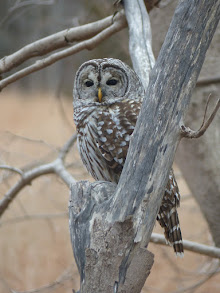
One late afternoon I came across a barred owl at the edge of a wood. I wasn't looking for it, nor it for me. It settled on a branch and looked me over, but not so intently that it couldn't be distracted by a hawk calling in the distance. Somehow it will probably make its way through the winter. I'll keep an eye out for it next year.

Saturday, August 29, 2020

One a day (conclusion)


One hundred days ago I set myself the task of reading The Decameron at the rate of precisely one tale a day, and this morning I finished it, right on time. For those who are only vaguely familiar with the work (as was I), Boccaccio's collection has particular relevance at the moment, as the frame-tale that supports it supposes that a group of young Florentines escape from the plague-stricken city into the safety of the countryside, where they regale each other with stories until it's time to go home.

Presumably conditions improved a bit in their absence; in the summer of 2020, sadly, the world is still very much a mess. (Where I live COVID-19 cases are, for now, down significantly, which is something, at least.)

But back to Boccaccio. Escapist as it may be, it's a delightful book. I'm not sure I regret not reading it earlier; some things (like Moby-Dick) arguably benefit from being encountered later in life. The Signet Classics translation by Mark Musa and Peter Bondanella that I used is lively and readable. Some of the tales are little more than anecdotes, and a few of those rely on snappy repartee that perhaps loses something out of its cultural context, but there's plenty of variety and entertainment here. As with any self-confident writer, Boccaccio plays both sides at will, alternately upholding virtue and openly advocating infidelity, bad-mouthing women for their fecklessness and defending them against jealous and tyrannical husbands. Piety, thankfully, is in short supply, and the clergy come in for a robust helping of abuse.

Below are a few of the tales that struck me as being particularly memorable.

Third Day, Tenth Story: basically a classic dirty joke, grounded in feminine gullibility and clerical misbehavior.

Fifth Day, Fourth Story: a pleasingly modern tale, ending happily, of young lovers caught in flagrante by the girl's parents.

Fifth Day, Eight Story: a gruesome supernatural horror story in which a woman is punished eternally for refusing her favors.

Eight Day, Seventh Story: the account of the vengeance of a spurned lover and scholar. (This one is particularly long and vindictive, perhaps suggesting a grudge on the part of the author.)

Tenth Day, Ninth Story: a nicely balanced story of the mutual generosity of an Italian nobleman and the Muslim general Saladin (who is, dubiously, depicted as being fluent in Italian).

Tenth Day, Tenth Story: a narrative of the unspeakably cruel manner in which a husband tests the virtue and submissiveness of his absurdly long-suffering wife, wrapping up, improbably, with tutti contenti.

I'll leave the last words to the author, who concludes: "The time has come to end my words and to humbly thank Him who with His assistance has brought me after so much labor to my desired goal, and may His grace and peace be with you, lovely ladies, and if, perhaps, reading some of these stories has given any of you pleasure, please do remember me."

Tuesday, August 25, 2020

Last train out


Maybe it's the unearthly shade of red in the evening sky or the rumbling sensation below your feet, but something tells you that this time it's for real. You take inventory: what needs to come, what can be carried, what has to be battened down or left to fend for itself. Things for the road, in case...

Some people aren't budging. Take no notice, get it done. It's too late for those arguments now.

All the things you never got to: papers to organize, phone calls to make. The peonies that should have been divided years ago. Little regrets. Nothing for it.

You should have done it last year, you should have done it years ago. Maybe it's too late. No matter. Just get on with it.

In the end, one suitcase and a cloth bag with some food and a thermos. You think you must be forgetting something, but it seems to matter less with every moment that goes by. The cold feeling when you lock the door. Don't look back.

Along the road, clusters of travelers, some rushing, some hesitant. Familiar faces, no time for chat. Caught in a funnel. Momentum.

At the station, little formalities that now seem quaint. Less of a crowd than one thought. Maybe tomorrow. Maybe it's just a false alarm, after all.

As the train pulls out you don't look through the window, but the whirl around you leaves you suddenly weak at the knees. Jostle through the aisle and into a seat. A sip of cold water to settle you.

Later, passing through unfamiliar country, the grief drains away. Nothing but weariness now. What was it you forgot?

Wednesday, July 22, 2020

Abundance


As this anxious summer wears on I've been making regular visits to a little pond not far away, one that, in spite of its diminutive size, hosts an astonishing array of wildlife, all of it unconcerned with our troubles. In addition to hundreds if not thousands of frogs of various sizes, which dash into the water with cries of alarm as I circle the shore, there are snapping and painted turtles, at least one water snake, small fish, and several species of dragonfly. As I arrive great blue herons fly up, issuing unearthly raucous cries, and rabbits, deer, and wild turkey browse the adjacent meadows.


The rabbits have apparently become accustomed to human presence and continue nibbling until I'm almost on top of them, a complacency that may be ill-advised as there are foxes, coyotes, and other predators in the vicinity. The dragonflies don't seem to care much about me either; they dart about, carefully avoiding hungry mouths lurking below the surface of the pond, and rest here and there on rocks and vegetation, only flitting away when I come within an arm's length. The green one immediately below is (I'm told) a female eastern pondhawk, which is a wonderful and appropriate name, for this is very much a hunting creature.


The frogs must be the keystone species here, their sheer numbers guaranteeing their own perpetuation as well as the survival of those who prey upon them. Over the past weeks the young ones have been slowly metamorphosizing from tadpoles. Some are still confined to the water, while others now hop about, soon to lose the remnants of their tails. They're utterly absurd creatures, and as such instantly recognizable as our kin.