Tuesday, January 26, 2010

On Paper


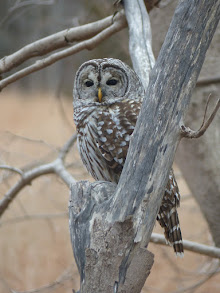
Woodcut from Basle, Switzerland, late 17th c. According to paper historian Dard Hunter, writing in 1930, "the engraving has never been used in any book on papermaking."

It's probably in some way hypocritical or self-contradictory or at least ironic to use a blog post to electronically disseminate a defense of the indispensable special qualities of paper artifacts, but then you likely wouldn't be reading this otherwise, so here goes.

Compared to many technologies (pottery, weaving, writing), true papermaking is a relative newcomer, invented, it is said, in China sometime around 105 AD by one Cai Lun. (The significantly older technologies of papyrus and parchment do not represent true paper, as they are not made from pulped fibers but from continuous sheets or strips of natural material.) As with many industries, paper manufacture has gone through a predictable cycle, starting with a long period of relative stasis in which it was labor-intensive, small in scale, and highly variable in terms of the quality of the finished product, followed by major technological advances (the replacement of the hand mould and press by a continuous rotary belt process in the first half of the 19th century) that led to dramatic increases in production and affordability accompanied by standardization and, in general, cheapening of quality. Finally, the technology is now -- or so one is told -- threatened with obsolescence, at least in part, but, paradoxically and perhaps nostalgically has been revived in something resembling its traditional form by artisans for the specialty or luxury market.

Paper does have its drawbacks. It's highly vulnerable to fire and water and its manufacture requires a steady stream of natural materials. In China and Japan paper was traditionally directly made from a variety of plant sources (and still is, by artisans) but in Europe the material of choice was recycled rags, themselves originally composed of linen, cotton, or other textile fibers. In the 19th century a burgeoning readership led to a shortage of raw materials and the adoption of wood pulp, which tends to be acidic and to deteriorate rapidly over time. For this reason the paper in books published before the 1800 is often in better shape than paper produced only a few decades ago. More recently an attempt has been made to improve durability by using acid-free paper, at least in books that are considered to have potential lasting value.

But enough potted history. Much more authoritative information can be obtained from a variety of sources (see endnotes). When well-made and protected, paper is surprisingly stable. It's certainly a more long-lasting medium than magnetic recording tape and may be more durable than optical media like CDs and DVDs (check back in a hundred years). Moreover, the readability of paper does not depend on special hardware or software that can itself become obsolete (floppy disc drive in that laptop, anyone?); it requires only a human reader trained to interpret a certain system of signs.

Electronic dissemination of documents is cheaper than printing on paper just as modern printing and papermaking technology is cheaper than the handcraft practices that prevailed for centuries. If paper still had to be made by hand there'd be a lot less of it and hence fewer and more expensive books, newspapers, and so on. That would certainly not be a good thing, just as it would be a shame and a mistake to forgo the revolutionary possibilities of electronic dissemination. But efficiency has costs as well as its benefits, and one of them is the loss of texture that occurs anytime a highly labor- and material-dependent technology is replaced by one that can be endlessly reduplicated with minimal effort.

Texture is not "content" or "information" -- at least not in a simple, reductive sense -- and can't easily be digitized. It creates complications, wrinkles. Texture -- even the texture of a flat sheet of paper -- is three-dimensional. Big ideas, on the other hand, are two-dimensional, and need to be so to make order out of chaos. But the world is always more complicated than such systems imply, and the apprehension of texture is essential in order to reveal the existence of things the big ideas gloss over. Texture isn't necessarily physical; a story, an idea, an algorithm, a digital artwork, can be textural if they create three dimensions where there had previously only been two.

In the case of paper, there often are specific physical aspects that may be of interest. A book might have little intrinsic value, at least to a particular reader, in terms of its subject matter, but the chain lines and watermarks left by paper moulds, the irregularities and stray fibers, the untrimmed deckle edges, may still have value for the evidence they provide about the system of manufacture that produced the paper and the market and readership that supported its production. Much the same could be said for the materials and decoration of the binding.

There's also the issue of context. To take just one example, you may be able to find a 19th-century New York Times article online, but if you're not at the same time seeing the stories in the adjacent columns, or the ads that may have appeared on the bottom or on the facing the page, you're missing part of the story. For your purposes the text alone may be sufficient, but that's not the same as saying that the other evidence doesn't exist. The truth is, you can't always know, or quantify, the value of texture, and yet it's there, and may be telling us things we want or ought to know.

There's another concern as well. In the course of various researches, several times in the past year I've tapped into Google Books and examined historical materials -- The Jewelers' Circular and Horological Review (1898) and Electrical Worker: Official Journal of the International Brotherhood of Electrical Workers (1914 and 1915), to name two instances -- that I would certainly not have known of, let alone been able to read and quote from, had they not been digitized. Purchasing the originals, if it were even possible to locate them, would have been prohibitively expensive. (A professional historian might well have been able to track them down where they were archived, but I don't have the training or the resources.) Being able to find them was a great boon, but it points up a quandary. These documents were created and circulated on paper, because there was no alternative. How much historical evidence about the 21st-century world is destined to disappear because it is being disseminated in the form of web pages, emails, Word documents, and other electronic forms? How many blogs will be accessible five years, or twenty years, or fifty years from now? (For what it's worth, I keep a hard copy of most of my own posts.) The universal preservation of electronic materials would, of course, create a inconceivable glut of information, most of which would never be examined. My point is that what we create on paper may, ironically, have a better chance of long-term survival than the output of all of our sophisticated technological novelties.

In the past year I've often reproduced and written about documents and images that were originally created on paper, some of them uncommon or even unique. I value the opportunity to present them here, just as I enjoy the work that others do in documenting the things they've discovered. But we need to remind ourselves that with everything that's shared, something is also being held back. To get the whole story and appreciate these things for their beauty and their evidence of history and all that they may have to say, you have to hold them in your hands.

A few endnotes:

The Gibbon of papermaking was Dard Hunter of Chillicothe, Ohio, who not only traveled through China, Japan, and other regions tracing its history but ran his own paper mill, cast his own type, and printed and bound his own books. His handmade books are collector's items and worth a small fortune (I've never even seen one), but there is a Dover paperback edition of his definitive Papermaking: The History and Technique of an Ancient Craft. A biography of Hunter by Cathleen Baker, By His Own Labor, was published by Red Hydra Press in 2000. More information on the history of paper can be found at the Robert C. Williams Paper Museum at the Georgia Institute of Technology.

The writer Nicholson Baker created a furor a few years ago when he published Double Fold: Libraries and the Assault on Paper, in which he inveighed against the deaccessioning by libraries of books and other documents that were microfilmed or digitized and then destroyed, a practice supposedly justified by the greater accesibility, reduced storage requirements, and greater permanence of the new media. While Baker may have gotten some things wrong, there's no doubt that some of the activities he described, such as the destruction of rare bound volumes of 1900-era newspapers, color supplements and all, were little short of cultural crimes. Baker founded an organization, the American Newspaper Repository, to rescue some of the orphaned volumes; the Repository's holdings have since been acquired by Duke University.

Sunday, January 17, 2010

Notes for a Commonplace Book (5)


Carla Rippey:

Whatever our senses pick up is carried to the brain by two pathways, one conscious and rational, and another unconscious and innate. While these perceptions travel toward the cortex, where they will be integrated with other data captured from the environment and with previous associations, they are also traveling toward the amygdala, a much more primitive part of the brain. Sending something to the amygdala is like sending a digital image in low resolution: it arrives right away, but it’s blurry. In no way is it a precise and well-processed image like the one that is formulated in the cortex. It is, we might say, a dirty image. It’s these dirty images that make us confuse, just for an instant, a garden hose with a snake.

I have the idea that whenever an image attracts me, whenever I happen upon a photograph with which I feel some sort of connection, for example, it’s because the image resonates in me at a subconscious level: it generates the same “dirty image” as something I have already stored in my brain.

As a result, the archives of possible material for my work are made up by images that have already triggered a reaction in me. Examining them dispassionately, now ensconced in the "high road" of clear perceptions and conscious associations, my job is to pinpoint the disturbing element and highlight it by means of cropping, the juxtaposition of images, or the construction of a collage. The interpretation is then refined through its translation to drawing, printmaking or painting. In a sort of morphing, I must retransmit it with my own energy.

I like the term "dirty images". They are dirty because their reading is ambivalent, but dirtiness is also associated with the erotic, the perverse, the disturbing, and that which is repressed and feared -- all elements which pertain to the interpretation of my work. After all, one could postulate that I traffic in stolen images: it’s a dirty business.

From Carla Rippey: Dibujo, pintura y grabado (Taller Gráfica Bordes)

Devil


Into my room a devil came.
He appeared outside on the fire-escape;
no ordinary burglar, as if through air
he lifted a leg through the window-glass
and pulled his black-winged body after.

As he stole across the room I woke --
too late, he held me down.
For once he gets inside your room
a devil cannot be fought.

What did he bring? All that devils have:
despair, confusion, memory of loss.
He left them there with me.
then departed for wherever it is that devils dwell.

So I live in his aftermath,
damned, no remedy.
Devil of cities, I cannot carry this burden of years.
Return, and take back what is yours.

(1976)

Sunday, January 10, 2010

A Map of Slavic Europe


This fold-out map (it's one of three in the book) is from Russian and the Slavonic Languages by W. J. Entwistle and W. A. Morison, a volume in Faber & Faber's Great Languages series. There's probably nothing here that would be news to a philologist or a Slavic historian, and I don't know to what degree the situation may have altered since the book was published in 1949, but it's interesting to have the extent and diversity of Slavic diffusion displayed in graphic form.

The big gap to the west of the Black Sea is the territory occupied by speakers of Romanian (a Romance language) and Hungarian (Finno-Ugric). Among other things, the map illustrates the little pockets stranded by the shifting of borders and the back and forth of migrations. Some of those pockets must now be extinct, like the "Wendish Slovenes of Lake Leba" (not to be confused with the inhabitants of the former Yugoslavian Slovenia, far to the south) who were said by the authors to have already dwindled to some 200-250 individuals.


Of the book's co-authors, William J. Entwistle was the general editor of the Great Languages series, succeeding L. R. Palmer. He was apparently not strictly speaking a Slavic specialist, as his title was King Alfonso XIII Professor of Spanish Studies in the University of Oxford, Fellow of Exeter College, Oxford. Entwistle was also responsible for the volume in the series that was devoted to Spanish. Morison was a Slavicist at the University of London. Their work was performed under less than optimal conditions, but the combination of the recent devastation across Europe and the onset of the Cold War must have lent the book extra relevance, even urgency.
This book has been written under great stress, and cannot but show many faults. The war has absorbed the services of almost all the small band of competent students of Slavonic. One author has been wholly engulfed in public business, and the other partly, during the composition of the work, which has been elaborated too often in hotel bedrooms or railway carriages. Long neglect has left our libraries, despite the gallant efforts of the librarians, deficient in Slavonic works. Not infrequently we have been unable to consult essential works, and have had to rely on our own discretion.
Several of the projected volumes in the Great Languages series were never completed; the project seems to have petered out around 1960, though some of the individual books have since been reprinted by other publishers.

Tuesday, January 05, 2010

Katazome calendar: Takeshi Nishijima


This folio of stenciled prints is the work of a katazome artist who designed a number of calendars that were produced from 1969 or 1970 to 1980 (and perhaps outside that range of years as well). If he is the same Takeshi Nishijima listed on Artfacts.Net then he was born in 1929 and died in 2003.

According to the descriptive text that accompanies the folio, Nishijima was both a professor of art at Kyoto University and "a graphic and textile designer [who] exhibited in numerous one man shows and won the coveted Grand Prize at the Kyoto Art Exhibit." He was associated with Haruo Kuriyama of the Wazome Kogei company, which was probably the publisher of this calendar. I've been told that Kuriyama was a friend of Keisuke Serizawa, the best known katazome artist, who produced calendars annually beginning in 1946.

Given the similarity in technique and layout between the work of the two calendar makers, Nishijima may well have studied with Serizawa; if so, he was also effectively a competitor, as Serizawa's calendars continued to appear through the 1970s. His work isn't as intricate as Serizawa's, which shows a greater fondness for rich geometrical ornament, and it appears to have received little attention outside of Japan. These calendars were, nevertheless, clearly aimed at Western audiences, as all the names of the months are in English.

Grateful acknowledgment is due to the printmaker Brian Garner for providing these images. I have cropped them square for the web, but they were printed on handmade paper and the bottom edges are in fact untrimmed. Below each image I have added the interpretive text for each month that was provided by the publisher on a separate sheet (see the last image below).


"During January people come to pray at Heian Shrine, Kyoto, for peace and good luck throughout the year."


"February brings tranquility in Plum Tree Park at Tsukigase, Kyoto."


"March is the time when water orchids rise to impart a springlike charm and grace."


"In April the tree peony is a delightful harbinger of the joys of spring."


"The rose which blooms in May is the universal symbol of love."


"June tells of farm dwellings at the castle town, near Nara prefecture."


"As summer progresses into July we are present as a storm passes, with clouds running at the ridge."


"The first yield of fruit in August tends to refresh the eye as well as the palate."


"September is the month for typhoons. Here willow trees sway in the wind at Nijo Castle, Kyoto, to protest the approaching violence."


"October's autumn flowers are handsomely framed by a Chinese jar of the Sung era."


"The sunset symbolizes approach of the year's end. The landscape of Japanese inland sea Seto is November's setting."


"As December arrives we note that Kyoto's farmers have completed their work. The harvest is in and we see a serene community of farmhouses."


Here are some katazome links:
  • Explanations of the technique at Wikipedia and by John Marshall.

  • George Baxley has information on Keisuke Serizawa's calendars, with numerous examples.

  • Kit Eastman is an American illustrator who employs the katazome technique.

  • Another artist, M. Joan Lintault, has several interesting posts on her work with the technique.

  • The Japan Society has organized an outstanding exhibition dedicated to Keisuke Serizawa, which runs through January 17, 2010. A catalog is available from Yale University Press.

  • And finally, my earlier posts, with illustrations of a full calendar set possibly by Serizawa, another set that is probably by Takeshi Nishijima, and a review of the Japan Society show.

Friday, January 01, 2010

The Frogs' Discovery


When I first picked up this little pamphlet of Japanese folk stories, I thought it might belong to the Tourist Library series issued in the years leading up to the Second World War by the Japanese Government Railways. Although a bit smaller than those books, it has a similar pasted-on cover illustration, onion-skin wrapper, and layout, and was obviously designed for visitors from the West.

In fact it was published after the war, in 1950, and I haven't been able to find any record of the book, its author Fujiya Iida, the Bunka Pony Series in which it was the first and perhaps only volume, or of the publishing company Bunkaen. It may have been a self-published or family production, as Y. Iida, presumably a relative of Fujiya, is listed on the title page (or colophon, if you like, as it's in the back of the book) as "publisher." It was printed by Nihon Dempo Tsushinsha, which Wikipedia identifies as the Japan Telegraphic News Agency.

This copy is signed, both in Roman script and in characters, and is dated Dec. 25, 1952, so perhaps it was a Christmas purchase. The original price on the title page appears to have been ¥100, but this has been overstamped to ¥80, and a little red outline of a volcano has also been impressed next to the author's name.


In addition to the cover image, which I rather like, there are two fairly dull interior plates, printed in a bluish ink. The cover and the title story both read "Frogs' Discovery," without "The," which appears only on the title page / colophon. Five additional tales are included: "Silence Competition," "Wrestling a Water-Imp," "An Inelastic Answer," "The Cheated Foxes," and "The Panacea."

Saturday, December 26, 2009

December


As the year waned she spent most of her weekend morning hours in bed, asleep if she could stay asleep or just thinking with her eyes closed if she couldn't. She always kept the room a little cold around her; she liked it that way, didn't like having to throw off a layer of the covers in which she lay enveloped if she got too hot. In her third floor flat, with the storm windows shut tight against the occasional passing car and the shouts of the downstairs neighbor's children, she would be undisturbed as long as she liked; her friends knew not to call. By mid-morning light would fill the room but she didn't mind; it fell obliquely, filtered by the shades, and by the time she was finally ready to rise it would have taken the edge off the morning chill.

She would cast a glance at the cover of the paper, dropped on her doorstep before dawn, but then set it aside until evening, make herself some oatmeal or a couple of eggs and a cup of tea, and only then change out of her nightgown and robe into a pair of jeans, a layer or two of sweatshirts, an old and ample soft gray sweater, and take her winter coat down from the wooden hanger in the little hall closet where it hung alone. She would collect her sketchbook and a few pencils from the easel she kept by her rarely used fireplace, gather her gloves and hat, and go out. It was too cold along the harbor, this time of year, so she would head inland instead, climbing to the outskirts of town, to the first ploughed-over cornfield, then walk another mile or so along the road until she came to the edge of the woods. There she would sweep the tail of her coat beneath her and sit on a stone wall crusted with patches of lichen, yellow and blue and grey-green, and with her back to the road she would sketch the oak trees, the frayed remains of an orchard that had been abandoned years before, and the crows that gathered to glean the fields.

She couldn't pick out the individual crows by sight, but she was pretty sure they were the same ones, from week to week; in any case, there always seemed to be the same number, a dozen or so across the acre's ground she had a view of. By now they must have been accustomed to the sight of her, but if so they acted no differently, never approached or gave a sign of recognition. She imagined they had their own concerns that she was not part of, or perhaps they noticed her but were too polite to intrude upon her solitude. But now and then it would seem to her that one, having drawn near, would considerately pose for her for a few moments, just long enough for her to deftly trace its form with her pencil. If so, she didn't signal her appreciation but registered in inwardly; it was her treaty with the crows, that she would never cross the line that separated them.

When the outlines of the furthermost trees began to soften and the wind picked up and bit at her cheeks she would close her book and climb down from the wall, ready for a warm meal, the newspaper, and phone calls. At night she would dream of the crows and in her dream she would hear their histories and they would tell her everything that had happened and everything they had seen from the deepest beginning of time.

(Slightly reworked; originally from December 2008)

Monday, December 21, 2009

Sloth


Sometime in the 19th century (an Emperor is on the throne of France), a Parisian woman named Anne relocates to a tiny village in the countryside. Though she misses some of the creature comforts of the metropolis, she has as compensation "the unsullied joys of country life" in "this heaven on earth." She writes a series of letters to her old friend Solange (who apparently never answers them). In her second letter she alludes in passing to a curious provincial custom: during the winter months the locals quite literally hibernate, tucking themselves into goatskin bags and suspending themselves from the rafters until spring. "How strange these people are, who do not hesitate to subtract the entire winter from their span of life!" she declares. As the correspondence continues, Anne becomes increasingly alarmed, and at last horrified, when she realizes that not only the peasants, but the servants and even the local gentry will all take part in the practice, leaving her entirely to her own devices. As a last departing hussar waits impatiently to ride off, she pens one final desperate missive to her erstwhile friend:
There are only two minutes left. Understand me well, Solange. I cannot prepare my food, I cannot do anything, there is nothing in the house, I am frightened of the horses, I could not ride them to safety -- even if they too are not asleep. I shall die here if you do not save me, Solange .... Solange, my soul, what can I say to you? Save your wretched

A
Years ago, when I first read the story summarized above, Tomasso Landolfi's brief "Pastoral" (which can be found in the New Directions collection Gogol's Wife and Other Stories) I took it for a bit of Gothic whimsy, a fantastic tale of quasi-vampirism in the provinces. But according to a New York Times op ed piece by the biographer and cultural historian Graham Robb, in the days before electrification many French countryfolk did in fact engage in something approaching hibernation, though not, to be sure, by hanging from the rafters.
Economists and bureaucrats who ventured out into the countryside after the Revolution were horrified to find that the work force disappeared between fall and spring. The fields were deserted from Flanders to Provence. Villages and even small towns were silent, with barely a column of smoke to reveal a human presence. As soon as the weather turned cold, people all over France shut themselves away and practiced the forgotten art of doing nothing at all for months on end.

In the mountains, the tradition of seasonal sloth was ancient and pervasive. "Seven months of winter, five months of hell," they said in the Alps. When the "hell" of unremitting toil was over, the human beings settled in with their cows and pigs. They lowered their metabolic rate to prevent hunger from exhausting supplies. If someone died during the seven months of winter, the corpse was stored on the roof under a blanket of snow until spring thawed the ground, allowing a grave to be dug and a priest to reach the village.
Robb provides more details in his book The Discovery of France:
An official report on the Nièvre in 1944 described the strange mutation of the Burgundian day-labourer once the harvest was in and the vine stocks had been burned:
After making the necessary repairs to their tools, these vigorous men will now spend their days in bed, packing their bodies tightly together in order to stay warm and to eat less food. They weaken themselves deliberately.
Human hibernation was a physical and economic necessity. Lowering the metabolic rate prevented hunger from exhausting supplies. In Normandy, according to the diary of Jules Renard, "the peasant at home moves little more than the sloth" (1889); "in winter, they pass their lives asleep, corked up like snails" (1908).
Some of these reports should, no doubt, be taken with a grain of salt, nor are they unique to France. (Some reasonable skepticism on the whole topic of "human hibernation" can be found on the blog Not of General Interest.) But even the fact that such reports were believed at the time lends a whole new slant to Landolfi's story. His hapless heroine is now revealed as an obtuse and pampered outsider, who is not only utterly spoiled and unable to fend for herself without the assistance of servants, but who also in her sophistication is unable to see the simple practical value of a good long spell of winter dormancy.

In any case, just something to mull over on the shortest day of the year. By the way, according to New Directions, the photograph on the front of the dust jacket, in which the author's face is almost completely obscured, was the only one Landolfi approved for publication, at least as of 1963 when Gogol's Wife was released. The jacket was designed by David Ford.

Sunday, December 13, 2009

Old stuff


NYU's Institute for the Study of the Ancient World is currently featuring a new exhibit entitled "The Lost World of Old Europe: The Danube Valley, 5000 - 3500 BC." The objects on display, most or all of which were excavated in Bulgaria and Romania, belong to Neolithic cultures that are still relatively little known here, in part because of their extreme antiquity (they predate the invention of writing), and also no doubt because of the limited interchange of scholarship between East and West before 1989. Manhattan's Upper East Side may be as far removed from the world of the makers of these artifacts as it would be possible to travel, but nevertheless, here they are, until April 25, 2010. Admission is free, and this may be your one chance to see them. If you can't make it there is a companion catalog, which I haven't yet seen.

The term "Old Europe" was coined by the late archaeologist Marija Gimbutas, who believed that large parts of Neolithic Europe were characterized by common traditions of matriarchy and the worship of a "Mother Goddess," traditions that were supplanted or subsumed when new, patriarchal, cultures from further east penetrated the Balkans. Gimbutas's work has come under heavy criticism in recent years, and David Anthony, one of the co-authors of the exhibition catalog, is among the critics, but the "Old Europe" description itself has evidently stuck. The current exhibit seeks a nuanced view, pointing out that the archaeological evidence for matriarchy is now considered to be more ambiguous that it was a generation or so ago.

None of which should interfere with the enjoyment of what is on display, including, for instance, this remarkable pair of fired clay figurines from Hamangia in Romania.


The male figure on the left has been dubbed, inevitably, "the Thinker," although the exhibit notes that his posture may in fact indicate mourning. Whatever the truth is, there is nothing "primitive" about the artistry of these pieces, created at least 6,600 years ago.

Here's a clay vessel, 4200-4050 BC:


My daughter and I both concluded that this was a doll's house:


We weren't "serious," of course, but it raises an interesting question: when does a religious figurine become a "toy," or vice versa. Is a crèche, whatever else it is, not a toy set, and if not, why? Are figurines no longer "toys" when adults "play" with them? Is there really an absolute gap between the "serious" religious or magical practices of adults and the imaginative play of children? I suspect the distinction would have had no meaning when these pieces were created.


The above are not museum groupings of similar objects but actual assemblages as found in place; the lower one has been called, somewhat speculatively, "the Council of the Goddess."

From an essay by Douglass W. Bailey, included in the exhibition catalog but also available online (PDF):
Contemporary psychological studies have shown that something very odd happens to the human mind when one handles or plays with miniature objects. Most simply put, when we focus our attention on miniature objects, we enter another world, one in which our perception of time is altered and in which our abilities of concentration are affected. In a well-known set of experiments, the psychologist Alton Delong showed that when human subjects were asked to imagine themselves in a world where everything was on a much smaller scale than everyday reality, or when they engaged in activities in smaller than normal environments, they thought that time had passed more quickly than in fact it had and they performed better in tasks requiring mental agility. Importantly, the subjects of these studies were not conscious of their altered experience of time or concentration.
This one was interesting:


Called a pintadera (there were several other examples in the exhibit), it is, in effect, an early printmaking tool, used to stamp patterns on skin, cloth, or even bread.

The above images are from a slide show on the website of The New York Times; there is an accompanying article by John Noble Wilford. The Institute, which is located at 15 East 84th Street, provoked controversy when it was founded in 2006, because its principal benefactors, Leon Levy and Shelby White, had in the past been accused of purchasing looted antiquities for their own private collections. As far as I know the objects in the current exhibit have been legitimately loaned by museums in the countries where they were first located and their presence in the exhibit hasn't been challenged.

Thursday, December 10, 2009

By the shore


It's warmer tonight and a fog lies across the lake. The ice is still sound -- it won't thaw yet for weeks -- but as soon as evening falls, even on a moonlit night, nobody ventures out on it. It's not that we're afraid of them, exactly -- they must be far more afraid of us, I suppose, though who knows what they think? -- but all the same we keep our wary distance as they keep theirs. In the morning, perhaps, as we hack through and clean out the holes in the ice and set our lines, we'll come across their traces, their scratchings and their footprints, the bloody scraps of a desperate meal they wrested from the black water below.

Many of us have never seen them, or aren't sure. Sometimes, staring out at the lake, the fog swirls apart and for an instant something seems to dart across, far from shore, or stands, just for a moment, and stares back. They never come ashore, never pick around the edges of the camp in search of old bones or flakes of desiccated fish, not that there'd be much to find. Where they go after sunrise or once the ice breaks up for good and spring comes we don't know and don't ask. To the far shore, we suppose, or deep into the woods beyond, where we ourselves don't venture.

The worst is when they fight among themselves. It doesn't happen very often; only now and then, in the bitterest part of the winter, when we ourselves are nearly starving, without notice their hideous screaming cuts through the night and we cover our ears -- though who could block out that sound or forget it once it is heard? Then after a while it's suddenly quiet, and we know perfectly well what that quiet means. No one has ever found a body, the next morning, on the ice.

Sunday, December 06, 2009

An anecdote


à Amittai Aviram

As an autumn afternoon advanced, Arthur Asbury, an accomplished Assyriologist, ambled along an avenue, arriving at an Asturian auberge. After an appetizer (artichokes and anchovies, attractively arrayed) and an appropriate apéritif, Asbury approached an antiquary's. Admiring an authentic Athenian astrolabe, Arthur acquired an Abish, an Auster, and an anonymous antiphonary, and asked (as an aside) after an Argentinian acquaintance, Arabella Aragón. Ages ago, Arabella assassinated an aging archbishop -- as an anarchist, Arabella abominated Anglicans -- arcing an adeptly aimed arrow at an atherosclerotic aorta. As an Austrian ambulance absorbed an Alpine avalanche, Arabella absconded, avoiding arrest. After apprehension, adjudication, and an appeal, an attorney achieved an acquittal. An absolute antinomian, Arabella abjured absolution.

Assuming an aristocratic accent and adopting an Armenian alias, Arabella apprenticed as an archaeologist's assistant. Ambitious and amoral, Arabella ascended academically and acquired avid acolytes and admirers. At an anthropological association affair, awaiting an antipasto, an awestruck Arthur Asbury attempted an awkward advance, anticipating an amour. Astonished at Arabella's ambivalent answer, Arthur affected affliction and advanced again; after an acrimonious argument Arabella accepted an absinthe and an afterhours assignation. Arriving as arranged, alcohol-addled, Arthur assaulted Arabella amateurishly. Alert and athletic, Arabella artfully applied an ashtray as an anesthetic.

Asbury awoke, alone, aching, and abashed, an aubergine abscess appearing above an ankle. Ashen and aggrieved at Arabella's absence, Asbury ate at an automat and addressed an abject apology. Arabella's apparently affectionate acceptance allowed an ambiguous amity, and -- after an anxious April -- an ardent affair. As autumn arrived, Asbury's aspirations approached apogee.

Saturday, December 05, 2009

Derailed!


A train accident, possibly in Dutchess County, New York or thereabouts. The front bears the handwritten date "1920" in the bottom lefthand corner. The cardstock is Velox, a photographic paper invented by Leo Baekeland and manufactured by Kodak from 1902 onwards. The particular design around the space intended for the postage stamp indicates a date of manufacture from 1907-1914, so unless the handwritten date is wrong the card was printed on stock that had been sitting around for at least six years. It was never mailed.

As far as I can tell this isn't a commercially printed postcard but an actual photographic print on postcard stock. Vast numbers of these so-called "Real Photo postcards," which were produced with a specially sized film, were created beginning around 1902, as advances in photographic technology made it possible for amateurs and professionals alike, even in small towns, to document both ordinary life and newsworthy events and distribute the resulting images to friends and family around the country.

There are several excellent books that collect Real Photo images, including Rosamond B. Vaule's As We Were: American Photographic Postcards, 1905-1930, and, most recently, Luc Sante's Folk Photography: The American Real-Photo Postcard 1905-1930, which has just been published by YETI Books. Some images from the latter can be seen on the Artforum website.

Tuesday, December 01, 2009

Frost and Fire


With a few notable exceptions so-called "holiday music" tends to make me cringe. If I'm trapped in a department store in December -- something I naturally try to avoid at all costs -- the sound of "The Little Drummer Boy" or Andy Williams crooning "It's the Most Wonderful Time of the Year" is generally enough to send me running for the exits even faster than I normally would. But Frost and Fire, by the superb English vocal quartet known as the Watersons, is no ordinary "holiday" record. In fact it's not entirely a Christmas record at all; befitting its subtitle -- A Calendar of Ritual and Magical Songs -- it includes Easter and harvest songs as well as Christmas hymns and wassails, few of them familiar to American ears. It's a very English record, and there are no dancing snowmen here (not that I have anything against Frosty, mind you), but Lord Nelson and Napoleon make appearances, along with Herod, a rather malicious boy Jesus (who gets soundly spanked for his misbehavior), and a very large and well-endowed ram. Though most of the songs are at least ostensibly Christian, the record includes such cryptopagan curiosities as "John Barleycorn" (later famously covered by Traffic with vocals by Steve Winwood). It also includes the eerily beautiful "Idumea," written by John Wesley's brother Charles, which has to be the strangest Christian hymn I've ever heard.

In their original configuration, the Watersons were two sisters from Yorkshire, Norma and Lal Waterson, their brother Mike, and their cousin Mike Harrison. After Harrison moved on he was replaced by Norma's husband, the guitarist and folk singer Martin Carthy, who is perhaps best known in the states for having involuntarily loaned his arrangement of "Scarborough Fair" to Paul Simon. Lal Waterson died ten years ago, but a successor group still tours as Waterson: Carthy. Though they are sometimes described as "harmony singers," the term is apparently not apt; according to Paul Adams
They ... rarely achieve four-part harmony. At times only one person is singing a harmony line and the others are in unison. Sometimes they are all in unison but drift into two or three parts at the end of a line. In their case it is the blend of voices which makes it sound like harmony.
Whatever the musicological truth may be, the group's rousing, earthy sound is like nothing else I've ever heard. I don't listen to this record that often, but when the chill weather starts in I invariably reach for it.

The original Frost and Fire LP, which came out in 1965, featured the first quartet and was entirely a cappella, except for a drum beat here and there. The Topic re-issue I own includes six songs from a second LP, Sound, Sound Your Instruments of Joy, which was originally released in 1977 by the version of the group including Martin Carthy and which features a brass quartet on one cut. Unfortunately this combined release appears to have been discontinued, so the CD currently available only includes the original Frost and Fire.

There's a fine documentary about the Watersons called "Travelling for a Living"; it's included in the group's 2004 retrospective boxed set, Mighty River of Song. Below is an excerpt. It's actually a May Day song, but I couldn't turn up any clips of their Christmas material. No one seems to be sure what if anything the words "Hal-An-Tow" mean.

Friday, November 27, 2009

Spencer Holst: On Demons


In the olden days of the Arabian Nights a fisherman threw his raggle-taggle net into the Mediterranean. He pulled, and pulled, and pulled the net onto the shore, and he discovered nothing in it except an old ivory jar. He lifted a piece of seaweed off the jar, and saw that it was ancient and intricately carved with a procession of people and beasts winding spirally around it, so that whichever way he turned it three lines of people appeared. At the top was a stopper. It was made of lead. On it was impressed the Seal of Solomon.

The fisherman opened the jar and smoke began to come out of it, began to pour out of it, making a rushing sound, and the smoke gathered into a large cloud, and the cloud became the body of a demon, or jinn, or genie, or genius ... or call it whatever you want.

The demon put the fisherman in the palm of his hand, and gave him a choice of a number of hideous deaths.


"But I was the one who freed you!," protested the fisherman.

"Listen," said the demon, "I've been in that jar for 50,000 years. For the first five thousand I joyfully planned how I would reward the man who freed me ... I would turn him into an emperor! Give him palaces, the whole world for his dominion .... But ten thousand years passed, and I began to be a little depressed, and I lost some of my enthusiasm, yet I said to myself: whoever frees me, I'll give him a comfortable princedom, a good castle, servants, so he'll be set for life .... But more years passed, and after 15,000 years I became so disgusted, so disgruntled, that I decided I wouldn't give any reward to the fool who chanced to free me .... But as more time passed I began to hate humanity, they who ignored me ... And I began to devise methods of murder, of torture .... Oh! The things I've thought these 35,000 years .... I have daydreamed of this day, and of the way I should kill you. I have thought up thirteen horrendous ways for you to die. These are the ways: listen carefully, for I shall give you your choice."

"You can obviously do whatever you want with me," said the fisherman. "You can kill me on the spot. But nevertheless, the truth is the truth, and you're a liar."


"What?!" said the demon.

"You couldn't have been in this ivory jar. Look how small this jar is, and look at yourself, you're as big as a mountain. Any child could see that you aren't telling the truth. You're a liar. Kill me if you want, but don't expect me to believe your fairytales, don't make me laugh. Kill me if you want, but don't expect me to believe that you spent centuries in this little jar. Don't be ridiculous. Kill me if you want, but don't expect me to believe such an obvious fable."

"What?!" said the demon. "I'll show you!"

Whereupon his body began to dissolve into a huge cloud of smoke, which began to twirl like a tornado, and the smoke condensed and entered the ivory jar, and the fisherman quickly replaced the stopper, and it has remained there until this very day.

(Drawings by Beate Wheeler. On Demons was published in 1970 by Doctor Generosity Press. Further information on the author can be found at the Spencer Holst Papers page at the University of Texas at El Paso.)

Sunday, November 22, 2009

The stone


The field had been abandoned two years before. Someone had come and hauled off the cattle for the winter and in the spring they didn't come back. It had never been much of a pasture anyway, soggy in spots and overgrown with brambles and scrub in others. Left to their own devices the handful of cows must have gone half-wild, their hides a tangle of burrs and beggar's ticks by the time they were rounded up. After that nobody had scythed the grass and without the cows' patient grazing the vegetation had grown up, little sumacs and maples had sprouted and taken hold, creating a new green canopy just a couple of feet off the ground.

The boy hiked down from the road above, the cuffs of his jeans swishing through the high grass, until he came to the little stream that lay just behind a perfect colonnade of cattails. No more than two yards across and half that deep, its waters barely seemed to move, though if the boy dropped a leaf on its surface it would drift slowly off until it disappeared from sight. The stream bed was smooth and yellow-brown; if there were stones buried in the ground beneath they had long since been covered by centuries of silt and fallen leaves. There were tussocks at the water's edge that made for unsteady footing, but a few strides further off a great flat slab formed a bridge across the water, whether set there by a glacier or by some farmer's hand the boy didn't know. He could kneel on the stone and peer into the darkness beneath. In one corner, in perpetual shadow, a spider sprawled in readiness at the edge of an unbroken web.

It was only when he clambered to his feet again and stood blinking in the sunlight that he noticed the pickerel. It lay still and solitary in the water a few feet upstream, its narrow crocodilian snout aimed towards him, its lateral fins pulsing steadily, holding it against the current. The boy figured it couldn't have been more than eight or ten inches long. Its sides were covered in reticulations of green and white, and he thought it was the most beautiful thing he had ever seen.

Monday, November 16, 2009

Kiuchi in monochrome


A solitary figure stands silhouetted at the bottom of an expanse of gray, its back turned. Directly beyond, seemingly floating in space but presumably drifting through the waters of an aquarium, is an immense, languid whale shark, also solitary, whose shadow glides beneath. The architecture of the enclosing tank -- if a tank there is -- is barely suggested. There are no rocks or reefs looming behind the shark, and no clusters of fish circling past. Here and there patches of white stippling appear, and there is a suggestion of a diagonal band of white, a reflection on the glass, perhaps, or just a stream of light falling through the waters, but that's all. Nothing distracts from the stillness of the scene and from the lone figure's silent contemplation, or perhaps, from the mutual contemplation of man and beast.


The artist and graphic designer Tatsuro Kiuchi has issued a paperback volume, entitled Pen Still Writes, that is entirely composed of monochrome illustrations originally created to accompany serialized works, by several writers, that appeared in various Japanese magazines and newspapers. The book has no text, other than a brief description and biography (in English and Japanese) on the jacket flaps, as well as captions on the facing page (Japanese only) indicating where the illustrations first appeared. According to the flap copy all of the artwork was done in Photoshop.


Kiuchi is a versatile artist who has worked on a wide variety of commercial projects, ranging from children's books to postage stamps to ads for Starbucks, and he is perfectly capable of being warm and accessible when the occasion demands. But these serialized illustrations, especially when removed from their original contexts and viewed as a body, have an appealing mysteriousness. The human figures we see in them tend to be remote, their faces turned away or their features left blank; likewise the stippling effect adds a layer of distance between subject and viewer. Many of the pictures have a distinct retro feel, recalling vintage artwork from, perhaps, the old Highlights magazine of a few decades back, though they are far more subtle and ambiguous. I wonder just who is being caged in -- or out -- in the picture below?


Pen Still Writes is only available direct from the artist, who can be contacted through his website. I have written earlier about Kiuchi's fascinating (color) artwork for Hikaru Okuizumi's The New Journey to the Center of the Earth, which can be seen in a Flicker slideshow. More examples of his monochrome work, including several images not reproduced in the book, can be found at illoz.

Monday, November 09, 2009

Ultramarine


The old man was only her uncle, not her father, but he had raised her -- he and his wife, while she lived -- and she was the next of kin. She would have happily taken him in, would have visited more often, but he had stubbornly insisted that he was fine by himself. After the funeral -- a smattering of cousins, some shuffling old women from the neighborhood -- she went to the boarding house to see to his things. The landlady unlocked the door to his room, then withdrew without a word and let her be.

She set down her purse, slipped off her gloves and folded them over it, then began her inventory. It didn't take long. In the closet she found some old suits and trousers that still had some wear in them, and there was a good pair of leather slippers next to the bed; she would tell the landlady to donate those to charity. There were three or four books on a shelf she didn't think anyone would want. She flipped through them to see if anything would fall out, but there was nothing.

In a drawer of the nightstand she found the old enamel candy box and lifted the lid. There was a little folding money on the top -- not much, but she doubted the landlady had helped herself -- a mass card with her grandmother's name on it, his naturalization papers, a few photographs, sepia-toned and curling, a union ring with a chipped red stone, and a thin packet of letters, carefully tied with string.

She undid the knot with her fingernails and lifted the bundle into the dusty sunlight. The paper was brittle, burned by the slow fires of time, but the ink was a vivid dark blue. She unfolded the first one carefully but it was written in the old tongue, the one he wouldn't teach her, that she didn't want to learn, and she could only make out a word or two here and there. The letters were all in the same hand and she didn't recognize the name of the sender.