
It's become a thing in the northeast to go out on rainy spring nights and help migrating amphibians across the road. As far as I know no one does this for earthworms, vast numbers of which wind up squashed or dessicated on the pavement. Chalk it up to "vertebratism."
I may have saved the salamander's life, but I don't expect that it felt gratitude or even consented to being moved. Its ability to conceptualize cause and effect or make rational decisions is presumably limited. As with most wild animals, its attitude towards us is grounded in simple fear.
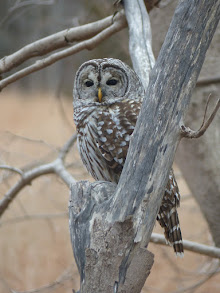
There's a group of five or six deer living in the woods around us, and some days they come grazing within sight of our kitchen window. They may benefit from our presence, in that young vegetation prospers where we've created a clearing, but they beat a hasty retreat if we step outside. I've seen deer and owls, when I encounter them on a trail, hold their ground with something that might border on curiosity or at least indifference, but there's no reason to think that my presence is valued or welcome. Our domestic animals, of course, are capable of feeling most or even all of the emotions with which we regard each other, and this can also be true of some animals that haven't been "domesticated" but merely tamed, but these are exceptions. Timothy Treadwell, the subject of Werner Herzog's film Grizzly Man, captured some entrancing footage of a wild fox interacting with him with something like mutual joy, but Treadwell's misjudgment of his ability to cross the boundary between the human and animal worlds led to his being eaten by a bear.




No comments:
Post a Comment