Saturday, May 28, 2022

Stepping up to the plate


Two forceful and anguished statements in the wake of yet another mass shooting indicate that the stereotypical image of the American professional baseball player is seriously out of date or simply wrong. First, Nationals pitcher Sean Doolittle:
It just feels like we’ve reached a point where if not now, when? We should have done something after Sandy Hook; we should have done something after Vegas; we should have done something after Pittsburgh; I mean, you can go down the list. We should have done something after Virginia Tech. How far back do you want to go? And then the conversation inevitably always changes to mental health or bulletproof backpacks. We’re talking about ballistic blankets. We’re talking about renovating schools so there is only one entrance and one exit. We’re talking about arming teachers.

You’re describing a prison, and you’re bargaining and negotiating with people’s lives instead of just addressing the common denominator in every single one of these issues. It’s really frustrating, and I would like to think that in this country we’re capable of some common-sense reforms that a majority of Americans support that don’t infringe on your Second Amendment rights ... Who am I? I’m on the injured list. I’m a middle reliever on a team that unfortunately is in last place right now ... But we’re still members of societies and our communities, and there are people who look up to us as athletes, who listen to what we have to say as athletes.

And I think if you could start some of these conversations, or you can participate in some of these conversations and maybe get people to listen or put pressure on elected officials to do something, the reality is that you have a little bit more sway than the average person. And when it comes to making changes in your community, you can help move the needle on any number of issues that are important to you.

Source
Perhaps even more remarkably, San Francisco Giants manager (and former player) Gabe Kapler, on why he won't be coming out of the dugout during the playing of the national anthem:
I’m often struck before our games by the lack of delivery of the promise of what our national anthem represents ... We stand in honor of a country where we elect representatives to serve us, to thoughtfully consider and enact legislation that protects the interests of all the people in this country and to move this country forward towards the vision of the "shining city on the hill." But instead, we thoughtlessly link our moment of silence and grief with the equally thoughtless display of celebration for a country that refuses to take up the concept of controlling the sale of weapons used nearly exclusively for the mass slaughter of human beings.

We have our moment (over and over), and then we move on without demanding real change from the people we empower to make these changes. We stand, we bow our heads, and the people in power leave on recess, celebrating their own patriotism at every turn.

Source

Saturday, May 14, 2022

Turtle Diary

Two days, two eastern box turtles. This mostly terrestrial chelonian, considered a "species of special concern," is widespread in our area but probably not all that common numerically. I see maybe one a year, often in more or less the same spots. The empty shell above may be the remains of one I saw on two occasions a few years ago. It appears to have succumbed to a predator strong enough to pierce its armor. No such grim fate as yet for the red-eyed male below, which I observed when he was, improbably, in the process of climbing over a stone wall. I kept my distance and he held his ground.

Thursday, May 12, 2022

Nobody's business

That the Supreme Court is poised to overturn settled law and reverse the 1973 decision in Roe v. Wade should surprise no one, given the steady rightward drift of the court, but it should appall anyone who cares about fundamental human rights.

I'll state my bias: human beings don't procreate spiritually, we procreate as bodies. We are no different in this regard from other animals, and anyone who thinks differently has a lot of special pleading to do. There is, therefore, no more basic level of individual rights than that which pertains to the body and to reproduction. The recognition of those rights, in the face of determined opposition, has been one of the most important advances of modern society. It is, paradoxically, the defense of the fundamental dignity of the physical, of our nature as animals, that defines us as modern human beings.

To deny a woman the right to control her reproduction is as outrageous an affront to human dignity as can be imagined. We pride ourselves — rightly — on the declared principles of freedom of speech and the free exercise of religion, but what is more intrusive, forcing others to keep their thoughts and beliefs to themselves, or telling a woman that even her own body is not hers to control? Defenders of abortion rights often point out — rightly — that it would be unthinkable and cruel to force a rape victim to carry her rapist's child to term, but that argument, legitimate as it is, is ultimately superfluous. It is for women to decide under what circumstances they are willing to bear a child. And it's no one else's business.

Roe v. Wade established a reasoned balance, informed by medical science, between the interests of society and a woman's rights. That balance has been steadily undermined by legislation and previous court decisions, but the essential principle underlying it has been preserved — until now. There is little short-term prospect, given the nature and dire condition of or political system, that the overturning of Roe can itself be undone. The damage will be profound, both to women and to American democracy.

It has to be understood that those who would deny a women's right to decide when or whether to have a child, and who more generally reject the whole idea of a right to privacy, don't really believe that human beings have inherent, independent rights at all. They recognize only power and its privilege to compel those who are subject to it. The fact that the right to abortion has long been acknowledged and supported by a majority of Americans will count for little. I have no doubt that reversal will be robustly cheered in the states that will be lining up to enact restricive legislation and competing to see how extreme that legislation can be made.

This country has been morally problematic from its inception, but it's hard to see how it will survive in any real sense. Even before this decision, we have come as close to fascism as we have ever been, and the danger has in no way receded.

Thursday, May 05, 2022

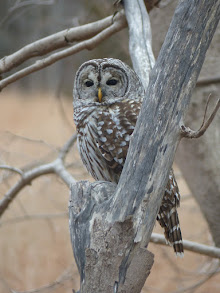
Owl report

A few years ago I had a good run of luck with owl sightings, but last year there were none at all and I hadn't seen any this year until now. Two days ago when I was walking the dog I heard the telltale whistle-hiss of a barred owl in an area where I'd seem them many times in the past. I couldn't get a definite visual on it and didn't have my camera with me, but I made note of the place so I could return. Yesterday it rained but this morning I headed for the same spot, with camera this time but sans dog.

On my way out I thought I heard the same hissing sound but it was too faint for me to be sure; on the way back, though, there was no mistaking it. I walked off the trail a few yards in that direction until I located the owl high up in a very tall tulip poplar. I wasn't close enough to see it well, but since I didn't want to spook it I let my camera zoom in and do the looking. After a few minutes I moved to a slightly different angle, then started to walk away. A single distinct "hoot" from nearby stopped me in my tracks. I looked up: a large adult owl was perched, by itself, in another large tree about fifty yards from the first, keeping a wary eye on me. I took some pictures and headed home.

I thought there might have been a second owl in the first tree, but couldn't tell for sure. It was only when I downloaded the images that I realized that there were no less than four, probably all juveniles. (One is largely concealed behind a limb in the shot below.) Had I known they were there, I would have made a better job of getting them all in the frame.
The Norway maple and tulip poplar leaves are coming out this week; the other trees are a bit behind. I'll give the owls a week's worth of privacy before I check in on them again, but by then I suspect they'll be harder to spot. Still, it's good to know that this family is thriving.

Saturday, April 16, 2022

Non-buyer's remorse


When you really should have bought the book: the Taschen edition of the Augsburg Book of Miracles, published in 2014, is now out of print and available in the second-hand market only at prices starting at $250 (and increasing steeply from there). Oh well.

Earlier post: Signs and Wonders. The Marginalian has a selection of the illustrations.

Thursday, March 31, 2022

Night haul


The tackle creaks as the net is pulled in. On the lantern-lit deck the crew plant their feet and strain at the rope.

Spilled out on the boards, the finned and tentacled creatures blink and gape, but even as the men gather around them their irridescence fades and their jewel-like colors dim. Outlines blur. The seething multitude becomes still, then melts away into brine and breeze.

They cast the net out again and sail on, dragging the dead dark sea towards morning.

Friday, March 25, 2022

Honest Things


Eleanor Clark, on the Oysterman's Cooperative building in Brittany, where "there is just about everything there you could ever need in oystering, from women's dark blue canvas pants and the beautiful fishermen's blouses up to the heaviest cable":
A lovely store, in which nothing has been advertised, nothing is packaged, no patronage is solicited, no brainwashing is done, no profit is to be made and therefore it is most unlikely that anything bought will break or otherwise go to pieces the first time it is used. Oh, the long-lost delight of this decency! For the general American public there is nothing left that begins to approach it but the small-town hardware store, where a nail is still a nail and had better be a good one, and there is apt to be a good deal of junk and vanity even there. Besides, in this place with its crude heavy counters and air of a warehouse, the aura of the single trade, of the beau métier with all its sea-depths and adventure, hangs around every item, for not a bolt or rope or pair of gloves there is meant for any other purpose, and it is remarkable what beauty it casts over everything. Beauty depends after all on what you come from, what you are being cleansed and relieved of, and in the pass we are in nowadays an American lady of the buying type might be tempted to come away from this place with a batch of pulleys, the way her grandmother acquired a little replica of the Venus de Milo.

But no, that wouldn't do, would it? The beauty of all these honest things, aside from their fine conjunction of textures, is in their being together and being there, not somewhere else, in the above-mentioned association, in the simple appropriateness of it all. It is not to be bought; the poor lady will have to go back to the square, with its tasteless souvenirs.
Clark was writing in the early 1960s, and no doubt many things are different now. Except for The Oysters of Locmariaquer and Rome and a Villa, her books seem to have gone out of print. She moved in Trotskyite circles for a time and apparently knew the man himself, if briefly, in his Mexican years; later she married Robert Penn Warren. The Vassar Encyclopedia has what seems to be the best summary of her life and work.

Monday, March 14, 2022

"This is my city"


Sergio Borschevsky, the translator of Borges, Cortázar, Neruda, García Márquez, and other writers into Ukrainian, is staying put in Kiev with his wife. From an interview with the Argentinian news website Infobae:
Why should we have to leave? This is my city. It doesn't belong to Putin or to his general staff or to the Russian Ministry of Defense... This is my city and my apartment. I live here. When I was a boy I saw all this destroyed by German Nazis. I saw it, because I was born in 1946 and I saw Kiev in ruins, I was born a year after the war. And now when I see these images of cities destroyed by the Russian Army, I remember my childhood. And I can tell you that I'm not thinking of leaving. I will die in this city. Now or later? I don't know, but in this city.
The full interview (in Spanish) is available here.

Update: A version in English, though imperfect, can be read here.

Friday, March 11, 2022

Carlos Barbosa-Lima 1944-2022


A good friend let me borrow this LP of Scarlatti transcriptions for the guitar when we were in high school and I've always remembered it, in particular the last track, the Sonata in G major*, K.380, which still strikes me as one of the most perfectly poised pieces of music I know. The record has never been issued on CD, but at least we have this uploaded version.

The Times has an obituary of the guitarist, Carlos Barbosa-Lima, who died in São Paulo on February 23rd.

* Scarlatti's original key seems to have been E major.

Thursday, March 10, 2022

Briefly Noted

Some news items of potential interest to readers of this space.
The translator Edmund Keeley has died. Known for his versions of the work of modern Greek poets like Yannis Ritsos, George Seferis, and C. P. Cavafy, he taught for many years at Princeton University, where he directed the creative writing program. The New York Times has an obituary.

Musician and songwriter Peter Case is the subject of a new documentary by Fred Parnes entitled A Million Miles Away, which is premiering at the Santa Barbara International Film Festival this month. No word yet on wider distribution.

Hayao Miyazaki's 1983 graphic novel Shuna no tabi (Shuna's Journey) will finally have an authorized English translation when it is published this fall by First Second Books. The translator is Alex Dudok de Wit. A news report can be read here.

Saturday, March 05, 2022

Stasys Eidrigevičius: "Ukraina"

A pastel artwork by Stasys Eidrigevičius, donated by the artist to an auction to benefit Ukrainian refugees, of whom there will be many. More information (in Polish) is available here. The auction closes March 9th.

Eidrigevičius, who was born in Lithuania but has lived in Poland for many years, works in many media but is particularly known for posters and (in the US) for illustrations for children's books. In his work, objects, animals, and human figures mingle and morph, caught up in mutual webs of dependence. His website is here.

Thursday, March 03, 2022

From the Archives: A Letter


The post below was posted in a different venue in 2006; I'm dusting it off in honor of Michael Leddy's post at Orange Crate Art.

I've never read Rose Macaulay's novel The Towers of Trebizond and I suspect that I'm never going to get around to it. But I still have the hardcover copy that I bought at a used book sale a number of years ago, and I'm not quite ready to give up on it. That's only partly because everything I've ever heard about the book is positive; when you come down to it, I suspect, the book is probably not really my thing at all. The real reason I'm hanging onto it is the following letter, which I found neatly folded inside the front cover when I bought it.


TELEPHONE: TEMPLETON 8-7440
CABLES - SECNARFS, NEW YORK


654 MADISON AVE
NEW YORK, 21, NEW YORK

April 6, 1959

Mr. James H. Sachs
Bedford, New York

Dear Jimmy:

            It was so sweet of you to think of us and to introduce us to the Schaffners. As the result of The Tower of Trebizond we are going to get a wonderful trip to Europe.

            We are sailing with them on the Giulio Cesare on the 9th and will see Ravello, Sicily and trans-Appenine Italy. Mr. Schaffner thinks that he can enjoy me more completely on board. I don't know just what it means but it sounds alarming. Thanks so much. If I survive maybe I will send you a postal card.

Sincerely yours,

Rose

Rose Macaulay

At first sight this seems like the kind of witty missive a cosmopolitan, well-educated older British woman like Macaulay might have written to a social acquaintance in the mid-20th century. The hint of naughtiness in the second paragraph, the learned reference to “trans-Appenine Italy,” the British “postal card,” instead of “postcard,” all seem fit to type. But there's a problem: the date. Rose Macaulay died on October 30, 1958, a full five months before the letter was supposedly written. Moreover, as far as I have been able to determine, she was not in New York at any time in the last months of her life, making a simple dating mistake of a year or so (but how likely would that have been anyway?) less than probable.

The closer I examine the letter, the less genuine it seems. The date is in American style, not British. The title of the book is wrong — it's Towers not “Tower,” and in fact what the correspondent originally typed was “Trevizone”; the correct spelling is overwritten in pencil. (It's true that the errors involve contiguous pairs of letters on the keyboard, so it's possible she — whoever she was — was simply a bad typist.) And why would the real Rose Macaulay write gratefully of the prospect of “a wonderful tour of Italy” as if she were not a seasoned, independent traveler herself?

If the letter is not really by Rose Macaulay, and it seems very doubtful that it is, then two possibilities come to mind. The first one, unlikely but consistent with the signature, is that it was written by another woman named Rose Macaulay, who somewhow, as the “result” of the odd coincidence of her name with that of the famous author, was invited to see some of her namesake's old stomping grounds.

The other possibility is that the writer of the letter was not named Rose Macaulay at all. She was simply a woman who, perhaps as the outcome of a conversation about The Towers of Trebizond, was invited to Europe by a wealthy couple she had just been introduced to. The signature, then, would have been just a little joke for the benefit of “Jimmy.”

In either case, I wonder if she survived the trip.

Update: The James H. Sachs to whom the letter was addressed appears to be the individual of that name who was one of the founders of Newsweek and later a publisher of Horizon magazine. He also donated a few acres of land to a preserve where I occasionally hike. If the identification is correct he died in 1971. The New York Times obituary is here.

Tuesday, February 22, 2022

A Buried Book

Archaeologist Alan Hardy describes a find that emerged during the excavation of a long barrow in the Berkshire Downs:
A book was found within deposit 3001, located immediately south of the southern ditch section, and approximately 0.23 m below the present ground. The book was a buckram bound copy of Demonology and Witchcraft by Walter Scott, published in 1831 (Plate 4.5). The inside front cover was daubed with red ink and crudely inscribed with the words 'Demon de Uffing'. Some decay was evident to the cover and the edges of the pages although it was generally in very good condition. Its state of preservation may well have been due to the surrounding matrix of chalk and soil, which maintained a dry environment. The excavator was confident that the ground around the location of the book's burial had not been recently disturbed, and therefore a pre-excavation joke by persons unknown was ruled out. In theory the book could have been deposited during the 19th-century excavations, but it is more likely that its burial is related to one of the more recent revivals in the mystical aspects of the White Horse and its surroundings.

D. Miles et al., Uffington White Horse and Its Landscape: Investigations at White Horse Hill, Uffington, 1989-95, and Tower Hill, Ashbury, 1993-4
Related posts:
Up in the Downs
The Lay of the Hunted Pig

Saturday, February 19, 2022

The Lost Altar

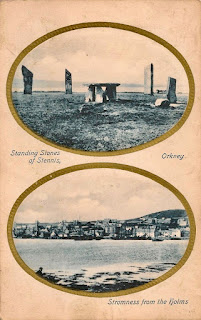
This double-view postcard of scenes from Orkney was issued by J. M. Stevenson, a longtime stationer in Kirkwall and Stromness. It also bears the initials of V. & S. Ltd., that is, Valentine & Sons of Dundee, the actual printer. There's no writing on the back of the card, but I'm guessing that it dates from around 1910. "The Holms" are two small islets just across the water from Stromness.

The central "altar" or "dolmen" shown in the view of the neolithic Standing Stones of Stennis (or Stenness) was a "reconstruction" from 1907, possibly inspired by Sir Walter Scott's interpretation of the site. It was dismantled under murky circumstances in 1972 and only the uprights were put back in place. A century earlier a landowner had vandalized the site extensively, resulting in the loss of much of the surrounding circle of stones.

Despite its barren northern location, Orkney has some of the most extraordinary neolithic monuments in Britain. I haven't been there (my wife and daughter have), but perhaps someday I will make a visit.

Sunday, February 13, 2022

A Stock of Curios

W. Jeffrey Bolster:
Able-bodied seamen versed in “the Mariner’s art” were admittedly a minority among black seamen; but men like Daniel Watson, who made five foreign voyages from Providence between 1803 and 1810, cultivated professional identities as seamen. As sailors, they wove together worldliness, skill, and class. Watson, and men such as the African-born David O’Kee, an ex-slave who made at least eight voyages from Providence during the 1830s, were fully socialized to the world of the ship, and probably more at home there than ashore. A blind sixty-year-old black Philadelphian introduced himself to the census marshall in 1850 as a “Seaman,” though his voyaging days were over. The pride black men felt in being identified as seamen is evident in the possessions left by Henry Robinson, a black laborer who died in Boston in 1849. Robinson owned the clothing, chairs, and stove that one would expect, but he also lived among a stock of curios that seem to have been collected at sea. Cases of “sea shells of several kinds,” “two coral baskets,” “one statue,” “one toy ship,” a series of pictures, and “two african swords and arrows” perpetuated images of a life considerably more exotic than the one that ended in a down-at-the heels Boston tenement house.

Black Jacks: African American Seamen in the Age of Sail

Friday, February 11, 2022

Bookseller's Nightmare


A prim middle-aged woman steps up to the counter and asks if we have any books by the novelist Catherine Cookson. I say I don't think so but I agree to check the shelf and the stockroom. No Catherine Cookson. She would like to order some. I reach for Books in Print, but the volumes we have on our reference shelf are decades old and the authors volume is missing anyway. I switch on the microfiche reader. The information that is displayed on the screen has nothing to do with books. Instead, there are a series of street-level views of a city, and I can't even find the intersection I'm looking for. In the meantime, someone has set down a plateful of very appetizing-looking chocolates next to the microfiche reader, but who knows when I'll have a chance to try one.

Thursday, February 10, 2022

Curiosity Cabinet

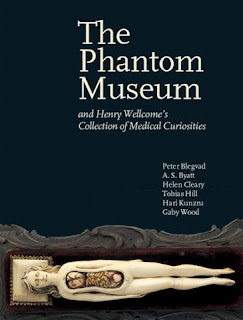
This volume of stories, texts, and illustrations was published by Profile Books in 2003. For a while it seemed to have become scarce, but it's relatively easy to find now.

The Wellcome Collection is (or was) a vast assemblage of objects related to the history and anthropology of medicine. As one might expect, many of the objects are gruesome or bizarre. Henry Wellcome, who amassed the objects, died in 1936, and after his death much of the collection was apparently dispersed, though some of its holdings became accessible to the public in 2007. The editors explain the concept:
This book forms a companion volume to the catalogue of an exhibition on Henry Wellcome's collection held at the British Museum in the summer of 2003. The aim of the exhibition was to reunite a fraction of the collection back in one place. The exhibition catalog endeavours to present the facts of the collection, exploring its objects through documents and physical evidence. Here, in The Phantom Museum, the objects are investigated using a different method, that of the sympathetic imagination.
Each of the six pieces in the volume is inspired by one or more of the Wellcome's objects. A. S. Byatt is the most familiar name among the writers. Peter Blegvad contributes an unclassifiable piece, but my favorite is a deft short story entitled "The Venus Time of Year," which follows two women, one modern and one in Roman Britain, who both have recourse to votive offerings in the form of a fertility figurine. Admirably, it doesn't try to do too much or look too far ahead in the women's lives. Of the author, the back flap notes, "Helen Cleary lived in Singapore, Wales and East Anglia before moving to London. She is working on her second novel and writes non-fiction for the BBC History website."

Oddly, I've found no evidence that either of the two Helen Cleary novels mentioned was ever published, nor any indication that she has published any additional fiction. She didn't disappear; she apparently has contributed to several documentaries and reference books.

In conjunction with the British Museum show, the Quay Brothers released an eccentric short documentary about the collection, which is also entitled The Phantom Museum.

Monday, February 07, 2022

Time Capsule

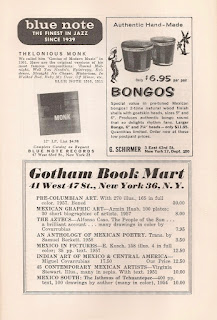
Above, a page of ads from Barney Rosset's Evergreen Review, Vol. 2. No. 7 (Winter 1959). This was a themed issue devoted to Mexico, but it also included a long essay on Thelonious Monk, so these particular advertisements were presumably chosen with that in mind. Bongos are more usually associated with Cuba, but these "pre-tuned Mexican bongos" would have been the perfect accessories for beatniks, or at least for the Hollywood version of them. Other ads in this issue included one for the Living Theatre and for the Circle in the Square production of Brendan Behan's Quare Fellow, directed by José Quintero.

Sadly, the Gotham Book Mart is no more, but as of this writing at least one of the contributors, the Mexican writer Elena Poniatowska, is still with us after sixty-odd years.

Saturday, February 05, 2022

Jason Epstein (1928-2022)

Publishing pioneer Jason Epstein has died. At 93, he managed to outlive his obituarist, Christopher Lehmann-Haupt, who died in 2018.

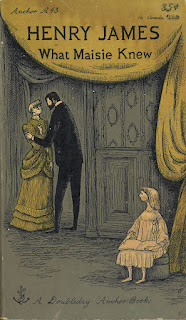
Epstein worked with a long list of authors and founded or co-founded Anchor Books, The New York Review of Books, and the Library of America. I confess to a fetishism for the early Anchor paperbacks, including those published after Epstein left the company in 1958. I have a dozen or so in the house and often re-read some of them. Many have wonderfully dotty covers by Edward Gorey. Today Anchor Books and many of its erstwhile competitors and imitators in the paperback market, including Vintage, Penguin, Signet, Ballantine, Bantam, and Dell, are all subsumed under the same corporate umbrella.

Monday, January 31, 2022

Norma Waterson (1939-2022)


The revered British folksinger Norma Waterson has died. The Guardian has an obituary and a nice appreciation.

Though she recorded contemporary material as a solo artist, she was probably best known as a member of a family ensemble that in its original conformation in the 1960s also included her brother Mike, sister Lal, and a cousin, John Harrison. Norma's husband, the fine guitarist Martin Carthy (who survives her) replaced Harrison beginning in 1975. Later lineups under various names included the couple's daughter, the fiddler Eliza Carthy.

Below are the Watersons (including Martin Carthy) with a rousing a capella hymn demonstrating the group's unique style.


A documentary entitles Travelling for a Living follows the group in their early days.