Sunday, December 27, 2020

Necrology


Three masters, three obits. Just an average day in 2020. Rest in peace.
Barry Lopez

Phil Niekro

Tony Rice

Thursday, December 24, 2020

A Parting


I came to this book by way of Coleridge and Wordsworth, both of whom are profiled, usefully if somewhat eccentrically, in its pages, but stayed for its other pleasures. One of the most memorable pieces here is "Recollections of Grasmere," which relates an incident from late 1807 when a couple named George and Sarah Green became disoriented on their way homeward during a snowstorm and perished, orphaning six children, the eldest of whom, a girl of nine, eventually went for help when the parents failed to return. William Wordsworth made a poem out of it, and his sister Dorothy wrote her own prose account (harder to find but said to be superior even to the one here). De Quincey skillfully sketches the background, describes the rugged upland landscape where the Greens lived, and narrates the difficult search that ended in the discovery of their bodies. He ends with an intriguing proposal for the construction of a system of "storm-crosses," equipped with bells, to prevent similar tragedies.

Among the other local characters described here is a brilliant self-taught philologist named Elizabeth Smith, who died in obscurity at the age of twenty-nine, not before mastering French, Italian, Spanish, Latin, German, Greek, and Hebrew and aquiring "no inconsiderable knowledge of the Syriac, the Arabic, and the Persic." Her headstone, which De Quincey calls "the scantiest record that, for a person so eminently accomplished, I have ever met with," declared simply that "she possessed great talents, exalted virtues, and humble piety."

The most affecting piece, however, is one devoted to De Quincey's friend Charles Lloyd, a promising but troubled young writer and family man whose "mysterious malady" — some kind of mental or nervous disorder — led to long periods of inhuman confinement in an asylum. (De Quincey improbably links Lloyd's illness to his Quaker upbringing.) At one point, Lloyd escaped and fled to De Quincey, who offered to shelter him from the pursuers who were expected to come. Lloyd declined the offer and set out again, with De Quincey accompanying him part of the way.
We set off on foot: the distance to Ambleside is about three and a half miles; and one-third of this distance brought us to an open plain on the margin of Rydalmere, where the road lies entirely open to the water. This lake is unusually shallow, by comparison with all its neighbours; but, at the point I speak of, it takes (especially when seen under any mode of imperfect light) the appearance of being gloomily deep: two islands of exquisite beauty, but strongly discriminated in character, and a sort of recess or bay in the opposite shore, across which the shadows of the hilly margin stretch with great breadth and solemnity of effect to the very centre of the lake—together with the very solitary character of the entire valley, on which (excluding the little hamlet in its very gorge or entrance) there is not more than one single house—combine to make the scene as impressive by night as any in the Lake country. At this point it was that my poor friend paused to converse, and, as it seemed, to take his leave, with an air of peculiar sadness, as if he had foreseen (what in fact proved to be the truth) that we now saw each other for the final time. The spot seemed favourable to confidential talk; and here, therefore, he proceeded to make his heart-rending communication: here he told me rapidly the tale of his sufferings, and, what oppressed his mind far more than those at this present moment, of the cruel indignities to which he had been under the necessity of submitting...

In vain I pressed him to return with me to Grasmere. He was now, for a few hours to come, to be befriended by the darkness; and he resolved to improve the opportunity for some purpose of his own, which, as he showed no disposition to communicate any part of his future plans, I did not directly inquire into. In fact, part of his purpose in stopping where he did had been to let me know that he did not wish for company any further. We parted; and I saw him no more. He was soon recaptured; then transferred to some more eligible asylum; then liberated from all restraint; after which, with his family, he went to France; where again it became necessary to deprive him of liberty.
The essay closes in bravura fashion with De Quincey listening to the uncanny murmuring of the River Brathay, where he and Lloyd had walked together in better times:
Often and often, in years after all was gone, I have passed old Brathay, or have gone over purposely after dark, about the time when, for many a year, I used to go over to spend the evening; and, seating myself on a stone, by the side of the mountain river Brathay, have staid for hours listening to the same sound to which so often Charles Lloyd and I used to hearken together with profound emotion and awe—the sound of pealing anthems, as if streaming from the open portals of some illimitable cathedral; for such a sound does actually arise, in many states of the weather, from the peculiar action of the river Brathay upon its rocky bed; and many times I have heard it, of a quiet night, when no stranger could have been persuaded to believe it other than the sound of choral chanting—distant, solemn, saintly. Its meaning and expression were, in those earlier years, uncertain and general; not more pointed or determined in the direction which it impressed upon one's feelings than the light of setting suns: and sweeping, in fact, the whole harp of pensive sensibilities, rather than striking the chord of any one specific sentiment. But since the ruin or dispersion of that household, after the smoke had ceased to ascend from their hearth, or the garden walks to re-echo their voices, oftentimes, when lying by the river side, I have listened to the same aerial saintly sound, whilst looking back to that night, long hidden in the frost of receding years, when Charles and Sophia Lloyd, now lying in foreign graves, first dawned upon me, coming suddenly out of rain and darkness; then—young, rich, happy, full of hope, belted with young children (of whom also most are long dead), and standing apparently on the verge of a labyrinth of golden hours. Musing on that night in November, 1807, and then upon the wreck that had been wrought by a space of fifteen years, I would say to myself sometimes, and seem to hear it in the songs of this watery cathedral—Put not your trust in any fabric of happiness that has its root in man or the children of men. Sometimes even I was tempted to discover in the same music a sound such as this—Love nothing, love nobody, for thereby comes a killing curse in the rear. But sometimes also, very early on a summer morning, when the dawn was barely beginning to break, all things locked in sleep, and only some uneasy murmur or cock-crow, at a faint distance, giving a hint of resurrection for earth and her generations, I have heard in that same chanting of the little mountain river a more solemn if a less agitated admonition—a requiem over departed happiness, and a protestation against the thought that so many excellent creatures, but a little lower than the angels, whom I have seen only to love in this life—so many of the good, the brave, the beautiful, the wise—can have appeared for no higher purpose or prospect than simply to point a moral, to cause a little joy and many tears, a few perishing moons of happiness and years of vain regret!
NB The Penguin edition of Recollections of the Lakes and Lake Poets shown above, which dates from 1970, is apparently now out of print. There are other editions available, but one does have to wonder, what is the mission of the Penguin Classics if a book like this no longer belongs on their list?

Sunday, December 20, 2020

The Waters of the Deep


William Wordsworth:
... once in the stillness of a summer's noon,
While I was seated in a rocky cave
By the sea-side, perusing, so it chanced,
The famous history of the errant knight
Recorded by Cervantes, these same thoughts
Beset me, and to height unusual rose,
While listlessly I sate, and, having closed
The book, had turned my eyes toward the wide sea.
On poetry and geometric truth,
And their high privilege of lasting life,
From all internal injury exempt,
I mused, upon these chiefly: and at length,
My senses yielding to the sultry air,
Sleep seized me, and I passed into a dream.
I saw before me stretched a boundless plain
Of sandy wilderness, all black and void,
And as I looked around, distress and fear
Came creeping over me, when at my side,
Close at my side, an uncouth shape appeared
Upon a dromedary, mounted high.
He seemed an Arab of the Bedouin tribes:
A lance he bore, and underneath one arm
A stone, and in the opposite hand a shell
Of a surpassing brightness. At the sight
Much I rejoiced, not doubting but a guide
Was present, one who with unerring skill
Would through the desert lead me; and while yet
I looked and looked, self-questioned what this freight
Which the new-comer carried through the waste
Could mean, the Arab told me that the stone
(To give it in the language of the dream)
Was "Euclid's Elements;" and "This," said he,
"Is something of more worth;" and at the word
Stretched forth the shell, so beautiful in shape,
In colour so resplendent, with command
That I should hold it to my ear. I did so,
And heard that instant in an unknown tongue,
Which yet I understood, articulate sounds,
A loud prophetic blast of harmony;
An Ode, in passion uttered, which foretold
Destruction to the children of the earth
By deluge, now at hand. No sooner ceased
The song, than the Arab with calm look declared
That all would come to pass of which the voice
Had given forewarning, and that he himself
Was going then to bury those two books:
The one that held acquaintance with the stars,
And wedded soul to soul in purest bond
Of reason, undisturbed by space or time;
The other that was a god, yea many gods,
Had voices more than all the winds, with power
To exhilarate the spirit, and to soothe,
Through every clime, the heart of human kind.
While this was uttering, strange as it may seem,
I wondered not, although I plainly saw
The one to be a stone, the other a shell;
Nor doubted once but that they both were books,
Having a perfect faith in all that passed.
Far stronger, now, grew the desire I felt
To cleave unto this man; but when I prayed
To share his enterprise, he hurried on
Reckless of me: I followed, not unseen,
For oftentimes he cast a backward look,
Grasping his twofold treasure. -- Lance in rest,
He rode, I keeping pace with him; and now
He, to my fancy, had become the knight
Whose tale Cervantes tells; yet not the knight,
But was an Arab of the desert too;
Of these was neither, and was both at once.
His countenance, meanwhile, grew more disturbed;
And, looking backwards when he looked, mine eyes
Saw, over half the wilderness diffused,
A bed of glittering light: I asked the cause:
"It is," said he, "the waters of the deep
Gathering upon us;" quickening then the pace
Of the unwieldy creature he bestrode,
He left me: I called after him aloud;
He heeded not; but, with his twofold charge
Still in his grasp, before me, full in view,
Went hurrying o'er the illimitable waste,
With the fleet waters of a drowning world
In chase of him; whereat I waked in terror,
And saw the sea before me, and the book,
In which I had been reading, at my side.
From The Prelude

I owe my familiarity with the wonderful passage above to Thomas De Quincey's essay on Wordsworth, written in 1839, that is, well before the poem he quotes was made available to the general public. De Quincey had heard or read it decades earlier and recalled it nearly verbatim. His gloss on it is as follows:
Wordsworth was a profound admirer of the sublimer mathematics; at least of the higher geometry. The secret of this admiration for geometry lay in the antagonism between this world of bodiless abstraction and the world of passion. And here I may mention appropriately, and I hope without any breach of confidence, that, in a great philosophic poem of Wordsworth's, which is still in MS., and will remain in MS. until after his death, there is, at the opening of one of the books, a dream, which reaches the very ne plus ultra of sublimity, in my opinion, expressly framed to illustrate the eternity, and the independence of all social modes or fashions of existence, conceded to these two hemispheres, as it were, that compose the total world of human power -- mathematics on the one hand, poetry on the other...

He had been reading "Don Quixote" by the sea-side; and, oppressed by the heat of the sun, he had fallen asleep, whilst gazing on the barren sands before him. Even in these circumstances of the case -- as, first, the adventurous and half-lunatic knight riding about the world, on missions of universal philanthropy, and, secondly, the barren sands of the sea-shore -- one may read the germinal principles of the dream...

The sketch I have here given of this sublime dream sufficiently attests the interest which Wordsworth took in the mathematic studies of the place [by "the place" De Quincey means Cambridge University], and the exalted privilege which he ascribed to them of co-eternity with "the vision and the faculty divine" of the poet -- the destiny common to both, of an endless triumph over the ruins of nature and of time.
It would be interesting to speculate, as to the figure of the Arab, whether Wordsworth had in mind the transmission of Euclid (and even lyric poetry, via the troubadours) through Arabic intermediaries, but the Don Quixote he was reading itself has a ostensible (but presumably fictional) Arab source, one Cide Hamete Benengeli.

Though De Quincey refers to "the ruins of nature and time," he also seems to interpret the poem as simply expressing a desire to carve out a refuge from "the world of passion" by taking shelter in a "world of bodiless abstraction," as well as in poetry. Today, though, Wordsworth's line about "the fleet waters of a drowning world" may strike a more ominous note. And I want to read more of this poem.

With no greater excuse than the segue of moving from one poet laureate to a Nobel laureate, here is Bob Dylan's "Too Much of Nothing," in a 1970 live performance by Fotheringay, with the sublime Sandy Denny joining in on the refrain.


Say hello to Valerie, say hello to Marion,
Send them all my salary, on the waters of oblivion.

Monday, December 14, 2020

The Indifference of the Dead

Machado de Assis:
In life, the watchful eye of public opinion, the conflict of interests, the struggle of greed against greed oblige a man to hide his old rags, to conceal the rips and patches, to withhold from the world the revelations that he makes to his own conscience; and the greatest reward comes when a man, in so deceiving others, manages at the same time to deceive himself, for in such a case he spares himself shame, which is a painful experience, and hypocrisy, which is a hideous vice. But in death, what a difference! what relief! what freedom! How glorious to throw away your cloak, to dump your spangles in a ditch, to unfold yourself, to strip off all your paint and ornaments, to confess plainly what you were and what you failed to be! For, after all, you have no neighbors, no friends, no enemies, no acquaintances, no strangers, no audience at all. The sharp and judicial eye of public opinion loses its power as soon as we enter the territory of death. I do not deny that it sometimes glances this way and examines and judges us, but we dead folk are not concerned about its judgment. You who still live, believe me, there is nothing in the world so monstrously vast as our indifference.
Epitaph of a Small Winner is the American publisher's title of the first translation of the most famous work of the Brazilian novelist Joaquim Maria Machado de Assis (1839-1908). It was released in hardcover by Noonday Press in 1952 and in paperback four years later; the translator is William L. Grossman. The paperback cover shown above, which I rather like, is uncredited. (It doesn't look like the work of Shari Frisch, who provided a couple of dispensable line drawings to the interior of the book.) Later reprints of the same translation have different cover art and include a Foreword by Susan Sontag.

There have been at least four subsequent English versions, one of them published fairly obscurely in Brazil, and all of which make use of the book's actual Portuguese title, which translates as The Posthumous Memoirs of Brás Cubas. Recent editions contain annotations and have been reviewed favorably, but the Grossman translation is perfectly adequate for most purposes. Why one short book, however enjoyable, would need five translations in sixty-eight years is a bit puzzling, given that there are comparable books that been translated only once (sometimes badly) or not at all, but the more the merrier.

Words Without Borders has a recent overview by Charles A. Perrone: "Machado de Assis Gains Different Voices in New Translations of Posthumous Memoirs of Brás Cubas."

Wednesday, December 09, 2020

How to Change a Flat Tire (Update)


A friendly note from one of the former members of this American-based Celtic music group from the 1970s and '80s has brought some unexpected good news. In an earlier post in 2006, I mentioned that none of the group's output was available on CD. That is still apparently the case, but much of it, including some I had never heard before, has recently been uploaded on YouTube. The tracks available include the group's second album, Traditional Music of Ireland and Shetland, an unreleased third album, and some live odds and ends like the one below.


I was particularly delighted to find "The Mallard" (below), a humorous a capella song that I once heard live but assumed was never recorded.


There's even some rare video footage. All in all, the group's music still sounds bright and inviting after all these years. The YouTube link for all the available tracks is here.

Thursday, December 03, 2020

Beans

Thomas De Quincey:
Mr. Poole propounded the following question to me, which I mention because it furnished me with the first hint of a singular infirmity besetting Coleridge's mind:—"Pray, my young friend, did you ever form any opinion, or, rather, did it ever happen to you to meet with any rational opinion or conjecture of others, upon that most revolting dogma of Pythagoras about beans? You know what I mean: that monstrous doctrine in which he asserts that a man might as well, for the wickedness of the thing, eat his own grandmother as meddle with beans."

"Yes," I replied; "the line is, I believe, in the Golden Verses. I remember it well."

P.—"True: now, our dear excellent friend Coleridge, than whom God never made a creature more divinely endowed, yet, strange it is to say, sometimes steals from other people, just as you or I might do; I beg your pardon—just as a poor creature like myself might do, that sometimes have not wherewithal to make a figure from my own exchequer: and the other day, at a dinner party, this question arising about Pythagoras and his beans, Coleridge gave us an interpretation which, from his manner, I suspect to have been not original. Think, therefore, if you have anywhere read a plausible solution."

"I have: and it was a German author. This German, understand, is a poor stick of a man, not to be named on the same day with Coleridge: so that, if Coleridge should appear to have robbed him, be assured that he has done the scamp too much honour."

P.—"Well: what says the German?"

"Why, you know the use made in Greece of beans in voting and balloting? Well: the German says that Pythagoras speaks symbolically; meaning that electioneering, or, more generally, all interference with political intrigues, is fatal to a philosopher's pursuits and their appropriate serenity. Therefore, says he, follower of mine, abstain from public affairs as you would from parricide."

P.—"Well, then, Coleridge has done the scamp too much honour: for, by Jove, that is the very explanation he gave us!"
Recollections of the Lakes and the Lake Poets

Wednesday, December 02, 2020

Virgil

Richard Holmes:
Coleridge continuously haunts De Quincey's pages, as a sort of battered Virgilian guide to the opium Inferno.
Coleridge: Darker Reflections, 1804-1834

Tuesday, November 24, 2020

Circular


There are few things in life I enjoy as much as acquiring books — maybe even moreso than reading them — but I've reached a point where doing so on more than an occasional basis can no longer be regarded as responsible. It's not so much the expense — like many people I should be economizing, but the world is awash in cheap used books — as it is a question of space and of what will have to be done with my modest horde after I'm gone. More fundamentally, it's a question of what the point is of accumulating additional books. I'm not a "collector" in any serious sense, and I can't claim to be rescuing and preserving material that isn't readily available elsewhere, so the personal library I have put together can only serve me, either for reading or for reference, and thus it all boils down to what I "need" to read.

When you're young the world unfolds with seemingly infinite avenues for exploration; only in time do those avenues close themselves off one by one, eventually leaving only the one narrow track you've chosen (or that is chosen for you). And so it is with reading. At first there are countless new books and authors to be encountered; gradually you learn which are most suited to your tastes and interests. You are solemnly instructed that there is a "canon" (or "canons") of sorts — books that one is supposed to read — and you read some of those and maybe never catch up with others. But eventually you realize that reading everything of merit isn't an achievable or even a desirable goal. You preserve an openness to the unencountered but you accept that the world doesn't actually care if you've read Proust (I haven't).

So now I find myself reading not in linear fashion, as if I were steadily checking off the list of books I am obliged (by whom?) to read, but in a circle, re-reading often, sometimes reading the same book twice in quick succession, and now and then incorporating things that I never thought of reading but reached for more or less at whim (New Grub Street). I love Dickens (and contrariwise have no desire to read Henry James again), but I would rather read Bleak House repeatedly than grimly force myself through Martin Chuzzlewit or Barnaby Rudge out of some mistaken sense of completeness or duty. Do I "miss out" in this way? In a sense, but nothing is subtracted if one is always reading something from which one gets joy, or enlightenment, or whatever it is one seeks as one turns the pages.

So like many people I keep a list of prospective reading, but I recognize that I'm never going to get around to most of those books, and that it doesn't matter. I'll get to some, will only think about others, and will live without the rest. And that's a good thing, because there will always be something good beckoning just over the horizon.

Sunday, November 22, 2020

That White House story...

This isn't an easy moment for people who perform in front of an audience for a living, but musicians, actors, and the like still need to eat and pay the rent, and some of them have gotten pretty creative this year about finding alternative sources of income. Singer-songwriter Peter Case, a favorite here, has two long-planned CDs in the pipe, but in the meantime he has put out a volume bringing together selections from his fifty-year output as a songwriter (one song here dates to his teens) with vivid tales of his life as a busker and touring musician. The selections in Somebody Told the Truth range from perfect pop tunes like "Zero Hour," first recorded in 1980 with the Plimsouls, to the spooky urban legend "Spell of Wheels," to more recent retrospective and political songs like "The Long Good Time" and "Water from a Stone." It's good to have them together, even if the selection is far from complete.

In the "stories" section, the standout is "The White House Story," which I've heard Peter tell live at least once (it's twice, if memory serves), and which he swears is gospel truth. I won't spoil the tale by summarizing it, but let's just say it involves a Spanish newspaper, a Secret Service agent, and an unnerving late-night ride through the streets of Washington DC.

Somebody Told the Truth bears the imprint of Boom & Chime Books and is distributed by Phony Lid Books, but it should be obtainable through Bookshop.org, and elsewhere.

Saturday, November 07, 2020

Joy


Today was a beautiful day and I'm not just thinking of the blue skies and unseasonably mild weather here in New York State. I'm a skeptical person by nature; I have no illusions about the obstacles that lie ahead for both the country and the Biden-Harris administration. Nor should anyone underestimate the tenacity of the paranoia and corruption that are rooted in our public life. But with all that it comes as a deep relief that in the middle of a terrible pandemic Americans in unprecedented numbers not only managed to find a way to cast their ballots but saw through all the dishonesty and bigotry and found the moral clarity to do the right thing. The pall that has hung over us for four years has been driven off. A celebration is indeed in order.

Monday, November 02, 2020

When the Ship Comes In


Arlo Guthrie's version of an early Bob Dylan composition feels like just what I need today.


And the sands will roll
Out a carpet of gold
For your wearied toes to be a-touchin’
And the ship’s wise men
Will remind you once again
That the whole wide world is watchin’

Monday, October 26, 2020

Turning out


Saturday was the first day of early voting where I live. My wife and I have already voted by absentee ballot, but yesterday I happened to walk by the local early voting site, which is in pool complex in our village park, and was surprised by how many people were lined up to vote -- wearing masks -- with a steady stream of cars discharging more. I live in a reliably blue district in a safely blue state, but it was heartening to see so many people taking this election seriously, even if one party doesn't think that "rank democracy" is as important as property rights and in fact has based its entire strategy on an anti-democratic electoral college and on erecting as many hoops as possible to make it difficult for people to vote.

In ordinary times a president who has lied and blustered his way through four terrible years, who continues to downplay a pandemic that has killed more than 230,000 Americans and done long-term damage to the economy, who can't even pretend to feel empathy, who has contempt for science, and who has thrown in his lot with violent militias and bonkers conspiracy theorists, would have no chance of re-election. And, if the polls are correct*, he doesn't. Ojalá.

I refer anyone who is stil wavering to the endorsements -- all of them unprecedented -- from Scientific American, Nature, and USA Today.

* The polling wasn't all that accurate, frankly, but the prediction of the final result was correct.

Saturday, October 17, 2020

Homage to E. B. White


I found these two grave markers in an out-of-the-way spot a few minutes' walk from the more accessible family pet cemetery I posted photos of a few years back (earlier post here). Strangely enough, though these two are only a foot or so apart and I've known about Wilbur's stone for some time, I never noticed Charlotte's until today. It must have been hidden by the moss and leaves. In a few years no doubt it will disappear entirely.

Wednesday, September 30, 2020

Notes for a Commonplace Book (28)

Charles Dickens:

I had no thought that night — none, I am quite sure — of what was soon to happen to me. But I have always remembered since that when we had stopped at the garden-gate to look up at the sky, and when we went upon our way, I had for a moment an undefinable impression of myself as being something different from what I then was. I know it was then and there that I had it. I have ever since connected the feeling with that spot and time and with everything associated with that spot and time, to the distant voices in the town, the barking of a dog, and the sound of wheels coming down the miry hill.

Bleak House

Tuesday, September 22, 2020

At the equinox


This ill-starred year grinds towards its end but still has ample time to accumulate additional misfortunes. My body remains on summer schedule, attuned to neither the clock nor the sun. I lie in the dark and wait for signs of daylight, then rise and perform the little rituals of waking up the house. I draw curtains open, put water on to boil, make breakfast. Outside I've already pulled up the tomatoes and summer squash, and the okra is bearing more slowly as the daylight dwindles and temperatures begin to drop. I wrap up the butternut squash fruits in pillow-cases at night to keep the deer from eating them before they're ready to cut off the vine. The resident hummingbirds still buzz around their feeder, but the swallowtail butterflies that feasted on our zinnias all summer have moved on.

Gardening plans, early morning walks, things not accomplished, will have to be deferred. There's a sense, in general, of being balanced on the cusp — but of what? Winter's grim days and long nights can't be avoided, and spring now seems very far away.

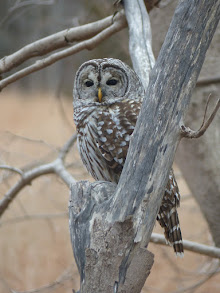
One late afternoon I came across a barred owl at the edge of a wood. I wasn't looking for it, nor it for me. It settled on a branch and looked me over, but not so intently that it couldn't be distracted by a hawk calling in the distance. Somehow it will probably make its way through the winter. I'll keep an eye out for it next year.

Saturday, August 29, 2020

One a day (conclusion)


One hundred days ago I set myself the task of reading The Decameron at the rate of precisely one tale a day, and this morning I finished it, right on time. For those who are only vaguely familiar with the work (as was I), Boccaccio's collection has particular relevance at the moment, as the frame-tale that supports it supposes that a group of young Florentines escape from the plague-stricken city into the safety of the countryside, where they regale each other with stories until it's time to go home.

Presumably conditions improved a bit in their absence; in the summer of 2020, sadly, the world is still very much a mess. (Where I live COVID-19 cases are, for now, down significantly, which is something, at least.)

But back to Boccaccio. Escapist as it may be, it's a delightful book. I'm not sure I regret not reading it earlier; some things (like Moby-Dick) arguably benefit from being encountered later in life. The Signet Classics translation by Mark Musa and Peter Bondanella that I used is lively and readable. Some of the tales are little more than anecdotes, and a few of those rely on snappy repartee that perhaps loses something out of its cultural context, but there's plenty of variety and entertainment here. As with any self-confident writer, Boccaccio plays both sides at will, alternately upholding virtue and openly advocating infidelity, bad-mouthing women for their fecklessness and defending them against jealous and tyrannical husbands. Piety, thankfully, is in short supply, and the clergy come in for a robust helping of abuse.

Below are a few of the tales that struck me as being particularly memorable.

Third Day, Tenth Story: basically a classic dirty joke, grounded in feminine gullibility and clerical misbehavior.

Fifth Day, Fourth Story: a pleasingly modern tale, ending happily, of young lovers caught in flagrante by the girl's parents.

Fifth Day, Eight Story: a gruesome supernatural horror story in which a woman is punished eternally for refusing her favors.

Eight Day, Seventh Story: the account of the vengeance of a spurned lover and scholar. (This one is particularly long and vindictive, perhaps suggesting a grudge on the part of the author.)

Tenth Day, Ninth Story: a nicely balanced story of the mutual generosity of an Italian nobleman and the Muslim general Saladin (who is, dubiously, depicted as being fluent in Italian).

Tenth Day, Tenth Story: a narrative of the unspeakably cruel manner in which a husband tests the virtue and submissiveness of his absurdly long-suffering wife, wrapping up, improbably, with tutti contenti.

I'll leave the last words to the author, who concludes: "The time has come to end my words and to humbly thank Him who with His assistance has brought me after so much labor to my desired goal, and may His grace and peace be with you, lovely ladies, and if, perhaps, reading some of these stories has given any of you pleasure, please do remember me."

Tuesday, August 25, 2020

Last train out


Maybe it's the unearthly shade of red in the evening sky or the rumbling sensation below your feet, but something tells you that this time it's for real. You take inventory: what needs to come, what can be carried, what has to be battened down or left to fend for itself. Things for the road, in case...

Some people aren't budging. Take no notice, get it done. It's too late for those arguments now.

All the things you never got to: papers to organize, phone calls to make. The peonies that should have been divided years ago. Little regrets. Nothing for it.

You should have done it last year, you should have done it years ago. Maybe it's too late. No matter. Just get on with it.

In the end, one suitcase and a cloth bag with some food and a thermos. You think you must be forgetting something, but it seems to matter less with every moment that goes by. The cold feeling when you lock the door. Don't look back.

Along the road, clusters of travelers, some rushing, some hesitant. Familiar faces, no time for chat. Caught in a funnel. Momentum.

At the station, little formalities that now seem quaint. Less of a crowd than one thought. Maybe tomorrow. Maybe it's just a false alarm, after all.

As the train pulls out you don't look through the window, but the whirl around you leaves you suddenly weak at the knees. Jostle through the aisle and into a seat. A sip of cold water to settle you.

Later, passing through unfamiliar country, the grief drains away. Nothing but weariness now. What was it you forgot?

Wednesday, July 22, 2020

Abundance


As this anxious summer wears on I've been making regular visits to a little pond not far away, one that, in spite of its diminutive size, hosts an astonishing array of wildlife, all of it unconcerned with our troubles. In addition to hundreds if not thousands of frogs of various sizes, which dash into the water with cries of alarm as I circle the shore, there are snapping and painted turtles, at least one water snake, small fish, and several species of dragonfly. As I arrive great blue herons fly up, issuing unearthly raucous cries, and rabbits, deer, and wild turkey browse the adjacent meadows.


The rabbits have apparently become accustomed to human presence and continue nibbling until I'm almost on top of them, a complacency that may be ill-advised as there are foxes, coyotes, and other predators in the vicinity. The dragonflies don't seem to care much about me either; they dart about, carefully avoiding hungry mouths lurking below the surface of the pond, and rest here and there on rocks and vegetation, only flitting away when I come within an arm's length. The green one immediately below is (I'm told) a female eastern pondhawk, which is a wonderful and appropriate name, for this is very much a hunting creature.


The frogs must be the keystone species here, their sheer numbers guaranteeing their own perpetuation as well as the survival of those who prey upon them. Over the past weeks the young ones have been slowly metamorphosizing from tadpoles. Some are still confined to the water, while others now hop about, soon to lose the remnants of their tails. They're utterly absurd creatures, and as such instantly recognizable as our kin.

Thursday, July 02, 2020

The Chaos of the Age (Leo Perutz)


(The Emperor Rudolf II addresses his lover, by means of a mutual dream.)
"In the dark hours of the day, when the chaos of the age weighs on me like a nightmare and the noise and bustle of the world is about me with all its perfidy and cunning, its lies and treachery, my thoughts fly to you, you are my comfort and consolation. With you there's clarity, when I'm with you I feel as if I could understand the way of the world and see through the lies and penetrate to the truth behind the perfidy. Sometimes I feel lost and call you, call you aloud, though in such a way as not to be overheard — but you don't come. Why don't you come? What holds you back when I call you? What prevents you?"

No answer came.

By Night Under the Stone Bridge