Tuesday, June 11, 2024

Materia medica

Harry Mathews, summarizing the medical theories of the "philosopher-dentist" R. King Dri:
The human body, richest of nature’s fruits, is not a single organism made of constituent parts, but an assemblage of entities on whose voluntary collaboration the functioning of the whole depends. “The body is analogous to a political confederation—not to the federation as is normally supposed.” Every entity within the body is endowed with its own psyche, more or less developed in awareness and self-consciousness. Aching teeth can be compared to temperamental six-year-old children; an impotent penis to an adolescent girl who must be cajoled out of her sulkiness. The most developed entity is the heart, which does not govern the body but presides over it with loving persuasiveness, like an experienced but still vigorous father at the center of a household of relatives and pets. Health exists when the various entities are happy, for they then perform their roles properly and co-operate with one another. Disease appears when some member of the organism rejects its vocation. Medicine intervenes to bring the wayward member back to its place in the body’s society. At best the heart makes its own medicine, convincing the rebel of its love by addressing it sympathetically; but a doctor is often needed to encourage the communion of heart and member, and sometimes, when the patient has surrendered to unconsciousness or despair, to speak for the heart itself.

Tlooth
Raymond Roussel:
Paracelsus regarded each component of the human body as a thinking individual with an observing mind of its own, which enabled it to know itself better than anyone else could do. When it became ill, it knew what remedy could cure it and, in order to make its priceless revelation, only awaited questions cleverly put by a shrewd doctor who would wisely limit his true role to this.

Locus Solus
I had read Tlooth many times before picking up Locus Solus, though Mathews always made clear his debt to Roussel. As far as I can tell, the attribution to Paracelsus is spurious, although the Swiss doctor did have some curious (and progressive) ideas. The translation of the Roussel, from 1970, is credited to the mysterious Rupert Copeland Cuningham, evidently a pseudonym. An earlier version of the passage from Tlooth can be found at the website of the Paris Review. The book version incorporates numerous minor changes, most of them clear improvements; the word "communion" in the last line, for example, was originally "communication." The name R. King Dri is probably a pun or anagram of some sort.

Saturday, June 08, 2024

Grand Hotel

For a commonplace book, notes on hotel rooms and the solitary travelers who visit them, sometimes only in the mind. Image: Joseph Cornell, Untitled (Hotel de l'Etoile: Night Skies, Auriga), 1954.

Lynda Roscoe Hartigan, et al.
Cornell traveled primarily only as a child and even then never beyond New England. His ability to evoke the character of a place or period as well as the sense of a traveler's yearning for experiences and sights is uncanny nonetheless. He often described himself as "an armchair voyager" to earlier eras and other countries... Initiated in 1950, the Hotels reflect his impressions of Europe's grand old buildings, poignant all the more for his emphasis on European culture during the postwar era's reconstruction efforts. The organizing motif is the window, which invites us to consider interior and exterior views.

Joseph Cornell: Shadowplay Eterniday
Raymond Roussel:
It was at the end of the eighteenth century that a Norman, Guillaume Cassigneul, had founded the establishment in question, known as the Hôtel de l'Europe, which was still run by his descendants to this day.

For its sign by day and night, he had a broad, high lantern hung over the entrance, bearing on its front, painted upon the glass, a map of Europe in which each land had its special tint – the attractive colour red being reserved for the motherland.

Locus Solus
Pablo Neruda:
I have come again to the solitary bedrooms
to lunch on cold food in the restaurants, and again
I throw my trousers and shirts upon the floor,
there are no coat hangers in my room, no pictures of anyone on the walls.

"The Widower's Tango" (translation by Donald D. Walsh)
Julio Cortázar:
Petrone liked Hotel Cervantes for the same reasons that anyone else would have disliked it. It was solemn, peaceful, almost deserted. A then associate had recommended it to him when he was crossing the river on the Vapor de la Carrera, mentioning that it was located in central Montevideo. Petrone agreed to an en suite room on the second floor, which overlooked the reception area. He knew from the number of keys hanging on the wall in the front desk that there was hardly anyone staying; the keys each had a heavy bronze disk with the number of the room, a naive attempt from the management to prevent clients fitting them in their pockets.

"The Condemned Door" (translation by Rebecca Bourke)


The Icelandic musician KK (Kristján Kristjánsson) performs a song entitled "Grand Hótel"; it appears on his 1995 album Gleðifólkið and also (in a different version) on Lifað og leikið, a 2000 collaboration with Magnús Eiríksson (aka Maggi Eiríks). I understand exactly two words of the lyrics (the title), but the music is suitably haunting, or haunted.

Robert Coover wrote a short book entitled The Grand Hotels (of Joseph Cornell). It's out of print and the publisher (Burning Deck) no longer exists. I haven't been able to track down a copy at a reasonable price.

Friday, May 03, 2024

Bright Lights

It's hard enough for me to wrap my head around the idea that a record I first listened to when I was in my twenties is now fifty years old, and even more remarkable that the people who were responsible for it are still around to reminisce about its creation. Richard and Linda Thompson's album I Want to See the Bright Lights Tonight was released on April 30, 1974. Though the recording process, which had taken place a year earlier, had been a breeze, relatively speaking, Island Records was unenthusiastic with the result and it took a change of management to get the album out of the can. When it did come out it failed to sell. A decade or so later (about the time I discovered it) critics began to talk it up and by now it's widely considered a milestone.

One of the finest electric guitar players of his generation, Richard was a veteran of the British folk-rock combo Fairport Convention and had produced one quirky solo album, Henry the Human Fly, which also initially failed to find an audience. Linda Pettifer had some experience doing musical odd jobs and had recorded a few singles. They met, eventually married, and began performing as a duo. Richard was developing his songwriting gifts (hers would lie dormant until much later, after they split up); Linda was the better singer. He played the primary instrumental parts and wrote out most of the rest. Corporate involvement in artistic decisions appears to have been nil. What suit, after all, would have approved a record that featured a guitar solo imitating a bagpipe, that made use of an eclectic array of instruments including krummhorns, a dulcimer, and a silver band, that boasted not a single love song, and that ended with an instrumental part lifted from Erik Satie? Or that began a lullaby with lyrics like the following?
I feel for you, you little horror
Safe at your mother's breast
No lucky break for you around the corner
'Cos your father is a bully
And he thinks that you're a pest
And you sister she's no better than a whore
The album's few relatively upbeat songs include one about looking forward to death, another about heading out to a dive to watch drunks get into fights, and this cheeky, in-your-face ditty sung by a one-legged panhandler:
I've been down to London
I've been up to Crewe
I travel far and wide
To do the work that I do
Cause I love taking money
Off a snob like you
For I'm only a poor little beggar girl
All of this grimness and despondency would be insufferable if it wasn't simultaneously funny. The witty, unsparing lyrics draw on the repertoire of the British music hall and other national vernacular song traditions, but it's only superficially a "folk" record. It's a mature, nuanced artistic statement about life from a couple who, incredibly, were still in their mid-twenties. There isn't a bad song in the lot.


The Thompsons made five more albums together and had three children before their marriage went up in flames. (They are now on friendly terms.) Richard still performs and records regularly. Linda eventually had to give up singing because of dysphonia but she has remained involved as a songwriter, most recently by means of a record entitled Proxy Music, on which friends and family handle the vocals. The website Life of the Record has put together an hour-long program devoted to Bright Lights; it features extended commentary by Richard and briefer remarks by Linda (read by their daughter Kami). Other fiftieth-anniversary appreciations can be found below:

Pop Matters
New Statesman
Paste

Monday, April 22, 2024

Runaway


The traditional ballad heard here is at least three hundred years old but doesn't seem to have run out of steam. This lovely, fairly recent rendition is credited to a group called Hurray for the Riff Raff; the singer (who, as it happens, is Puerto Rican) is Alynda Segarra.

I'm not sure when I heard "Black Jack Davey" the first time, though I do remember sitting in a university music library in the 1970s listening to a version on LP that was sung by a woman who may or may not have been Almeda Riddle. There are countless renditions under various names — "Gypsy Davey," "The Raggle-Taggle Gypsy," and so on. (I've seen it argued, convincingly or not, that in the Appalachians it became "Black Jack Davey" because there weren't any Gypsies in the Appalachians.)

The outline of the story, in all the versions, is simple: a woman runs off with a Gypsy or outlaw, her husband discovers her flight and catches up to her, he points out to her all she'll be giving up if she doesn't come back, but she throws it all in his face and refuses to come home.
Last night I slept on a warm featherbed
beside my husband and baby
Tonight I sleep on the cold, cold ground
Beside the Black Jack Davey
Pretty little Black Jack Davey
In some versions the husband then slays either or both of the lovers (as in the ballad known variously as "Little Musgrave" or "Matty Groves"), but the song seems more satisying when that's left out. In the Riff Raff version the husband's role has dwindled away to almost nothing. The music critic Nick Tosches linked the song to the story of Orpheus and Eurydice. And why not?

Sunday, March 24, 2024

Youth

My father's namesake in a photo taken in September 1897, when he would have been about six. According to the inscription on the back, part of which is not legible, the location is Seventh Avenue and Thirteenth Street in N. Y. City, by which I assume Manhattan is meant. I would like to think that the object he's holding in his hand is a pencil box.

The boy later served in the First World War and received a Distinguished Service Cross, which I still have, for his actions at Meurcy Farm on August 1, 1918. The award was posthumous, as he died in battle on October 15th of the same year. The Army chaplain Father Francis P. Duffy decribed him as "one of the best liked youths in the regiment."

Wednesday, March 20, 2024

Escaping the Waters (Defoe / Dante)


I have no idea whether Defoe read Dante, but there is a possible echo of the Inferno in a 1706 pamphlet devoted to the question of the proposed Union between England and Scotland. Commenting on how much relief such a Union would bring to the two countries, Defoe writes:
As a Man that is safely landed on a firm and high Rock, out of the Reach of the insulting Waves, by which he was in Danger of Shipwreck, surveys the distant Dangers with Inexpressible Satisfaction, from both the Sence of his own Security, and the more clear Discovery of the Reality of the Hazards he had run, which did not perfectly see before.

So it will not only be an inexpressible Pleasure to us to look back, and see the Dangers we shall be delivered from in both Nations, when this happy Union shall once be obtained; but we shall then, with Astonishment, see plainly such Rocks, such Shelves, and such inevitable Gulphs of Destruction avoided, as our keenest Understanding will not permit us now to imagine possible.

An Essay on Removing National Prejudices against a Union with Scotland (emphasis in original)
The relevant passage from Canto I of the Inferno is as follows, first in Italian and then in the Mandelbaum translation:
E come quei che con lena affannata
uscito fuor del pelago a la riva
si volge a l’acqua perigliosa e guata,

così l’animo mio, ch’ancor fuggiva,
si volse a retro a rimirar lo passo
che non lasciò già mai persona viva.


And just as he who, with exhausted breath,
having escaped from sea to shore, turns back
to watch the dangerous waters he has quit,

so did my spirit, still a fugitive,
turn back to look intently at the pass
that never has let any man survive.
In his biography, Daniel Defoe: Master of Fictions, Maximillian E. Novak doesn't suggest any connection (nor does Dante's name appear in the index), but he states that the scene Defoe describes was "a favorite of Dutch painters during the seventeenth century." He also notes the affinity of the passage with Defoe's most famous work, Robinson Crusoe, the writing of which still lay more than a decade in the future.

Saturday, March 02, 2024

Fate

Since it's in Lithuania there's virtually no chance that I will ever visit it, but it cheers me no end to know that there is now an entire museum devoted to the work of the artist Stasys Eidrigevičius. Perhaps there will be a catalog someday.

The museum's website observes, "It must be fate, but did you notice the initials of Stasys Eidrigevičius embedded in the word MUS.E.UM?"

Monday, February 19, 2024

Prickly issues

The poet Donald Hall was born and raised in suburban Connecticut, but he spent many of his summers at his maternal grandparents' farm in New Hampshire in the 1930s and '40s, an experience he recollected in a memoir entitled String Too Short to Be Saved. Though he was capturing a disappearing way of life, and remembering it fondly, he largely avoided the lure of nostalgia. There are golden afternoons spent haying and tending chickens in the book, but there is also alcoholism, mental illness, and suicide among the neighbors. He would later own up to embellishing a bit; in a reprint he confessed that the abandoned railroad on Ragged Mountain that he described didn't actually exist. It was another passage in the book, though, that initially perplexed me. Hall describes a day on the farm in the company of his grandfather:
We walked slowly uphill to the barn, which looked like a rocky ledge of Ragged in the gray light. When we were nearly to the milk shed, he suddenly pointed upward at the branches of the great maple next to the old outhouse. "Look!" he said. "There's a hedgehog!" I followed the angle of his finger and saw what resembled a bird's nest at a fork in the branches, indistinct in the late light. "Let's see how you are with a shotgun these days," he said.
The animal is dispatched, not by Hall, who misses four times, but by his grandfather. In a later chapter, when the grandfather is dead, Hall returns to the farm, spots three more "hedgehogs" in the trees, and brings them down.

As any naturalist can tell you, there are no wild hedgehogs in New England or anywhere in the Americas, nor do they readily climb trees (pace Maurice Sendak), nor are they considered agricultural pests (though they were once popularly thought to suckle milk from cows). There are, of course, porcupines, but no one who had grown up in New England (and was later educated in part in the UK, where there are hedgehogs), would be likely to confuse the two. So what gives?

As it turns out, Hall was simply following vernacular tradition. Although "porcupine" (unlike "opossum" and "skunk") is a European word dating to the Middle Ages, few English colonists to New England would have ever seen an Old World porcupine, as the closest ones live in Italy, and faced with a spiny creature they simply borrowed the familiar name "hedgehog." The usage was common enough to have been written into law; as late as the early twentieth century the state of New Hampshire was paying bounties for killing "hedgehogs." The bounty was repealed in 1979, by which time the word had been corrected to "porcupines."

Another word for hedgehog is "urchin," from Latin ericius (see Spanish erizo, French hérisson). Today that word refers to a street waif, but its original meaning is preserved in the name for the spiny echinoderms known as "sea urchins."

Image: "Hans My Hedgehog," from The Juniper Tree.

Monday, February 05, 2024

Who was Rará?

Cortázar's short story "Carta a una señorita en París" (Letter to a Young Lady in Paris) is narrated by a man who has a peculiar propensity to spontaneously regurgitating a baby rabbit from time to time. A little musicological puzzle has popped up in it. In the first paragraph, the narrator moves into a borrowed Buenos Aires apartment, where he is reluctant to disturb (though he will) its "closed order, constructed even in the finest networks of air, networks that in your house preserve the music of lavender, the fluttering of a powder puff, the interplay of the violin and viola in the 'cuarteto de Rará'," whatever that last phrase may refer to. That's my rough translation; the word translated as "powder puff" is cisne, which literally means "swan," hence the "fluttering." Paul Blackburn's version, published in End of The Game and Other Stories, reads as follows:
... it offends me to intrude on a compact order, built even to the finest nets of air, networks that in your environment conserve the music in the lavender, the heavy fluff of the powder puff in the talcum, the play between the violin and the viola in Ravel’s quartet.
Ravel? Why Ravel? For that matter, what was the "Rará quartet" or the "quartet by Rará" alluded to in the original. The allusion has baffled several commentators ("I have obtained no reference to this musical piece, if it exists" — Descifrando a Cortázar), and only one critic seems to have hazarded an explanation. Monica Kanne, in her thesis Estrategias de la traducción: Un estudio de estrategias de traducción y su aplicación práctica glosses it as "una pieza musical (del año 1949) del compositor italiano de música clásica contemporánea Sylvano Busotti (1931-)," that is, "a musical piece (from 1949) by the contemporary Italian classical music composer Sylvano Busotti" (actually Sylvano Bussotti, who has since died).

At first glance, this seems plausible. Although I haven't been able to trace a Rara Quartet by Bussotti, he did compose a Rara Requiem and direct an art film entitled Rara. He would have been only in his teens when Cortázar's story was first published (in his collection Bestiario) in 1951, but he was in fact precocious; the IRCAM database of contemporary music lists compositions as early as 1937 (when he was six!), though I find no record of an early string quartet. Still, it's a bit of a stretch that Cortázar, living in Buenos Aires at that time, would have had any exposure to the work of a teenaged Italian composer. As it happens, though, there's a simpler explanation: Blackburn's translation is correct, because "Rara" was a nickname of Maurice Ravel. (Per biographer Benjamin Ivry, "Ravel was known in his own circle as Rara.") Blackburn may have known that already, or Cortázar may have explained the reference (the two conducted a long correspondence). Author or translator or editor (or all three) decided that the allusion was too obscure and clarified it. Ravel's String Quartet in F Major is easy enough to find:


There are even excerpts of a version for ondes Martentot, a kind of precursor of the theremin:

Monday, January 29, 2024

The Drifter

When I was growing up there was a commercial artist in our neighborhood named Gordon Johnson, whose specialty was paintings for advertising work and book illustration. He often worked from photographs that he had local people pose for, and this scene of the sighting of the Mary Celeste probably depicts people I knew, though at this point I'm no longer sure who they were. It was done, if I remember right, as part of a series for an insurance company. I have a print copy somewhere, but the image above was found online.

The Mary Celeste incident is one of the great nautical enigmas. An American merchant sailing ship is found in the Atlantic Ocean, a bit west of Portugal, with no ship's boat, a full cargo, a logbook a few weeks out of date, and no obvious evidence of fire, shipwreck, mutiny, or piracy. No trace of the crew or the passengers (which included the captain's wife and young daughter) is ever found. The ship is boarded by sailors from the Canadian brigantine Dei Gratia and brought to port in Gibraltar. After lengthy legal proceedings it is eventually reclaimed by its owners and put back into service. (Later proprietors sank it as part of an insurance scam, but that's another whole story.)

Various explanations and impostures have been put forth over the years, some of them fairly bizarre. An early one was offered, anonymously and fictionally, by a young Arthur Conan Doyle, who mistakenly called the ship the Marie Celeste (as many have done since) and imagined a tale of conspiracy involving a psychopathic ex-slave with a grudge against the white race and the missing ear of an African stone idol. Perhaps the most amusing solution was put forward by one J. L. Hornibrook:
There is a man stationed at the wheel. He is alone on deck, all the others having gone below to their mid-day meal. Suddenly a huge octopus rises from the deep, and rearing one of its terrible arms aloft encircles the helmsman. His yells bring every soul on board rushing on deck. One by one they are caught by the waving, wriggling arms and swept overboard. Then, freighted with its living load, the monster slowly sinks into the deep again, leaving no traces of its attack.
I thought about the incident during a trip to a library, when, while looking for something else, I spotted the title Mystery Ship stamped in gold on a green binding and opened it on a hunch. The book, written by a historian named George S. Bryan and published by Lippincott in 1942, was indeed about the Mary Celeste. I brought it home on a lark and found that it was actually quite good, though it's apparently long out-of-print and mostly forgotten except by nautical historians. Bryan looked carefully at the original documentary evidence (much of which he reproduces), went over the various explanatory theories point by point, reprinted a good portion of the Conan Doyle, and dispelled much of the nonsense that had accreted over the years. (The ship's cat was not dozing contentedly when the Mary Celeste was found, there were no live chickens on board, nor were there half-eaten meals still warm in the mess.) His own tentative conclusion was that the ship was deliberately abandoned because the captain had reason to believe that it was in grave danger, either from shipwreck or from an imminent explosion of its cargo (which consisted almost entirely of barrels of alcohol). The line that may have tethered the single ship's boat failed to hold, and the passengers and crew drifted into oblivion.

I was aware of the story of the Mary Celeste from a fairly early age, though I never knew it in detail. This painting no doubt shaped how I imagined it. I've had a weakness for eerie nautical stories ever since.

Wednesday, January 24, 2024

Notebook: James Boswell Imitates a Cow

John Brewer, describing a night at the Royal Drury Lane Theatre in 1769:
During the hour before the curtain rose the theatre was filled by what a bemused German visitor, von Archenholz, called ‘noise and bombardment’: the audience chatted, cheered and sang, threw fruit at one another, flirted and preened themselves. A few years earlier James Boswell, waiting with a Scottish friend for a Drury Lane performance to begin, ‘entertained the audience prodigiously by imitating the lowing of a cow.’ As he later proudly remarked, ‘I was so successful in this boyish frolic that the universal cry of the galleries was “Encore the cow! Encore the cow!”’

The Pleasures of the Imagination

Tuesday, January 02, 2024

Notes for a Commonplace Book (30)

Henry David Thoreau:
I spend a considerable portion of my time observing the habits of the wild animals, my brute neighbors. By their various movements and migrations they fetch the year about to me. Very significant are the flight of geese and the migration of suckers, etc. But when I consider that the nobler animals have been exterminated here, the cougar, panther, lynx, wolverene, wolf, bear, moose, deer, beaver, turkey, etc., etc., I cannot but feel as if I lived in a tamed and, as it were, emasculated country. Would not the motions of those larger and wilder animals have been more significant still? Is it not a maimed and imperfect nature that I am conversant with? As if I were to study a tribe of Indians that had lost all its warriors. Do not the forest and the meadow now lack expression? now that I never see nor think of the moose with a lesser forest on his head in the one, nor of the beaver in the other? When I think what were the various sounds and notes, the migrations and works, and changes of fur and plumage which ushered in the spring, and marked the other seasons of the year, I am reminded that this my life in nature, this particular round of natural phenomena which I call a year, is lamentably incomplete. I listen to a concert in which so many parts are wanting. The whole civilized country is, to some extent, turned into a city, and I am that citizen whom I pity. Many of those animal migrations and other phenomena by which the Indians marked the season are no longer to be observed. I seek acquaintance with nature to know her moods and manners. Primitive nature is the most interesting to me. I take infinite pains to know all the phenomena of the spring, for instance, thinking that I have here the entire poem, and then, to my chagrin, I learn that it is but an imperfect copy that I possess and have read, that my ancestors have torn out many of the first leaves and grandest passages, and mutilated it in many places. I should not like to think that some demigod had come before me and picked out some of the best of the stars. I wish to know an entire heaven and an entire earth.

The Journal (1856)
The above is a fuller version of a passage quoted in Dan Flores's sobering 2022 book Wild New World: The Epic Story of Animals & People in America. A few of the animals Thoreau mentions have since recovered (at least to an extent) in the Northeast, but by and large his lament is still valid. We live in an impoverished world. Sadder still, many of us aren't even aware of how much we've lost.

Thursday, December 14, 2023

Forthcoming

Something for me to look forward to: this Spanish translation of a book by the Italian writer Leonardo Piccione. The publisher's description (roughly rendered) states:
The 47 stories contained in this volume are linked in various manners with the volcanoes of Iceland, and reveal them from the adventures of the first colonizers of the island to the deeds of extreme explorers, from the old Norse sagas to the NASA missions in the "lunar" canyons of the highlands, alternating science, poetry, chronicle, and legend.
If nothing else, the book design, judging from the interior spreads shown on the publisher's website, is stunning. The Nórdica Libros edition is due in February 2024; there's no word on an English-language version yet, as far as I can tell. The title translates as "Fictional Atlas of the Volcanoes of Iceland."

Monday, December 04, 2023

Produce department


We're lying in bed and there's a rap on the window glass. I get up and open the window. A middle-aged couple are standing on the sidewalk and the man asks me if I have any ramps. I say yes and go to the front door to meet them. On the way there I pick up a handful of limp scallions, which I offer with an apology, saying that ramps are out of season and that's all I have. He and his wife aren't wearing masks (neither am I) but he tells me they've both had COVID. He gives me a dollar and they leave. On the way down the hall I pass the open door of another room, where a male relative is standing next to a tall wooden cabinet. The cabinet is festooned with hundreds of radishes of different sizes and colors (but mostly red), lovingly and symmetrically arranged. Where some people have knickknacks, he has radishes. And now, back to bed.

Tuesday, November 28, 2023

(Not) Reading George Eliot


Two hundred pages into my second attempt to read Middlemarch I've thrown in the towel. I went into it with high hopes, having recently enjoyed the 1994 BBC series, which I didn't see when it first ran. I discounted my earlier experience with the book a few years back, which had ground to a halt after maybe twenty-five pages, and I did make good headway for a while this time, and even found myself appreciating Eliot's unhurried, almost dialogue-free narrative style. But after a while I just couldn't stay awake through one more page-long paragraph describing the characters and attitudes of provincial doctors or bankers or marriageable young women. Every sentence glistened with wit and intelligence, but the plot moved at a glacial pace. Now and then an anecdote would perk things up briefly — the most intriguing being the episode of Dr. Lydgate's passion for a French actress who stabbed her husband to death on stage — but it just wasn't enough. In fact I think I would have enjoyed the two hundred pages I did read even less if I hadn't been able to imagine the splendid BBC cast fleshing out the written page. It made me want to head back to Dickens, or, for whatever reason, to Turgenev's Hunting Sketches. In fact the idea of brief "sketches" is now very appealing. Ah, well.

Tuesday, October 31, 2023

Welcoming committee

We're in the process of completing our second relocation of the year, having most recently moved from temporary digs in Portsmouth NH to our new permanent address just over the Maine border. On one of our last mornings in New Hampshire I went for a morning hike and saw this bobcat crossing the trail just ahead of me. I quickened my pace a bit, figuring the cat would likely disappear into the brush before I could set up a shot, but it seemed to be in no great hurry and even turned around to look back at me for a moment. I've seen bobcats a few times before, but this is the first time I've had one pose. After a few seconds it moved off.

The mid-fall Maine weather has been far warmer than advertised, with temps grazing 80, and for several days the side of our house swarmed with ladybird beetles and assasssin bugs. The latter weren't living up to their name, perhaps because they know that the beetles are somewhat toxic; the two species crawled around each other, pursuing their separate interests.

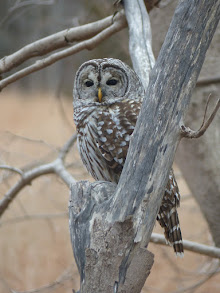
Then last night, around 8:30, an owl started hooting outside and kept it up for roughly a half-hour. The noise kept setting off our dog, and finally I took him out for a look. The bird, probably a great horned owl, was clearly visible in the top of a tree just across the street and was undisturbed by our presence. It flew off eventually but made a brief return just after dawn.

Monday, September 25, 2023

Hard Times


Sarah Orne Jewett was known for her portrayals of the lives of the farmers and fisher-folk of her native state, but she wrote at least one story that recognizes that nineteenth-century rural Maine, with its abundant water power in the form of rivers, was also a center of industrial production. "The Gray Mills of Farley," published in 1898, tells of events in a company town dominated by a cotton mill. The mill's labor force has arrived in successive waves: first, young people from neighboring farms, then experienced English millhands, poor Irish immigrants, and finally, the newcomers, French-Canadians who are willing to work cheaper and are viewed with suspicion by the older hands. The town is grim and poor, if not, when times are good, utterly desperate.

Jewett largely focuses on the mill's "agent," who is in charge of its day-to-day management and effectively mediates between labor and capital. No stereotypical brutish overseer, he was born in the town, was orphaned at a young age and grew up poor, but gained a commercial education and has returned to run the mills. Jewett describes him as "a single man, keen and businesslike, but quietly kind to the people under his charge." As the story begins, he meets with one of the mill's directors and reports that the mill has done well and will be able to issue a healthy dividend of nine percent to its investors. He adds, however, that he hopes the board will declare a dividend two or three points smaller than that and return some of the earnings to the labor force, whose wages had been cut during a previous downturn and never restored. He notes that the market is currently glutted and that it may be prudent to keep a reserve within the community. His proposal is politely but firmly dismissed; the directors feel no responsibility for the welfare of the workers, who, in their view, should consider themselves fortunate to be employed at all.

Sure enough, a downturn comes and the mill hands are laid off. Penurious to begin with, they are soon barely above starvation. As the months drag on the agent digs deep into his own pocket to help out as many families as he can, and provides an allotment of land and free seed potatoes so they can raise a bit of food. The local Catholic priest (again, portrayed sympathetically) dips into the takings of the collection plate and puts some men to work laying the foundation for a new church. The workers are resentful but have little recourse; many of the French-Canadians depart, returning home or seeking work elsewhere.

In the end, a reprieve comes. Business conditions improve and the workers are called back. But the positive note on which the story ends is tempered by a recognition of the harsh realities of industrial labor.
"Jolly-looking set this morning," said one of the clerks whose desk was close beside the window; he was a son of one of the directors, who had sent him to the agent to learn something about manufacturing.

"They've had a bitter hard summer that you know nothing about," said the agent slowly.
"The Gray Mills of Farley" can be found in the Library of America volume of Jewett's Novels and Stories.

Saturday, September 09, 2023

The Harbor of Lost Ships

Brad Fox, paraphrasing William Beebe's "final, disorganized notes on marine subjects," here describing the fate of shipwrecked sailors:
The sea angel Amphitrite swoops down for the sailors who have served her faithfully, and takes them to the court of King Neptune, who judges whether they've lived by the laws of the sea, whether they've been worthy.

Others end up in a harbor in the far north where lost ships go. Some vessels crossing in the northern seas encounter these ghost ships, appearing and disappearing, flagless, unresponsive to salutations or threats. The Harbor of Lost Ships is locked in by high, barren, icy cliffs. In their shelter lie thousands of hulls, pressed together. Their ghostly crews walk the wharfs or stand still, as if they would sail off the next day, trimming sails and swabbing decks in the icy mist.

The Bathysphere Book: Effects of the Luminous Ocean Depths
Update (September 2023): Not long after coming across the above passage, I picked up Sarah Orne Jewett's The Country of the Pointed Firs, one chapter of which recounts a tale of a voyage to the extreme north (somewhere above Labrador, or thereabouts) where sailors encounter a mysterious town populated by drifting "shapes of folks." The town, "a kind of waiting-place between this world an' the next," vanishes like mist when the sailors approach. Jewett's description is too long to quote here.

Sunday, August 06, 2023

August notebook


Here's a little object lesson in the compartmentalization of modern life. One afternoon we went out for a drive and as we headed to our car we looked back and saw our striped cat watching us from the window of our second-floor apartment, as she sometimes does. It took a moment before we realized that it wasn't our window at all, but the window of the adjacent apartment, whose occupants we haven't met, and that the striped cat wasn't our striped cat but an apparently identical one belonging to our neighbor or neighbors. Unlike the numerous dogs in the building, who see each other outside and hear each other barking from time to time, the two cats live parallel lives in cubicles a few feet apart, presumably in utter ignorance of each other's existence.

***

Mysteriously, we've been followed by dragonflies ever since we moved in. When we drive out of the parking lot we often see one hovering over our windshield, as if checking us out, and sometimes we find what we can only assume is a different dragonfly greeting us when we get out of our car at our destination. They're said to be an omen of good luck — and a symbol of Japan, whatever that might entail for us. Today a meadowhawk (many dragonflies have wonderful, vivid names) approached me while I was out walking, settled on my hand, and stayed there for some time. It chose my camera hand, but I managed to slip the other in my left pocket for my cell phone and take a picture.

Thursday, July 27, 2023

Sweet Thames Flow Softly


I've always enjoyed this Ewan MacColl song, which I first heard on Planxty's eponymous debut album, but this gentle version (featuring some additional verses) is special. The lead vocalist is Christy Moore, as on the Planxty LP; he is accompanied here by the late Sinéad O'Connor and by guitarist Neill MacColl, who is Ewan's son. (His mother, still living, is Peggy Seeger, half-sister of Pete.)