Thursday, August 25, 2016
Hills, evening
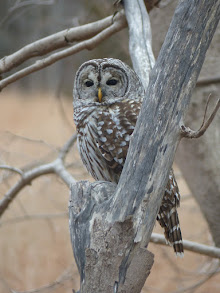
These pictures were taken on an overcast day from a secret (but not at all remote) location during an hour's hike after work. The world still has its little surprises.
Friday, August 12, 2016
María
This postcard portrait of a woman who signed only her first name was addressed to one Señora Doña Leonora de Esteban in Castro Urdiales in northern Spain. There's no date or trace of a stamp or postmark; the elegantly-penned inscription reads "To demonstrate once again the love that your friend professes for you, she dedicates to you this little memento." María was clearly not only well educated but possibly (if the desk is any indication) an educator. She wears heavy, dark clothing with an elaborate embroidered motif. I imagine her as unmarried, part of a nascent class of independent female professionals, writing to a former colleague who had married and moved away, but that's basically nothing but speculation. I'm not sure if this portrait was taken in a studio or (more likely) on location, but the use of the window to open up the background is an effective touch.
Rafael A. Idelmón, a native of Madrid, opened a photographic studio in Valladolid in January 1860 and another in Palencia four years later; his descendants were reportedly still in business at least until 1927, and a living descendant named Enrique del Rivero Cuesta is active as a professional photographer, continuing a family association with the camera lasting more than a century and a half. The portrait of María is presumably from the first decades of the twentieth century, and may be the work of one of Rafael's sons or an employee of the firm. I'm not sure what the initials G.I.F.A.G. stand for, though I'm guessing that they indicate membership in a gremio or trade association.
Labels:
Postcards,
Real Photo,
Spain
Wednesday, August 03, 2016
A Quincunx for Sir Thomas Browne
Kenneth Jackson has directed a brief documentary about Sir Thomas Browne, in conjunction with an upcoming exhibition at the Royal College of Physicians. (The poster of the video has disabled embedding, so you'll have to click through the above screenshot to watch.) The exhibition, which opens in January 2017, is also intended to coincide with a project to issue a scholarly edition of Browne's complete works.
For me, the highlights of the film are the surprising number of words Browne added to the English language (they include "ambidextrous," "electricity," "hallucination," and "coma," among many others), and, of course, his firm debunking of the once widely-held notion that badgers had shorter legs on one side of the body in order to facilitate walking across slopes. Science moves slowly, perhaps, but it marches on all the same — though its legs may be a bit wobbly and uneven.
Labels:
Thomas Browne
Tuesday, July 26, 2016
Maxims (July 2016)
If you're not part of the problem, you're not part of the solution.
Preening one's moral feathers at the expense of others is not a morally defensible position.
There's no net.
Few things are more evident than someone else's illusions.
Those who have the least have the most to lose.
Nothing is more perishable than meaning.
Everything is a prism.
The unavoidable and the unacceptable are like a snake swallowing its own tail.
See it for what it is.
The world's indifference is the precondition of our responsibility.
Beware of neat rhetorical tropes. Beware of maxims.
Tuesday, July 19, 2016
Stonebirths
This is not their time, our present world, but who is to say if that time is ages behind them or merely still to come? What may awaken when we, in turn, have had our day?
Labels:
Enigmas,
Photography
Sunday, July 03, 2016
Friday, July 01, 2016
Rot
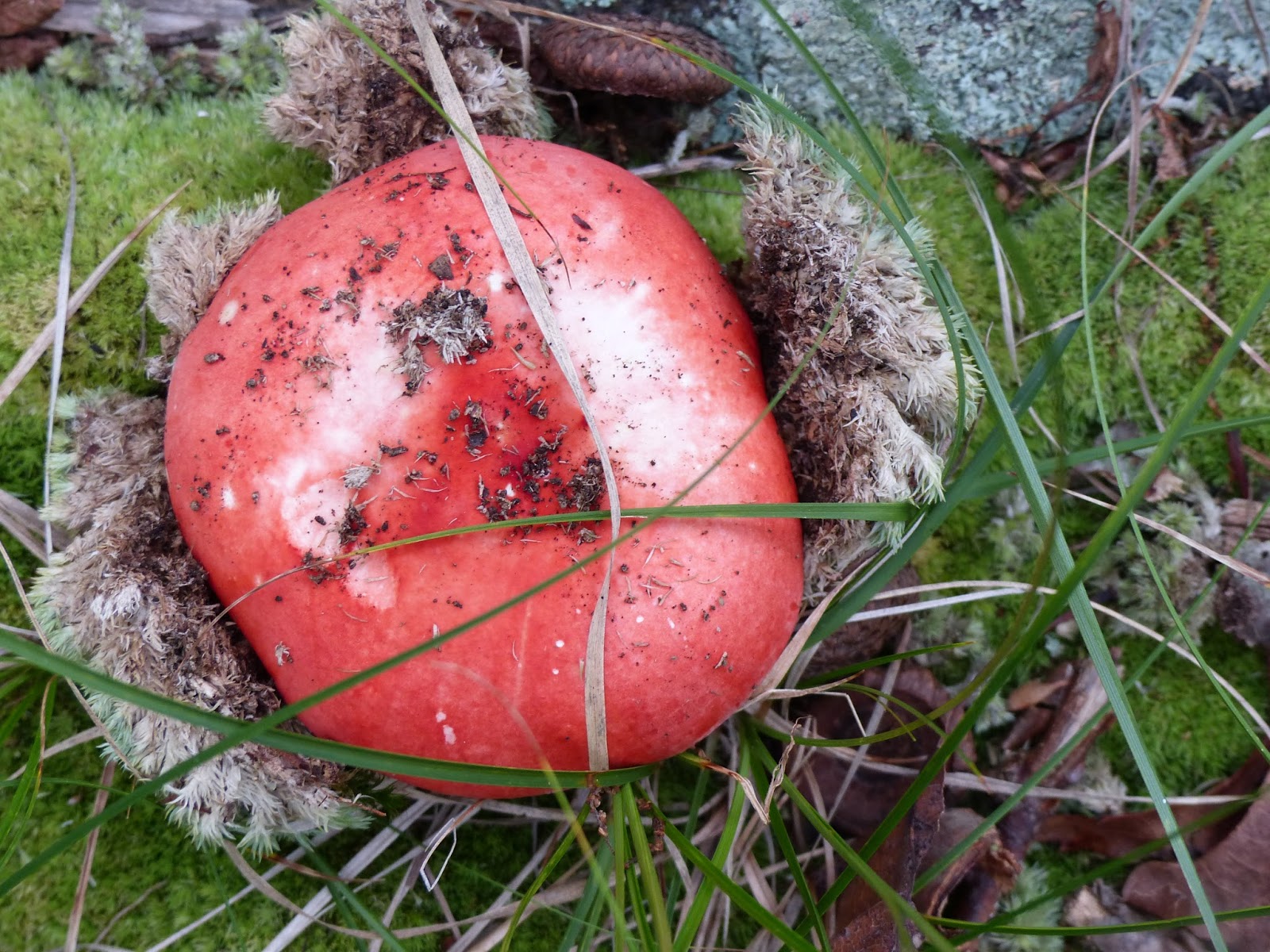
Scenes from the woods, spring and summer 2016.
Many of these specimens seemed to appear overnight (or maybe I just didn't notice them), and many were gone or wasted away to nothing in a day or two. All are fungi except the second, which is Indian Pipe (Monotropa uniflora), and the last, which seems to be a slime mold. The brightly-colored insect in the third-to-last shot is one of the aptly-named Pleasing Fungus Beetles.
Update: Further rot below:
Above: Probably Climacodon septentrionalis.
Labels:
Fungi,
Natural history
Monday, June 27, 2016
The Door
He climbs the wooden stairway, his advancing shadow traced by sparse incandescent bulbs that emit, out of their little prisons of wire mesh, a faint whiff of singed insects. The banister is damp to his touch and he lets go. At each landing a hallway branches off; he pauses for breath but barely raises his eyes. He reaches the top storey. At the end of a long corridor there is a single door with a panel of unlettered frosted glass, diffidently backlit from within. He walks along the worn floorboards until he is within reach of the knob. As he lifts his hand to turn it he feels fingers grasp his shoulder from behind.
Labels:
Shadows
Sunday, June 19, 2016
The Clearing
One of the paths I often walk is bordered on one side by inpenetrable swamp, but today I spotted a place where I could cross easily onto an island of slightly higher ground. No one goes there. For whatever combination of reasons — light, water, chance — the understory that covers much of the edge of the swamp is absent here, nor is the spot as barren and brown as the deepest and oldest woods just a few yards away. Instead, there are nearly pure stands of ferns, a few patches of wispy grass, and here and there a fallen trunk.
At the base of a tree I found the sole remnant of some creature's successful hunt.
Labels:
Natural history,
Walking
Tuesday, June 14, 2016
Gregory Rabassa (1922-2016)
The translator Gregory Rabassa has died, according to a notice from the Associated Press.
Rabassa was a professor for many years at Queens College, but it was his work as a peerless translator of modern Latin American literature that secured his place in the literary firmament. Beginning in 1966 with an English-language version of Cortázar's Hopscotch (itself a daunting feat, given that novel's linguistic fireworks), he produced dozens of translations, including more than a few that, taken individually, would have been sufficient to secure his reputation: José Lezama Lima's Paradiso, Mario Vargas Llosa's Conversation in the Cathedral, Gabriel García Márquez's One Hundred Years of Solitude, and on and on and on. That he not only managed to translate such challenging, verbally sophisticated works at all but did so with scrupulous care and endless creativity is simply astounding. We owe him a very great debt.
Translator Susan Bernofsky has a nice appreciation.
Update: The New York Times now has a full obituary.
(Photo of Gregory Rabassa from the jacket of Rabassa's memoir If This Be Treason: Translation and Its Dyscontents, published by New Directions.)
Sunday, June 05, 2016
The Hundred-Acre Wood
I got up early and set out on foot for the local park in search of a family of barred owls who either weren't around today or were keeping themselves out of sight. Though a light rain fell, beneath the leafed-out canopy I felt scarcely a drop. I can walk the trail that circles the wooded section of the park in ten or fifteen minutes, but this time instead I turned off into the interior of the woods, following a network of little trails that branch off here and there through sparse growth beneath tall beaches and tulip-trees and past parallel ridges of outcroppings, some topped with little cairns. Somewhere high above a single bird was calling plaintively, always the same five-note refrain — wee-HEE-heee, WEE-he — but even as its source seemed to drift from treetop to treetop I could never catch a glimpse of it. Four deer eyed me warily but held their ground; maybe they're used to me by now.
There were no other walkers today. There's a tacit fellowship of sorts among those mad enough to get up and walk the woods before work, but it's a reserved one, respectful of the cathedral-like atmosphere of the canopy as well as of the privacy of strangers whose reasons for needing to be there are their own.
On the leaf litter beneath some young beeches I found a pale white mushroom the size of a small melon — or of a brain, which in its convolutions it half-resembled. Perhaps the rest of the body lay still vertically interred, the eyes staring forward through the loam, awaiting its time. A host of tiny flies circled around it.
Labels:
Fungi,
Natural history,
Walking
Saturday, May 07, 2016
Cloud Chamber
Thomas Hardy:
Then these children of the open air, whom even excess of alcohol could scarce injure permanently, betook themselves to the field-path; and as they went there moved onward with them, around the shadow of each one's head, a circle of opalized light, formed by the moon's rays upon the glistening sheet of dew. Each pedestrian could see no halo but his or her own, which never deserted the head-shadow, whatever its vulgar unsteadiness might be; but adhered to it, and persistently beautified it; till the erratic motions seemed an inherent part of the irradiation, and the fumes of their breathing a component of the night's mist; and the spirit of the scene, and of the moonlight, and of Nature, seemed harmoniously to mingle with the spirit of wine.Tess of the D'Urbervilles
Monday, May 02, 2016
The Gloaming: 2
The ensemble known as The Gloaming (Thomas Bartlett, Dennis Cahill, Martin Hayes, Iarla Ó Lionáird, and Caoimhín Ó Raghallaigh) has released its second CD, entitled simply 2. While perhaps not as groundbreaking as the group's first release, it's still a very enjoyable record. My favorite track so far is the concluding one, "The Old Favourite."
A version of one track, "Casadh an tSúgáin," is featured in the movie Brooklyn, where it is sung on camera by Iarla Ó Lionáird. The cover image, as was the case with the first Gloaming CD, is by the artist-photographers Robert and Shana ParkeHarrison; it's called "Flying Lesson."
Labels:
Ireland,
Music,
The Gloaming
Saturday, April 30, 2016
The Water-Cure
Daniel Defoe:
I heard of one infected creature, who, running out of his bed in his shirt, in the anguish and agony of his swellings, of which he had three upon him, got his shoes on and went to put on his coat; but the nurse resisting and snatching the coat from him, he threw her down, run over her, ran down stairs, and into the street directly to the Thames, in his shirt, the nurse running after him, and calling to the watch to stop him; but the watchman, frightened at the man, and afraid to touch him, let him go on; upon which he ran down to the Stillyard stairs, threw away his shirt, and plunged into the Thames; and, being a good swimmer, swam quite over the river; and the tide being coming in, as they call it, that is, running westward, he reached the land not till he came about the Falcon stairs, where landing, and finding no people there, it being in the night, he ran about the streets there naked as he was, for a good while, when, it being by that time high water, he takes the river again, and swam back to the Stillyard, landed, ran up the streets to his own house, knocking at the door, went up the stairs, and into his bed again. And that this terrible experiment cured him of the plague, that is to say, that the violent motion of his arms and legs stretched the parts where the swellings he had upon him were (that is to say, under his arms and in his groin), and caused them to ripen and break; and that the cold of the water abated the fever in his blood.A Journal of the Plague Year
Defoe, in the person of the Journal's purported author, H. F., notes that he can not vouch for the veracity of the incident.
Labels:
Daniel Defoe,
London,
Notes
Subscribe to:
Comments (Atom)