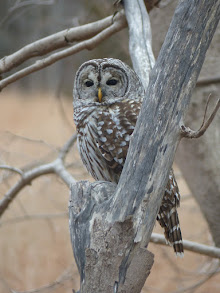
Ganonoque, Ontario, 1940


 While trying to scan some photographs from an old paperback I was having issues with pixelation. Rather than try to fix the problem (and not being especially adept at these things), I decided to roll with it instead. Using the Black & White setting, these images emerged.


it's no use backtracking(From 2008; reposted because I'm listening to it and because that's the kind of day it is.)
& wondering where we went
it's like watching where the dog
ran through the wet cement
there's no way in this world
we'll ever be content
so try to make it like the dream we had
the peaceable kingdom
where no one's betrayed
you might as well pray
you might as well pray
you might as well pray


Perhaps it was a result of my wartime experiences or of a self-pity typical of my age, but I had never quite been able to surrender to pleasure or joy, or to relax. As if I never ceased to be aware of the connection between happiness and despair, freedom and anxiety, life and ruin. My feelings were probably those of a tightrope walker on his high wire. No matter how fixedly I was looking upwards I was still conscious of the drop below me.As the story begins, the young man is en route to visit a classmate, Ota, who has a cabin in the country. Along the way he recalls an experience, a year or so after the end of the war, of seeing a traveling troupe of acrobats. While he had been waiting for their performance to begin, a young woman had approached him selling tickets, and though he never spoke to her he had been quite smitten by her. Later he had watched the same girl, now wearing a different costume, ascend one of the masts to take part in the show.
If only her letter hadn't been so totally urgent or her offer so unconditional. Did I even have the right to reject her after what I'd caused? But what feelings did I have for her? Did I have any feelings of the kind she wrote about?Suddenly, on the way to Dana's apartment, he comes upon the acrobats again:
As I stood there in the crowd, gazing up at the celestial acrobat who, high above our heads, above the dark void, was invoking that vaster void with the starry face, it seemed to me that I was beginning to understand something of the secret of life, that I would be able to see clearly what until then I had been helplessly groping for. I felt that life was a perpetual temptation of death, one continual performance above the abyss, that in it man must aim for the opposite mast even though, from sheer vertigo, he might not even see it, that he must go forward, not look behind, not look down, not allow himself to be tempted by those who were standing comfortably on firm ground, who were mere spectators. I also felt that I had to walk my own tightrope, that I must myself sling it between two masts as those tumblers had done, and venture out on it, not wait for someone to invite me up and offer to carry me across on his back. I must begin my performance, my grand unrepeatable performance.His resolution soon fades, however, and the story ends ambiguously, as he stands staring up at her window, still uncertain, suspended on the high wire.


Rumour has it that the inhabitants of this city walk on water. That, more bizarre still, their feet are webbed. Not all feet, but the feet of the boatmen whose trade is hereditary.
This is the legend.
When a boatman’s wife finds herself pregnant she waits until the moon is full and the night empty of idlers. Then she takes her husband’s boat and rows to a terrible island where the dead are buried. She leaves her boat with rosemary in the bows so that the limbless ones cannot return with her and hurries to the grave of the most recently dead in her family. She has brought her offerings: a flask of wine, a lock of hair from her husband and a silver coin. She must leave the offerings on the grave and beg for a clean heart if her child be a girl and boatman’s feet if her child be a boy. There is no time to lose. She must be home before dawn and the boat must be left for a day and a night covered in salt. In this way, the boatmen keep their secrets and their trade. No newcomer can compete. And no boatman will take off his boots, no matter how you bribe him. I have seen tourists throw diamonds to the fish, but I have never seen a boatman take off his boots.
Nesabap alaba barababaranap mana ba STOP Palaba banabarep arefep ber erabet geret nasefaterabat gret bara basarepHe carefully wrote the words down, then examined them at length. Their significance was as inscrutable as ever, and yet the longer he looked the more there seemed to be something in them -- some delicate gesture, some faint hint of tenderness -- that desperately longed to be conveyed. He read them backwards and forwards and out of order, anagrammatized them and spent at least an hour simply staring at the forms of the letters as if the shapes alone bore some critical message that had nothing to do with any language known to man, a message that arose from some other realm where nothing was arbitrary symbol, where every communication was a direct encounter with some truth so profound and absolute that it couldn't be expressed in anything as insignificant and arbitrary as language but only as itself. Before he even knew he was doing it, he began to tap out a response:
Qa balaqa STOP Barabasabaraq qaraq ablababap STOP Balap rabelaba perap salap balarepareb na nabapThe reply was almost instantaneous:
Gasap beragera aramerabap STOP Beragabaragap blagap gasa berarqaraba basaraba berap asanta nabep rebasapar raba berabasepHe sat back, contemplating the words. At that moment they seemed to him as soothing as the freshest spring rain, as deep as a desert well, as tender as a mother's love for the infant at her breast. Weeping with gratitude at their beauty, he stood up and spoke the message aloud, chanting it over and over as he circled the room, kissing the paper on which he had written it out. Trembling with joy, he leaned over the key and tapped out a response that he knew, with complete certainty, would be received and understood as his irreversible declaration of utter and undivided submission:
Garaqasap abamaba maserab berasseraber STOP Asarabageram merasapa aba basapa mergaraga berasaperaba STOP Meragerabarap birab qaru nagraba barasabarWith one motion he swept everything off the desk -- his books, his water jug, and his lamp, which shattered onto the floor -- and awaited the answer that he knew would soon be forthcoming.
When, on the last day of August 1910, Roger Casement arrived in Iquitos after some seven weeks of exhausting travel...Iquitos, where Casement, after the conclusion of his mission to the Congo, was dispatched by the Crown to investigate similar abuses and atrocities on the part of a British-incorporated rubber company, is of course familiar territory for Vargas Llosa, who set parts of several of his earlier novels in that hub of the Peruvian Amazon. But though the chapters devoted to Casement's activities in Peru make up the longest section of the book, they don't overshadow the rest. Tying the novel together, and alternating with the narration of Casement's activities, in the Congo, South America, and Europe, are scenes from Casement's last days, as he awaits execution in a cell in a British prison and reflects on the events of his life.
My own impression -- that of a novelist, to be sure -- is that Roger Casement wrote the famous diaries but that he didn't live them, at least not entirely, that in them there is much exaggeration and invention, that he wrote certain things because he wanted to but could not live them.El sueño del celta ("The Dream of the Celt," "the Celt" being a nickname given by some of Casement's friends because of the passion he came to develop for Irish history and culture) has just been published by Alfaguara. As the novel would seem to pose no major obstacles to translation (unlike some of the author's earlier works), an English-language version can probably be expected in a year or so.
Ba bara sabara rebapara azera ba STOP Sarabara berisa seribisarabisa serata bezera razara ra STOP Berisol sorisoriso bazara sarisarasarisab STOPHe transcribed this seeming gibberish into his logbook, returned an acknowledgement, then relayed the message to the operator at Z----. There was no response.
Saraba barisaserisab azarasaraza bazirazep STOP Azirasora sarizap borisoq qrabba oraseraborisep prebanamarasarasap STOP Azapep STOPAgain he acknowledged, transcribed and forwarded the message, and received no response from Z----. To his surprise, however, an hour later an identical message arrived. Perplexed, he carefully compared it with the previous one and acknowledged it, but almost immediately a third came, and then a fourth. He duly forwarded each transmission, but when the fifth and sixth arrived he held back. Clearly the operator in the hinterlands was not receiving his acknowledgments and was repeating himself in the mistaken belief that his messages were not getting through. There was no point in annoying the authorities at Z----, if they were indeed listening, with obvious repetitions. For several hours the wires carried message after identical message, dozens, scores, eventually hundreds. He transcribed each one, for a while, then simply gave up, walking away and returning every hour or so to see if the incoming transmission was the same as the others. It always was.
Raberaparabep barabap parabarabagarap garap baregatarat top barop roparaoparop bererep qrabab STOP Garep arepabap gop STOPThese syllables, though they meant nothing to him, he transmitted without a single pause. To his surprise, the machine did not pick up where it had left off. Instead there was silence for a few moments, then a brief acknowledgment, and then it lay still.
Garabarep farabara barana marabap amar raba raba barabaramop STOP Garabananana badarap badar badar badarap bada STOPHe wrote out the message, then tore it roughly out of the logbook and paced the room, reading it over and over. He had been instructed in the making and cracking of basic ciphers during his initial training, but this fit the pattern of nothing he had ever seen. He leafed through his logbook, carefully examining old entries. There seemed to be too few unique letters, too much obvious repeated filler, for the messages to contain any but the most rudimentary communication. No doubt there was a key, known to the operator on the other end and also at Z----, or maybe not even there, maybe the transcriptions were referred to another operator at some distant headquarters, perhaps even all the way to the home country, to some intelligence officer in the national palace, who perhaps decoded them for the eyes of M. le Président himself. One way or another it was clearly beyond his ken.
Garabarep farabara barana marabap amar raba raba barabaramop STOP Garabananana badarap badar badar badarap bada STOPAnd then it seemed to wait, patiently, expecting an answer. He put his hand on the key and tapped, hesitantly at first, then fluently:
Morarerabap aramara marabeparepamar berererapap STOP Beraqraba garab megaraba babap babap babap ma garabarap STOP Serabep arbaraba barapep a pep perapebabep merera baramabap STOPA brief acknowledgment followed, and then nothing for the rest of the night.
I was completely knackered when I got home to Ireland and decided to write a song about it. Unfortunately I could remember nothing, so this may or may not be true! No one will ever know.True or not, the story is hilarious and provides Andy with a chance to spin some of his best lyrics:
In the Dubliner we played a gig, though we were all a bit hungoverThe song's best lines come later on, and concern the origin of clouds, but for that you'll have to buy the record.
A man got up and tried to dance a jig it looked more like a Bossa Nova
I had some beers and I began to flirt
And very soon I was on blonde alert
You're too late you know, thirty years or so,
she laughed and went home to her mammy